ARTISTIC DIRECTOR
Matt Munisteri
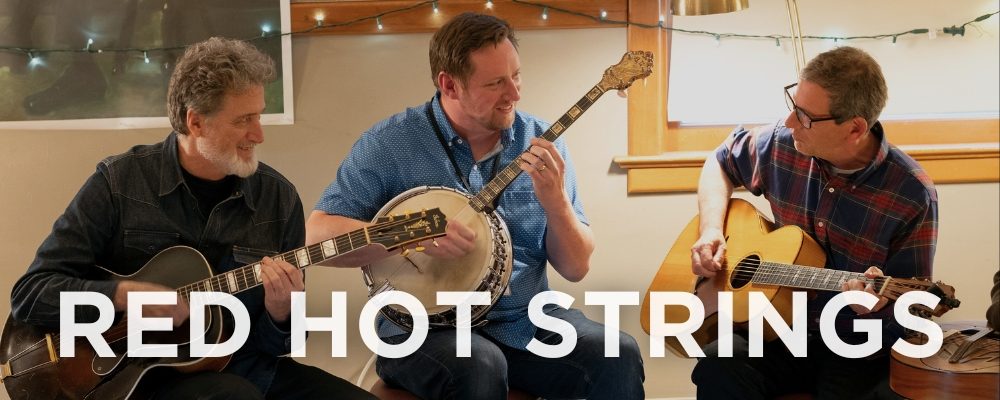
Matt Munisteri is a critically acclaimed guitarist, singer, and songwriter known for his mastery of American roots music, jazz, and blues. As Artistic Director of the Red Hot Strings program, Matt brings together leading string players from various genres to offer a broad exploration of string music. His teaching focuses on the fusion of traditional forms with innovative playing techniques, encouraging students to push musical boundaries.
Artist Faculty
2026 Artist Faculty
Craig Ventresco
Guitar
About
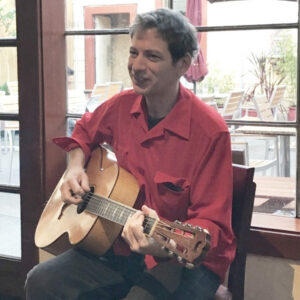
Craig Ventresco is a San Francisco-based guitarist and revivalist of early 20th Century jazz, pop, and folk material. He grew up in Maine, but established himself as a guitarist specializing in older styles of American popular music by playing on the street every day for tips in San Francisco, beginning in the late 1980’s. Craig formed the band Bo Grumpus, which gained a cult following among the more daring ragtime enthusiasts, and with whom he released five records. Craig specializes in playing popular music that was written during the ragtime era (circa 1890-1915). And in Ragtime-influenced finger-style Blues. And Blues-influenced Ragtime. And Ragtime-and-Blues-influenced Jazz. He’s largely self-taught and employs a one-of-a-kind pick-and-fingers technique on the acoustic guitar, which is loud and punchy and brings a pianistic quality to his solo performances. He’s come by his virtually encyclopedic repertoire via 78 records, piano rolls, and old sheet music. He also plays mandolin, ukulele, and other stringed ephemera.Dale Morris
Violin
About
Dale Morris, Jr. began playing violin at age three. By the time he was ten years old, he began his professional career performing with the Bar-D Wranglers at the Bar-D Chuck Wagon Supper and Western Show in Durango Colorado. He performed there for the next three summers alongside his father, Dale Morris, Sr. As a teenager, he competed in many fiddle contests, winning numerous championships in the United States, including the Texas State Championship, Grand National Title and the Grand Masters Championship. Upon graduation from high school, he went to college on a music scholarship and performed with the jazz band at Weatherford College, in Weatherford, Texas.
Read MoreDennis Lichtman
Mandolin
About
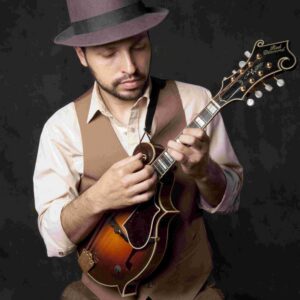
Dennis Lichtman is a multi-instrumentalist (clarinet, mandolin, fiddle, and more) who has been living, performing, composing, and teaching in New York City since 2002. He is a Selmer Paris Artist as an endorser of their Signature Clarinet. His music was recently used in director David Simon’s The Plot Against America (HBO) and he has appeared this year as a clarinetist on Succession (HBO) and The Blacklist (NBC). Lichtman’s newest album, Secret Workshop, features eleven original compositions inspired by the strange, unusual, and revealing objects he discovered in the off-limits workshop of his late father, an eccentric and extremely private inventor/machinist/mad-scientist. The project was made possible with a grant from the Canada Council for the Arts and includes a music video directed by award-winning Mexican animator Fer Lozada. Prior albums include Jerron Paxton & Dennis Lichtman, a duo effort with the young lion of acoustic blues formerly known as “Blind Boy” Paxton, and Just Cross the River, featuring original compositions inspired by the migration of jazz legends into the borough of Queens, NY beginning in the 1920’s. Lichtman is also a member of ragtime quintet The Lovestruck Balladeers and Ghost Train Orchestra, whose 2023 album of Moondog’s music is a collaboration with Kronos Quartet. Since 2007, Lichtman has been the clarinetist and bandleader of the famed Tuesday night traditional-jazz jam session at Mona’s in downtown New York, which was profiled in the New York Times, and has been described by the Wall Street Journal as “ground zero for an emerging late-night scene of young swing and traditional jazz players.” Lichtman has performed at Carnegie Hall, major festivals throughout the United States, and on stages in Europe, Brazil, and China. He is on the faculty of several jazz and string music camps and workshops, and has led college master classes and school workshops through the Midori Foundation, Lincoln Center’s Meet The Artist Series, and Beijing’s Ping-Pong Productions.
Read MoreDon Vappie
Banjo
About
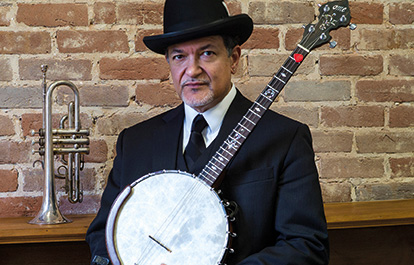
Don Vappie, musician / composer / educator, is the 2021 Steve Martin Banjo Prize Winner and was inducted into the Banjo Hall of Fame in 2022. In addition, he has received awards for his contributions to the preservation of New Orleans Creole Culture through music and film. He has produced 7 of his own albums, co-produced and starred in a PBS documentary, performed as a featured artist with orchestras on movie and television soundtracks, and at concerts and festivals around the world. Vappie’s highly regarded unique and original tenor banjo style is equal only to his love of his Creole heritage and tradition.
Read MoreGrant Gordy
Guitar
About
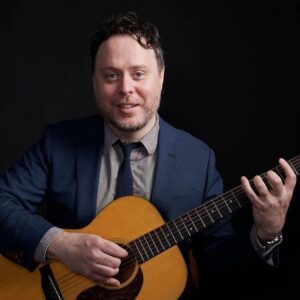
For many guitarists, landing a gig with bluegrass mandolinist David Grisman’s groundbreaking bluegrass/jazz quintet would be the culmination of a career in music. But for Grant Gordy, it was more of a beginning, an apprenticeship in combining bluegrass and jazz that served as a launchpad for his own music. How far he has traveled since then can be heard on Peripheral Visions, his stunning new quartet recording and welcome successor to his eponymous 2010 debut.
Read MoreJen Hodge
Bass
About
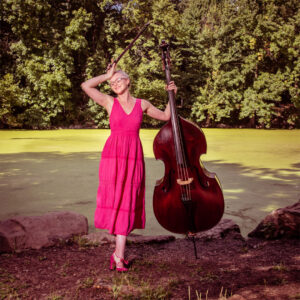
Jen Hodge is a Grammy-nominated bass player, currently living in New York City and originally hailing from British Columbia, Canada. A versatile and passionate musician, Jen is in high demand for her rock-solid bass playing, her consummate professionalism, and for the warm, infectious spirit she brings to the bandstand. Jen is a fixture of NYC’s hot jazz community, frequently featuring in the house band for the long-running Mona’s Tuesday Night Hot Jazz jam session hosted by multi-instrumentalist Dennis Lichtman, and performing with such artists as Bria Skonberg, The Hot Sardines, Jon-Erik Kellso & The EarRegulars, Cynthia Sayer, and Danny Jonokuchi & The Revisionists.
Read MoreJeremy Wakefield
Steel Guitar
About
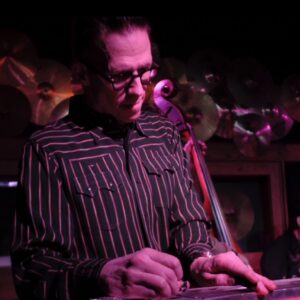
Jeremy Wakefield is a steel guitarist and composer living and working in Portland, Oregon. He first discovered the sound of the steel guitar coming out of a thing called a radio, on the kitchen table of his grandparents’ South Dakota home. Jeremy has recorded and performed live with a multitude of Western Swing, Country and Lounge artists , but is probably most known for his background compositions in the SpongeBob SquarePants series. He also enjoys writing descriptions of himself in the third person.
Read MoreMaxwell Apra
Mandolin
About
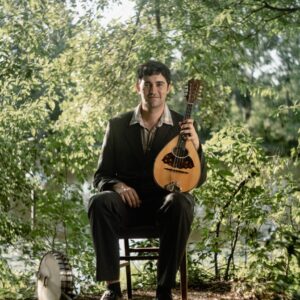
Maxwell is a New Orleans-based, internationally recognized multi-instrumentalist performer and music teacher. Specializing in mandolin and banjo, Maxwell began his training in California and then spent several years busking professionally in New Orleans’ city streets and night clubs, integrating himself into a rich and diverse array of musical styles including jug band, ragtime, jazz and little-known catalogue of traditional Italian mandolin music. Maxwell’s dedication to exploring the origins of the music he plays has always been of central importance. His repertoire reflects a deep investment in reviving authentic performance idioms of historic musical styles. His attention and priority to referencing specific historical sound recordings lends him a uniquely attentive and intimate sound.
Read MoreMolly Reeves
Guitar
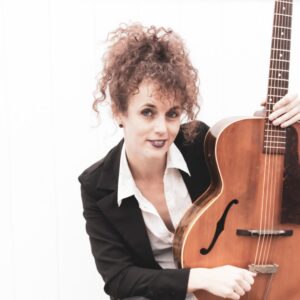
About
Raconteur of song Molly Reeves is a performer and adorer of early 20th-century American music. Molly is known globally for her enigmatic approach to rhythm guitar and her ability to invoke the idiomatic tone and language of 1920s and 30s acoustic guitar players. A crooner by nature, her dynamic and warm vocal stylings echo popular singers and storytellers of yesteryear. Molly resides in New Orleans where she plays with The New Orleans Jazz Vipers, The Shake Em’ Up Jazz Band, Russell Welch Hot Quartet, and the Chloe Feoranzo Quartet in addition to leading her own projects. As a guitar instructor Molly is sought out for her creative and enthusiastic teaching methods and is a faculty member of the New Orleans traditional jazz camp.
Read MoreTyler Jackson
Tenor Banjo
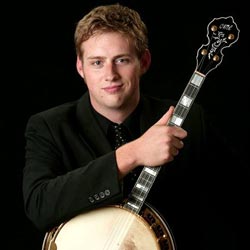
About
Tyler Jackson is a world renown tenor banjoist and upright bassist. Under the tutelage of Buddy Griffin, Tyler quickly learned the ukulele, tenor banjo, and electric bass. Tyler went on to study the double bass at the University of North Texas under Lynn Seaton and began to fine-tune his skills as a professional bassist. During this period, he was asked to work for Ray Price and the Cherokee Cowboys. Touring with Price took him all over the world and to venues across North America including the Grand Ole Opry, Massy Hall, Radio City Music Hall, Gruene Hall, as well as the Stagecoach Festival, Austin City Limits Live and more. In 2007-09 Ray Price teamed up with Willie Nelson and Merle Haggard to form the highly successful “Last of the Breed” tour. Tyler worked with many well-known artists spanning genres including Earl Klugh, John McEuen, Randy Travis, Jim Cullum, and Dale Watson.
Read MoreWorkshop
Participants learn “knee-to-knee,” intimate sessions with diverse instruments and artist faculty. Daily classroom instruction covers traditional hot jazz styles, songs, as well as technical skills and how to play well with others. Each evening, participants enjoy faculty concerts, chats, and jam sessions.
Most artist faculty teach two one-hour instrument sessions daily. Sessions are in various styles and techniques and focus on certain traditional methods. Instrumentation includes guitar, mandolin, violin, bass, banjo, and steel guitar. Ensembles gather in the afternoon.
At the end of the week, the artist faculty take to the stage and share in performance a festive celebration of the traditions they carry as well as their own music and styles. Your tuition includes a front row seat at this performance.
CLASS DRESCRIPTIONS
Don Vappie - Tenor Banjo
NEW ORLEANS BANJO - Chord Melody
Will will learn to play a song as a chord melody using a mix of the following lessons:
(Note: Reading music is a plus; listening is a must!)
1) Basic chord shapes and inversions - major, minor, diminished; chord extensions (6, 7, 9, 13); applying these inversions and extensions to play chord melodies.
2) Picking (right hand technique) - strumming traditional comping patterns; flat picking ascending rolls; using rolls to sustain long notes.
THE CREOLE BANJO OF NEW ORLEANS
With an understanding of basic chords we will learn to play Creole style syncopation. We’ll also look at how to play in an ensemble - how to be part of the musical conversation, and especially listening to the ensemble, basically how to make the band sound better. We’ll get into stylistic comping, applying arpeggiating and inversions to make more interesting comping, and we’ll learn more about each instrument’s role in an ensemble, and how the banjo can cover what might be missing.
Jen Hodge - Bass
SOUND AND SPACE
Come explore rhythmic variations and how they affect the groove of a song. Starting with the very basics and building in complexity, you'll learn how to craft some tasty bass-lines that honor the form and flavor of the tune.
SOLOING STRATEGIES (open to all instruments)
Where do solos come from? How do you pick notes? How do you make it sound good? In this safe space, among other curious souls, you'll learn concrete soloing strategies that will lower the trepidation around improvisation. If you've been avoiding playing solos (perhaps by becoming a bass player), come to this class and free your creativity around this essential component of jazz.
Jeremy Wakefield - Steel
TAILGATING AND OTHER INFRACTIONS
This class will be about finding melodies, both as a lead instrument and (especially!) as a supporting instrument. We’ll explore jazz horn styles as emulated by steel guitar (and vice-versa!) to find single-note melodies, build chord melody lines, and employ melody fragments in intros, outros and off-the-cuff solos. Key to this will be woking on some early jazz and swing “tailgate” trombone lines ala Kid Ory and Jack Teagarten, and exploring the influence of horn players on Bon Dunn, Alvino Rey & others.
JAZZ CHORDS FOR STEEL GUITAR
Finding all the chords you need to play jazz and swing standards- within the limitations of your non-pedal tuning. If a chord won’t be found, then we’ll learn how it can be implied! We’ll break down the structures of common chord voicings up and down the fretboard, and look at hw you can move easily between them.
Molly Reeves - Guitar
JOY IN RHYTHM
In this class we will interact with creative concepts, exercises, and games to incite our joy and drive for playing rhythm. This is a hands on quarter note calibration accessible and beneficial for all levels of playing.
EARLY JAZZ GUITAR - YOUR VOICE IN AN IDIOM
This class aims to illuminate a path towards your unique expression within the early jazz idiom. We will equip ourselves with the essential tools and techniques of the early guitar greats, traverse through the definitive recordings of the era, and map out fulfilling practices that align with our desires.
Dennis Lichtman - Mandolin
JETHRO BURNS SOLO & DUO RECORDINGS DEEP DIVE
Every single track on "Tea For One" and Burns' three full-length duo albums on Acoustic Disc is a master-class in swing mandolin. We'll do a hands-on, ears-open deep dive into Burns' approach to arranging and playing jazz standards in solo and duo settings. Every track provides a lifetime of study material - let's dive in!
SWING MANDOLIN ACCOMPANIMENT AND RHYTHM
Good accompaniment ("comping") is harder and more complex than good soloing! Let's explore ways to make your comping more interesting, grooving, and interactive with the soloist and the rest of the band. We'll explore left-hand (i.e. chord shapes and sequences) and right-hand (i.e. strumming patterns and accents) techniques using commonly played jazz standards as the framework.
Maxwell Apra - Mandolin
THE ITALIAN MANDOLIN IN AMERICA
Rooted in the tradition of Ballo Liscio, this session explores repertoire from Italian immigrant communities in the San Francisco Bay Area. Meaning “smooth dance,” ballo liscio emerged in the Emilia-Romagna region in the late nineteenth and early twentieth centuries and is known for its fluid, gliding style. Participants will learn one or two tunes associated with musicians such as Tony Flores, Ricardo Tunzi, and the Andrini Brothers, whose playing helped sustain this social dance music within Italian American communities in California and beyond.
SOUTHERN STRING BANDS SURVEY - from rags to jazz (open to all instruments) This workshop explores the repertoire and cultural role of New Orleans string bands between the 1890s and 1920s. Participants will examine a selection of rags and late 19th and early 20th century popular tunes associated with local string band style while also learning about to the social settings in which this music thrived. From rent parties and fish fries to picnics and neighborhood gatherings, string bands were a central part of community life, providing the soundtrack to everyday celebrations and mutual support within the city’s Black communities. This class welcomes all instruments.
Grant Gordy - guitar
THE FUNDAMENTALS OF GUITAR SOLOING
A good sounding solo -no matter the style of music- is nearly always operating using certain simple musical principles, whether we know it or not. As that old saying goes, “simple ain’t easy,” but when we begin to get a handle on the basic architecture at the nexus of rhythm, harmony and melody, it can be deeply impactful for our own playing, whether we’re more into fiddle tunes, western swing or the Great American Songbook. In addition to the raw material of musical structure, we’ll also consider some technical aspects unique to the guitar, like tone production, picking hand technique and fingering choice.
THE FUNDAMENTALS OF RHYTHM (open to all instruments)
Not “rhythm” as in “rhythm guitar,” but Capital R Rhythm! Rhythm is the primeval factor in all music. In this class we will learn some effective ways to attenuate our sense of time, strengthen our internal pulse and even train our ears in the process. Taking some time to give Rhythm some special consideration, my hope is that you’ll come away with a new appreciation for how it’s at the heart of all things musical, how important it is for all of us to work on it, and you’ll go home with some new techniques for hitting the woodshed.
Matt Munisteri - guitar
RIFFS AND THE ROOTED SOLO (open to all instruments)
This is class for ear training and for absorbing the language of Swing and Early Jazz soloing. Rather than thinking of what scales, modes or arpeggios go with what harmonic structure, we’re going to work on hearing and playing back melodic riffs and lines - starting simple and getting more complex - while applying them to the chord changes of a blues, “Lady Be Good” and “Roseroom”. The idea will be to look at soloing ideas that are rooted in The Blues and aural traditions, as we learn to recognize key intervals, instead of thinking “Oh goody - now I get to play the fourth mode of the Harmonic Minor Scale!”
CHORD/MELODY EZ SHORTCUTS
Chord/Melody guitar playing - both solos and songs - is dependent on having a lots of “go-to” licks at the ready. The idea isn’t just to move between chords; you want lay harmonized melodies, and ‘jazz lines”, and whether you’re a beginner at the style or advanced, this requires that your fingerings have to be impeccable…immaculate…unimpeachable - or your fingers are gonna wind up in traction. We’re going to learn a bunch of my FAVORITE chord/melody licks for navigating common swinging chord changes. Are They really EZ? No. Is there ever really such a thing as a short cut? Sorta. It’s gonna be something of a finger-buster, so it’s a class for advanced guitar players.
Tyler Jackson - tenor guitar/banjo
THE TENOR GUITAR AND TEXAS
This class will focus on the basics of playing rhythm tenor guitar in traditional Texas fiddle music. Students will learn authentic chord inversions and strum patterns, with a focus on applying these skills to popular tunes in the genre. A portion of the class will also be spent listening to examples of well-known tenor guitar players in the genre. Handouts will be provided.
SOLO STYLE TENOR BANJO
Take your playing to the next level by studying the masters of the past AND the masters of the present. Students will be given arrangements to learn that focus on both single-string and chord melody solos in the style of Harry Reser, Perry Bechtel, and Eddie Peabody. Improvisation, both single-string and chordal styles, will be covered as well. Proper technique will be a major focus in our classes. Everything from figuring out difficult fingerings to mastering advanced right and left hand technique will be tackled. If you're serious about the tenor banjo then you don't want to miss this!
Craig Ventresco
HELPFUL HINTS FOR HEAD ARRANGMENTS
A head arraignment is a simple version of a song incorporating melody/harmonies/rhythms, and they’re often thrown together on the fly. We’ll take a song that we all know and come up with various ideas that will make it sound good as a head arrangement.
(This is a good class for the player who has been playing a song for a minute and a half and wants to make it four minutes long.)
GUITAR ACCOMPANIMENT
We’ll talk about different ways for guitarists to approach playing accompaniment for both singers and instrumentalists using songs we all know and love as examples. The accompanist wants to play things that are ear-catching and have a persona stamp, yet yet not stomp on the voice playing the melody. We’ll look at incorporating bass lines, runs, and passing chords so we can enhance the singer or instrumentalist’s performance.
Dale Morris Jr.
SWING FIDDLE SURVEY
This class will serve as an introduction to the originators of swing violin. We’ll discuss the pioneers of this genre including Joe Venuti, Stephane Grappelli, Stuff Smith, Keith Coleman, Johnny Gimble, etc. We’ll note unique features of their individual styles and compare their approaches. As the class progresses, we’ll look more at fundamentals for advancing your own swing playing, and I’ll introduce my 4x4 exercise for fingerboard familiarity.
THE IMPROVISING VIOLINIST
Improvisation is our subject, and that will be reflected in the way we learn: We’re going to learn a couple of old jazz standards by ear as a class, without written music. Once we have the tunes under our fingers, we’re doing to make sure we understand how they work, by spending time reviewing their melodic and harmonic structures, before playing over them and doing a deeper dive into the art of improvisation over song structures.
Schedule
2026 Schedule
You have your choice of four daily one-hour class sessions on Thursday and Friday. Ensembles practice in the late afternoons. In the evenings, artist faculty present special topics and performances. Toward or on the weekend, ensembles perform, and on Saturday evening, artist faculty present a public performance. Playing music together happens in between everything else, sometimes replacing sleep.
Here is how you’ll spend your time:
FIRST DAY
4–5:30pm – Check-in, Centrum office
6–8pm – Dinner
8pm – Orientation
THURSDAY-SATURDAY
Most artist faculty teach two one-hour instrument sessions on Thursday and Friday and one on Saturday. Sessions in various styles and techniques focus on certain styles and Tradition Bearers. Instrumentation includes guitar, mandolin, violin, bass, banjo, and steel guitar. Evenings include events and performances, planned and spontaneous jams.
Newcomers
There is no age or skill restriction however, to get the most out of the intensive, one should be familiar with your instrument and be able to move about at a good clip.
Workshops are created for guitar, banjo, mandolin, violin, steel guitar, and upright bass players.
Kids & Teens
Most of our workshops are family events, and we welcome musicians of all ages and abilities to participate. Our programming has annually evolved to meet the needs of very young musicians, and we devote considerable resources to this end.
Info for Parents of Under-18 Participants
If under 18 and participating in the workshop, a parent or guardian over 21 years old must register and accompany the minor. If the parent or guardian is not participating in the workshop, there is a registration type for guardian with no cost. However, if the minor is staying on campus in the dorm, the parent or guardian will need to also stay on campus in the dorm, and there are costs associated with those accommodations.
Costs
Centrum has a variety of ways to be able to attend our workshops even if you’re on a budget. If you need financial assistance, Centrum has a robust scholarship program awarded on a first-come, first-served; and as-needed basis.
COSTS
- Tuition: $540. (non-refundable deposit to hold your place $100)
- Tuition Under-18: $440. (non-refundable deposit to hold your place $100)
- Room & board: $565.
- Meals only: $290.
- Airport shuttle (optional): $120. round trip or $60. one way
Workshop tuition includes admission to everything including great seats at the public performance on Saturday night. Your meal ticket is good for three meals per day starting with dinner Wednesday, May 13, ending with breakfast Sunday, May 17.
To get the best musical community experience, we encourage you to stay in either a quiet dorm room in Building 225, or a jam dorm room for those who wish to keep the music going. Both options have private rooms and shared bathrooms.
All rooms come with linens, blankets, and towels, but you should plan on bringing soap and personal toiletry items.
FAQ
RED HOT STRINGS - FAQ
Scholarships
Apply online as you register. Please note that except in rare cases, scholarships are available for tuition only. Centrum requires a $50 deposit of scholarship applicants, which is fully refundable before April 8, 2026, if you are unable to attend. If you are interested in volunteering, or a work trade position, please contact Mary Hilts at mhilts@centrum (dot) org.
Cancellation/Refund Policy
Full payment is due by April 8, 2026. If your full payment is not made by April 8, 2026, your registration will be canceled; $100 of your deposit is nonrefundable.
Any fee that includes a room: no refunds available after April 8, 2026.
Meals
If you have purchased a meal plan, meals are served at Fort Worden Commons. The first meal is dinner on Wednesday, May 13; the last meal is breakfast on Sunday, May 17, 2026.
Red Hot Strings Shuttle Schedule
ARRIVE – Wednesday, May 13, 2026, pick-up at Sea/Tac airport, 2:00pm, Pacific Time.
(book your arriving flight to land no later than 1:00pm)
DEPART – Sunday, May 17, 2026, depart Centrum, 9:00am sharp, Pacific Time.
(book your departing flight to leave no earlier than 1:00pm)
If we haven’t answered all of the questions you may have, please contact Mary Hilts at 360-385-3102, x116, or mhilts@centrum (dot) org.
PERFORMANCE
2026 RED HOT STRINGS CONCERT
Saturday, May 16, 2026
7:30 p.m.
Wheeler Theater
Featuring: Artistic Director Matt Munisteri, guitar; Craig Ventresco, guitar; Dennis Lichtman, mandolin and clarinet; Dale Morris Jr., violin; Jeremy Wakefield, steel guitar; Maxwell Poulos, mandolin; Don Vappie, banjo; Molly Reeves, guitar; Tyler Jackson, banjo; Grant Gordy, guitar; and Jen Hodge, bass.
PAST ARTIST FACULTY
Albanie Falletta
Guitar
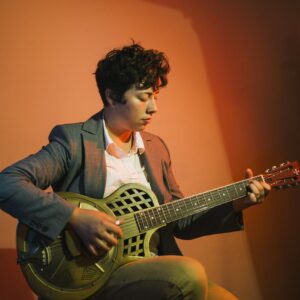
About
A native of Monroe, Louisiana, Albanie Falletta was in their formative years exposed to the local music of Louisiana: the sounds of cajun, zydeco, blues and gospel musics at festivals and backyard parties. After relocating with their family to San Marcos, Texas at the age of nine, Albanie began taking guitar lessons. They began their love and study of early American Jazz when hey were exposed to the Parisian Romani guitarist Django Reinhardt. Listening religiously to recordings of Reinhardt, Louis Armstrong, Billie Holiday, Fats Waller, and other such great figures of jazz, they developed their feel for swing. Soon Albanie was performing alongside mentors Slim Richey, Django Porter, Ray and Linda Sriro, the Jazz Pharaohs, and other players of the Austin scene where they lived and performed in the years after high school. Between 2008 and 2013, they led their own swing/early jazz band, Albanie and The Fellas, and was a member of several groups including the Thrift Set Orchestra, Guy Forsyth and the Hot Nut Riveters, Ivy Divey (a swing trio featuring three part harmony singing with Emily Gimble and Katie Shore), and others.
Read MoreCharlie Burnham
Violin
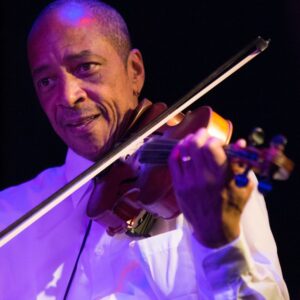
About
Charlie Burnham is an American violinist and composer. He has a unique highly imaginative style that crosses genres, including bluegrass, delta punk, free jazz, blues, classical and chamber jazz. He often performs with a wah-wah pedal. He initially became renowned for his work on James “Blood” Ulmer’s Odyssey album. The musicians on that album later performed and recorded as Odyssey the Band, sometimes known as The Odyssey Band. He was also a member of the String Trio of New York, and currently plays in the 52nd Street Blues Project, Hidden City, We Free Strings, Improvising Chamber Ensemble and the Kropotkins.
Read MoreCraig Ventresco
Guitar
About
Craig Ventresco is a San Francisco-based guitarist and revivalist of early 20th Century jazz, pop, and folk material. He grew up in Maine, but established himself as a guitarist specializing in older styles of American popular music by playing on the street every day for tips in San Francisco, beginning in the late 1980’s. Craig formed the band Bo Grumpus, which gained a cult following among the more daring ragtime enthusiasts, and with whom he released five records.
Read MoreDave Biller
Faculty
About
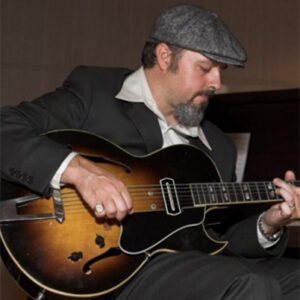
Dave Biller has toured and recorded with Wayne Hancock, Dale Watson, and Deke Dickerson and is mostly known as a professional pedal steel player, but his record, Hot Guitars of Biller & Wakefield, captured the ears of music lovers everywhere. Like many guitarists of his age, Biller’s first heros’ were classic rock guitarists such as Jimmy Page, Clapton, and Hendrix, but jazz “became his religion” after discovering a ‘Best of Coltrane’ cassette in a clearance bin in an old record store. Dave Biller has a unique guitar style that takes influence from jazz heavyweights such as Barney Kessel and Howard Roberts, country pickers such as Roy Nichols and James Burton and the three Blues Kings; Freddie, Albert, and BB, but he says the guitarist which made the biggest impact on his playing was Django Reinhardt. Of Reinhardt, Biller said “In 1998 I saw the film footage of him for the first time and it changed my life in music forever. It was a pivotal moment and for the next 5 years I was hopelessly lost in the world of gypsy jazz.”
Read MoreDavid Grisman
Special Guest Instructor
About
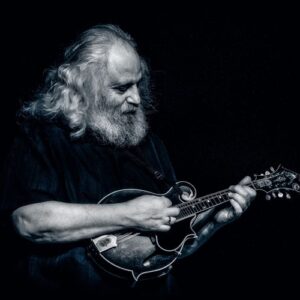
In the course of a career that has spanned more than six decades, David Grisman has had an immeasurable impact on American acoustic music. A trail-blazing instrumentalist, composer, bandleader, and creator of a living musical genre, David has influenced contemporary string players from Bluegrass to Pop and Jazz. We are delighted that he will be joining us on Saturday May 17th to present a workshop on arranging, and to participate in a moderated conversation about his music and his vital work as a conservator of string traditions. We doubt that he needs much of an introduction to anyone who’s considering attending Red Hot Strings, but we shall nonetheless try…
Read MoreDennis Lichtman
Mandolin
About
Dennis Lichtman is a multi-instrumentalist (clarinet, mandolin, fiddle, and more) who has been living, performing, composing, and teaching in New York City since 2002. He is a Selmer Paris Artist as an endorser of their Signature Clarinet. His music was recently used in director David Simon’s The Plot Against America (HBO) and he has appeared this year as a clarinetist on Succession (HBO) and The Blacklist (NBC). Lichtman’s newest album, Secret Workshop, features eleven original compositions inspired by the strange, unusual, and revealing objects he discovered in the off-limits workshop of his late father, an eccentric and extremely private inventor/machinist/mad-scientist. The project was made possible with a grant from the Canada Council for the Arts and includes a music video directed by award-winning Mexican animator Fer Lozada. Prior albums include Jerron Paxton & Dennis Lichtman, a duo effort with the young lion of acoustic blues formerly known as “Blind Boy” Paxton, and Just Cross the River, featuring original compositions inspired by the migration of jazz legends into the borough of Queens, NY beginning in the 1920’s. Lichtman is also a member of ragtime quintet The Lovestruck Balladeers and Ghost Train Orchestra, whose 2023 album of Moondog’s music is a collaboration with Kronos Quartet. Since 2007, Lichtman has been the clarinetist and bandleader of the famed Tuesday night traditional-jazz jam session at Mona’s in downtown New York, which was profiled in the New York Times, and has been described by the Wall Street Journal as “ground zero for an emerging late-night scene of young swing and traditional jazz players.” Lichtman has performed at Carnegie Hall, major festivals throughout the United States, and on stages in Europe, Brazil, and China. He is on the faculty of several jazz and string music camps and workshops, and has led college master classes and school workshops through the Midori Foundation, Lincoln Center’s Meet The Artist Series, and Beijing’s Ping-Pong Productions.
Read MoreDon Stiernberg
Faculty
About
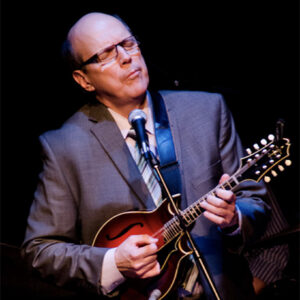
Don Stiernberg has been a professional musician for nearly 50 years. Along the way he has been involved in performing, writing, recording, producing, and teaching but is best known for his mandolin playing. His path was set very early on as he grew up north of Chicago. Emulating his older brother, he experimented with playing various stringed instruments, finally landing on the mandolin. Things got serious when an ad played on the radio: “Study Mandolin with the great Jethro Burns”. At his first lesson he discovered what he wanted to do: play the mandolin, be a musician, and try to be as cool as Jethro Burns! Within a few short years he was playing professionally, first in a bluegrass band with his brother, later standing right next to his hero in The Jethro Burns Quartet. There was no turning back, and thanks to encouragement and mentorship from his family and hero he is still out there trying to achieve those early goals. Currently Don is regarded as a leading exponent of jazz mandolin style, and a respected teacher. In June of 2020 his tenth recording project ”Straight Ahead” by The Don Stiernberg Quartet, was released and quickly garnered praise in The Chicago Tribune as one of the “Best Jazz Recordings of 2020”. There are four online instructional courses for mandolinists available at Soundslice.com, and the book “Jazz Mandolin Appetizers” is available from Mel Bay. In person, Don teaches at mandolin-focused camps and events from coast to coast and abroad, and covers the same territory performing at clubs, festivals, and concert halls with his own group. On the horizon is more of the same: a dedicated pursuit of ‘the good notes” to share with audiences, listeners, and students.
Read MoreEva Scow
Faculty
About
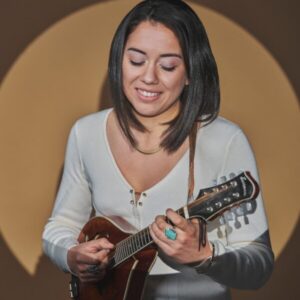
Eva Scow is an American mandolinist and violinist from Fresno, California. She began studying music at a young age, starting on the piano and violin at age 4, and later adding the mandolin at age 8. Growing up she played in Classical orchestras and bands, exploring different kinds of music from Bluegrass to Brazilian Jazz. She began playing professionally in high school, collaborating with different musicians/bands around the country.
At age 15 she recorded for mandolin pioneer David Grisman on his album ‘Tone Poets’. She was selected to perform at Carnegie Hall in 2006 for a Young Artist Spotlight alongside bassist Edgar Meyer. She recorded her debut album with guitarist Dusty Brough entitled ‘Sharon by the Sea’ (Adventure Music) in 2007. The album features influences, from Flamenco, Jazz, and Brazilian folk music. That same year she also recorded with jazz guitarist Anthony Wilson for his album ‘Power of Nine’ (2007). Eva has performed at the International Festival du Mandoline in Lunel, France (2010). She toured alongside country pop duo Attwater, opening up shows for Willie Nelson (2011). Eva has opened concerts for artists Poncho Sanchez, Lee Ritenour, and JJ Cale. She has recorded on numerous projects, ranging in styles from R&B, Country, Pop, and Jazz. Eva also teaches string orchestra and jazz education at the middle school level in Fresno, CA. Eva is a member of the contemporary jazz quartet Espacio, and the progressive funk group The Experience. She continues to play in numerous groups across California as a side-person, equally at home in the classical, folk and jazz idioms.
Evan Price
Violin
About
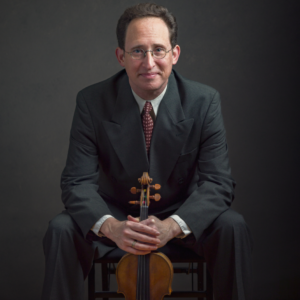
Evan Price is a versatile violinist and composer best known for his work with the paradigm-shifting chamber ensemble, The Turtle Island Quartet, and with The Hot Club of San Francisco, the most venerable gypsy jazz band in North America. A native of Detroit, Michigan, he grew up studying classical violin while mixing with folk and jazz musicians of all stripes, learning to fiddle and improvise in various styles as well as teaching himself to play numerous folk instruments. He also developed a love of chamber music and with it a taste for composing and arranging, greatly inspired by the early recordings of Turtle Island. He joined that group at age 24 and within a year was also playing with the Hot Club of San Francisco. In 2016, he composed and performed his first large-scale work, a Concerto for Jazz Violin and Orchestra, and recorded his debut solo album, “Dialogues.” Both reveal an artist with not only the ability to traverse far-ranging genres with authority but the maturity to assimilate them into a uniquely American voice. 2022 saw the premier of “Letters From Brno,” an award-winning documentary film featuring original chamber music by Evan. And in 2024, his concerto for two mandolins, “A Game Of Cat and Mike,” was premiered by the San Jose Chamber Orchestra with Mike Marshall and Caterina Lichtenberg, soloists. His current projects include leading his own jazz trio, continuing to perform with the HCSF, directing the International Space Orchestra, and performing with the San Francisco Ballet and Opera Orchestras. He is the recipient of 2 GRAMMY® awards for his work with Turtle Island.
Read MoreJeremy Wakefield
Steel Guitar
About
Jeremy Wakefield is a steel guitarist and composer living and working in Portland, Oregon. He first discovered the sound of the steel guitar coming out of a thing called a radio, on the kitchen table of his grandparents’ South Dakota home. Jeremy has recorded and performed live with a multitude of Western Swing, Country and Lounge artists , but is probably most known for his background compositions in the SpongeBob SquarePants series. He also enjoys writing descriptions of himself in the third person.
Read MoreJerron Paxton
Guitar
About
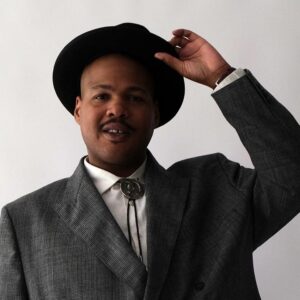
Born and raised in South Central Los Angeles, Paxton’s music is steeped in the rich cultural heritage of the Great Migration. His family’s journey from Shreveport, Louisiana, to the Athens neighborhood of South LA in the 1950s laid the foundation for his appreciation of Southern Black culture. As an only child, he spent much of his upbringing absorbing the culture his family had taken with them to California from the South. Paxton grew up very close with his grandmother, often shadowing her mannerisms and adopting them as his own. While Futurama or King of the Hill were on the family TV, he’d find himself sitting down with her, practicing banjo chords he’d heard on her favorite records. Since relocating from Los Angeles to New York City in 2007, Paxton has found an embracing audience within the city’s diverse cultural communities and vibrant music scene. He discovered that New Yorkers are sensitive to the kind of authenticity in storytelling that he was exposed to as a child.
Read MoreJonathan Stout
Guitar
About
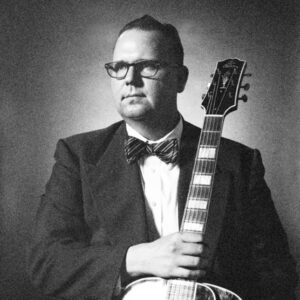
Los Angeles-based guitarist and bandleader Jonathan Stout is well-known to swing dancers everywhere for the wonderful dance orchestra he leads, but any fan of swing guitar currently stalking the internet knows him for the beautiful touch he brings to relaxed swinging versions of standards played chord-melody style on an array of prized old archtop guitars. One of the few guitarists working today who harken back to the era when acoustic chord-melody giants roamed the earth, his recordings and Swing Guitar Blog have increased people’s awareness of past masters like Allan Reuss and George Van Eps. During the past year Jonathan has given fans a welcome relief from the pandemic doldrums through his regular “front porch practice sessions”.
Read MoreKatie Shore
Faculty
About
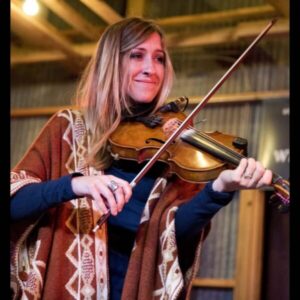
Like many fiddlers, Katie was inspired at a young age by her grandfather. At six years old she told her parents she wanted to “play music you can clap your hands and stomp your feet to”. Hailing from Ft. Worth “Cowtown”, Tx, Katie grew up playing in a world of strong fiddle traditions, attending fiddle contests, music camps such as Mark O’Connor’s and Johnny Gimble’s, and with some classical training, was part of the Ft Worth Youth Orchestra. After receiving an Associates Degree in Commercial Music in 2008, Katie moved to Austin, Tx. In addition to becoming a luthier and teacher, Katie leads her own project and has performed and collaborated with musicians including The Jitterbug Vipers, Continental Graffiti, Ghosts Along the Brazos, Willie Nelson, and George Strait. Inspired by many styles and cultures, Katie’s voice and fiddle have taken her around the country and abroad. Currently the female vocalist and fiddle player for 9-time Grammy Award winning band, Asleep at the Wheel, Katie looks forward to every new adventure and opportunity to sing and play!
Read MoreMatt Munisteri
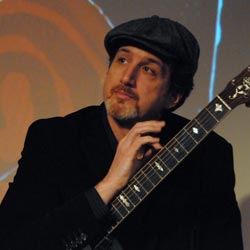
Artistic Director, Red Hot Strings
About
Guitarist, singer, songwriter, and Brooklyn native Matt Munisteri grew up with early interest in American folk music that led him from finger-style Country and Ragtime guitar, through Blues, to Tin Pan Alley and Jazz. His own compositions, and lauded guitar playing, accurately reflect this life-long immersion in the history of American Popular Song; linking rural and urban, long-gone with contemporary. As one of “New York’s finest vintage guitar stylists” (Downbeat Magazine), Matt is regularly called upon to play on a wide range of CDs, movie soundtracks, television shows, and commercials. He’s also worked with a wide range of artists in the studio and on the road. Over the past decade he’s worked regularly with violinist Mark O’Connor’s Hot Swing, Steven Bernstein’s Millennial Territory Orchestra, and the singer Catherine Russell, in whose trio he is the guitarist and music director. A sought-after accompanist, Matt has recorded with many of today’s most individual singers, including Holly Cole, Madeline Peyroux, Liz Wright, “Little” Jimmy Scott, Geoff Muldaur, Sasha Dobson, Catherine Russell, Kat Edmonson, and Loudon Wainwright. In addition to arranging for his own bands Matt has contributed arrangements to 5 of Catherine Russell’s CDs, and to Wainwright’s 2010 Grammy-winning CD “Hight Wide and Handsome – The Charlie Poole Project.” In 2014 he was a co-producer of his friend Julian Lage’s debut solo guitar CD “World’s Fair”. Matt has played every one of Carnegie’s Halls, but on the rare occasions that he’s not on the road, Sunday evenings find him crammed into a dim corner of a tiny watering hole on Manhattan’s lower west side, playing music with cherished musicians and friends as The EarRegulars.
Read MoreMaxwell Apra
Mandolin
About
Maxwell is a New Orleans-based, internationally recognized multi-instrumentalist performer and music teacher. Specializing in mandolin and banjo, Maxwell began his training in California and then spent several years busking professionally in New Orleans’ city streets and night clubs, integrating himself into a rich and diverse array of musical styles including jug band, ragtime, jazz and little-known catalogue of traditional Italian mandolin music. Maxwell’s dedication to exploring the origins of the music he plays has always been of central importance. His repertoire reflects a deep investment in reviving authentic performance idioms of historic musical styles. His attention and priority to referencing specific historical sound recordings lends him a uniquely attentive and intimate sound.
Read MoreMikiya Matsuda
Steel Guitar
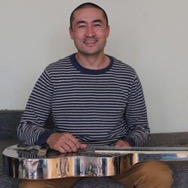
About
Mikiya Matsuda is a steel guitarist and sometimes string bassist living in San Francisco, CA. He is the leader of the Alcatraz Islanders, a swing-era Hawaiian group, and a regular sideman with various traditional jazz and western swing dance bands in the Bay Area. Mikiya graduated from Amherst College with a B.A. in music, studied privately with steel guitarists John Ely and Alan Akaka, but mostly learned (and continues to learn) the instrument by listening and playing along with old western swing, country, Hawaiian, and mainland jazz recordings.
Read MoreMolly Reeves
Guitar
About
Raconteur of song Molly Reeves is a performer and adorer of early 20th-century American music. Molly is known globally for her enigmatic approach to rhythm guitar and her ability to invoke the idiomatic tone and language of 1920s and 30s acoustic guitar players. A crooner by nature, her dynamic and warm vocal stylings echo popular singers and storytellers of yesteryear. Molly resides in New Orleans where she plays with The New Orleans Jazz Vipers, The Shake Em’ Up Jazz Band, Russell Welch Hot Quartet, and the Chloe Feoranzo Quartet in addition to leading her own projects. As a guitar instructor Molly is sought out for her creative and enthusiastic teaching methods and is a faculty member of the New Orleans traditional jazz camp.
Read MoreTyler Jackson
Tenor Banjo
About
Tyler Jackson is a world renown tenor banjoist and upright bassist. Under the tutelage of Buddy Griffin, Tyler quickly learned the ukulele, tenor banjo, and electric bass. Tyler went on to study the double bass at the University of North Texas under Lynn Seaton and began to fine-tune his skills as a professional bassist. During this period, he was asked to work for Ray Price and the Cherokee Cowboys. Touring with Price took him all over the world and to venues across North America including the Grand Ole Opry, Massy Hall, Radio City Music Hall, Gruene Hall, as well as the Stagecoach Festival, Austin City Limits Live and more. In 2007-09 Ray Price teamed up with Willie Nelson and Merle Haggard to form the highly successful “Last of the Breed” tour. Tyler worked with many well-known artists spanning genres including Earl Klugh, John McEuen, Randy Travis, Jim Cullum, and Dale Watson.
Read MoreWhit Smith
Guitar
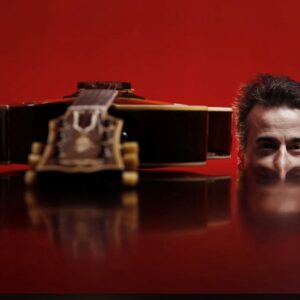
About
Whit Smith is a guitarist, singer, songwriter and founding member of the highly acclaimed Western swing trio, The Hot Club of Cowtown. He is known by guitarists for his driving rhythmic style, and for his ability to move through chord progressions employing endlessly creative variety harmonies. After nearly 30 years of vigorous touring, performing and recording, Whit has arrived at a style that pays clear homage to a variety of influential guitarists from the 1930’s and 40’s, while serving as the perfect vehicle for his own bracingly original ideas. His years with Hot Club of Cowtown have been vital to the creation of his unique style: “Playing in a trio setting left a lot of room to develop a bigger more animated sound, so through necessity I developed ways of harmonizing around the melody using double stops to make us sound like a much bigger band.” A native of New England, Whit has lived in several cities including New York and Tulsa before settling in Austin, Texas in 1997. He freely admits to suffering from Vintage Guitar and Amplifier Acquisition Syndrome.
Read MoreZoe Guigueno
Upright Bass
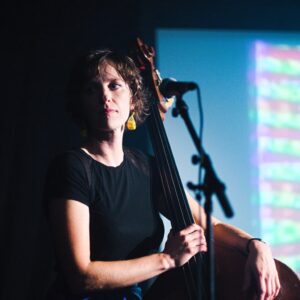
About
Zoe Guigueno (GIG-an-oh) is a bassist and songwriter headquartered in New York City. While jazz trained, she can also often be found playing klezmer, Americana, or indie-rock. She has performed with Steve Martin, busked in a pink gorilla costume, and played upright bass while whitewater rafting. Her most recent solo album, We Were Radar Stations, came out on Fiddlehead Records in October 2022.
Read More