Artistic Director
Jontavious Willis
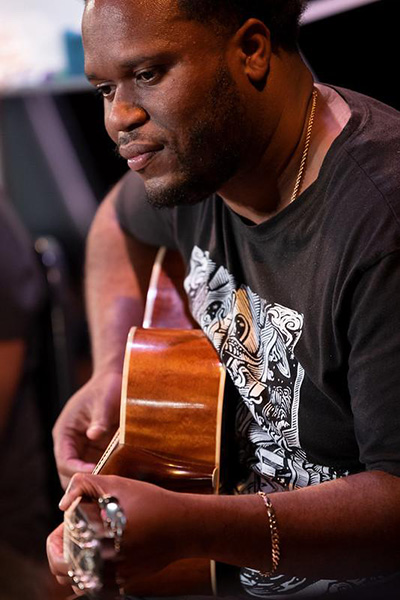
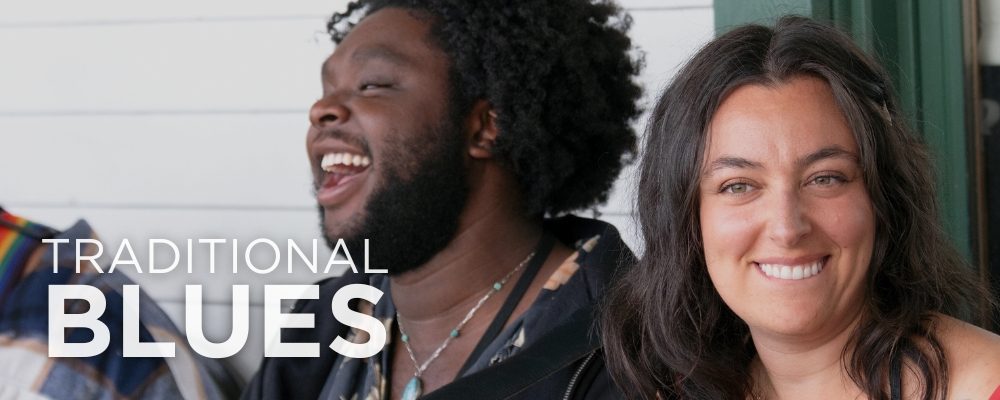
Jontavious Willis is a Grammy-nominated blues musician hailed as one of the most promising acoustic blues artists of his generation. With a deep respect for the traditions of Delta and Piedmont blues, Jontavious also brings a fresh, contemporary energy to his performances. As Artistic Director of the Traditional Blues program, he curates a diverse faculty to guide students in mastering traditional styles while encouraging them to find their unique voices.
Artist Faculty
2026 Artist Faculty
Alvin Youngblood Hart
Guitar
About
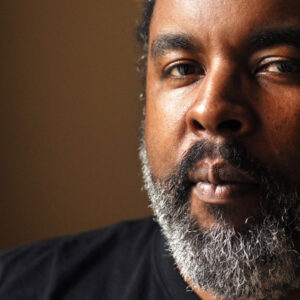
The cosmic American love child of Howlin’ Wolf and Link Wray… Known as a “musician’s musician,” Alvin Youngblood Hart’s praises have been sung by everyone from Bob Dylan to guitar gods Gary Moore & Mick Taylor. “Alvin Youngblood Hart is as good as you’ll ever hear ” – Bob Dylan 2022 from his book The Philosophy of Modern Song. “He’s the Real Deal” ~ Mike Campbell, 2022 External Combustion Support Tour. Mr. Hart was born in Oakland CA in 1963 to a family of post WWII Mississippi transplants. After a couple false starts, he began to play the guitar, in earnest, in 1977. “By that time, it had become obsessive competition among us teenage boys. The guitar was the video game of our day,” Hart says. The Hart family was never one to stay put. Spending his formative years on the West Coast, in the Midwest and the Mid-South surely influenced Alvin’s wide ranging musical perspective. “It really taught me to appreciate MUSIC for what it was… not because it was this or that genre. I have a great disdain for genre segregation. I try to avoid that practice”. Along with his 40 years of playing comes a nuts and bolts passion for the hardware of the trade. “I’ve been a guitar tinker since day one. I can recall my parents buying me a new guitar, and I would have every screw out of it by bedtime”. Hart is also an electronics technician, a talent he picked up after 7 years active duty in the U.S. Coast Guard. His knack for quick thinking repairs on the road has earned him nicknames such as, The Garage Guerrilla or The Rock N Roll MacGyver from fellow musicians. After two decades on road, Alvin continues to delight audiences worldwide, whether as a solo performer or with the eternally rockin’ Alvin Youngblood Hart’s Muscle Theory… The multi award winner always delivers. “When I was 15 year old kid in my room, I would never believe that would someday play legendary venues like the Hollywood Bowl or Royal Albert Hall. You couldn’t have told me that I’d be in the studio with Taj Mahal, or play onstage with the Allman Bros. Band and members of Thin Lizzy. Some days, it’s a dream job…” Read MoreAndrew Alli
Harmonica
About
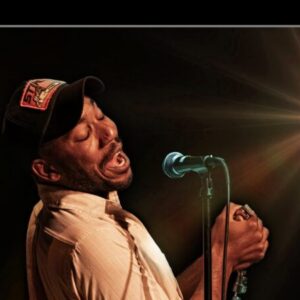
This Richmond, Virginia native was always passionate about music and stumbled upon the blues while taking up his first instrument, the harmonica. He instantly fell in love with the blues and committed himself to the harmonica. The harmonica has changed his life as he has been professionally and teaching all over the world. His sound has developed into a unique mix of traditional influences mixed with his own flavors of feeling and swing.
Read MoreBenjamin Hunter
Mandolin
About
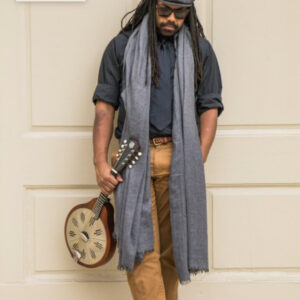
Benjamin Hunter is an award-winning multi-instrumentalist, composer, community activist, social entrepreneur, and educator. Benjamin’s work explores the intersections of music & art, community, policy, and culture.
Read MoreBilly Flynn
Guitar, Mandolin
About
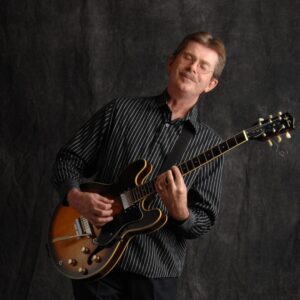
Born in Green Bay, WI, Billy was captivated by sounds from the start. In 1970 he turned 14 and “Clark Kent’s Super Joint” opened in town. A club destined to be open only briefly, the place was booked solid with blues musicians that changed Billy’s whole idea of music. Jimmy Rogers and Johnny Littlejohn, Mighty Joe Young, Luther Allison and Johnny Young were among the talents coming through. He was sitting outside one night when Jimmy Dawkins saw him sitting there with a guitar. He talked the club owner into letting Billy inside and even invited him up to jam. It was a new world. Billy’s jam that night with Dawkins was the beginning of a long relationship. Dawkins called him up in ’75 with an offer to join the band. He jumped at it, touring with Dawkins on and off for four years. Never willing to stick with only one musical avenue, Billy also played in home territory with Sunnyland Slim, Mighty Joe Young, Luther Allison, and others. In the early 1980s he became a regular member of the trio, “Jim Liban and the Futuramics,” an eight-days-a-week road band that wore any rough edges off his guitar chops in a hurry.
Read MoreChaz Leary
Washboard
About
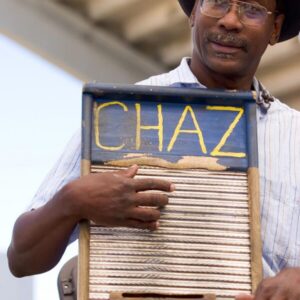
Though comfortable in all forms of our diverse American musical heritage, Washboard Chaz Leary has achieved dominance and international recognition in acoustic country blues. He has played professionally with an impressive array of world-class musicians, both on the stage and in the recording studio. His reputation as a consummate musician and performer – along with a delightful stage presence has brought him countless excellent reviews and wide popularity. Originally from New York, Chaz lived in Boulder, CO from 1975-1997, and played with a wide variety of bands including the legendary Ophelia Swing Band, Prosperity Jazz Band, BBQ Bob & Washboard Chaz, Judy Roderick and the Forebears, and Bleecker St. During this time, Chaz was a two time finalist in KBCO’s Boulder songwriting contest. Upon arrival in New Orleans in December 2000, Chaz established himself as a seasoned musician, forming his Washboard Chaz Blues Trio with Ben Maygarden on harmonica and Roberto Luti on slide guitar. Shortly afterward, Chaz joined Alex McMurray and Matt Perrinne on sousaphone to form the Tin Men, one of New Orleans’ most unique and recognized bands. Since then, Chaz has also played with the cream of New Orleans musicians, including the New Orleans NightCrawlers, The Iguanas, Tuba Fats, Royal Fingerbowl, The Jazz Vipers, the Tin Men, The Palmetto Bug Stompers and Washboard Rodeo.
Read MoreChris Wallace
Gospel Choir
About
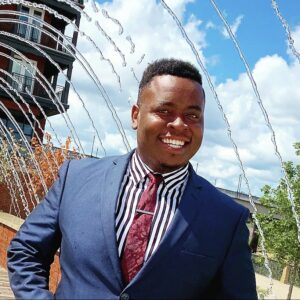
Chris Wallace, hailing from the small town of West Point, Georgia, has been immersed in music for as long as he can remember. Starting out at just 11 years old, Chris began playing music for churches, and it’s been his passion ever since. Currently, he serves as the Minister of Music at The Friendship Baptist Church in Columbus, GA, with past roles at Spirit Filled Ministries, Bethlehem Baptist Church, Asbury United Methodist Church, and Sightseeing Road Chapel at Fort Benning. Chris’s musical journey has put him on stage with some of the biggest names in the industry, including Shirley Caesar, Kirk Franklin, the Clark Sisters, and William Murphy. A true advocate for music education, Chris founded the Fountain City Battle of the Bands and co-founded the Columbus All-Star Marching Band. Chris has made his mark as Assistant Band Director and Band Director at William H. Spencer High School and as Choral Director and Band Director for Quitman County Schools. He also founded “The League of Extraordinary Musicians,” a platform to teach young people about music through piano and vocal training. In addition, he’s served as Director of Music for both the Columbus Interdenominational Ministerial Alliance and the Mount Calvary Baptist Association. Over the years, he’s led workshops and taught on local, state, and national levels, including at the General Missionary Baptist Convention. As a creator, Chris has produced six gospel albums, with his latest release, God Vibez, blending modern hip-hop and R&B influences with gospel music. Alongside his ministry work, Chris is also a vocalist for the globally acclaimed rock band, The Heavy. He’s toured the world, performing on iconic stages like Madison Square Garden, Coachella, and making appearances on shows like Late Night with David Letterman, Conan O’Brien, and The Daily Show with Trevor Noah. From Amsterdam to Paris to Berlin, Chris’s voice has echoed across the globe, making waves both in the gospel and mainstream music scenes.
Read MoreClinton Davis
Banjo
About
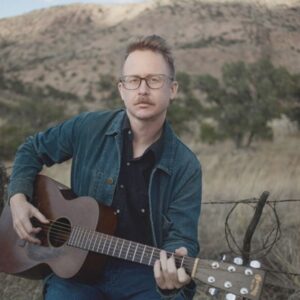
Clinton Davis is an old-time folk musician based in Southern California. A fifth-generation Kentuckian, Davis grew up in rural Carroll County. His repertoire spans fiddle and banjo music native to his family home, the exuberant ragtime piano and guitar of early 20th-century New Orleans, and ballad songs and dance music of the Southwest.
Read MoreCody Dickinson
Percussion
About
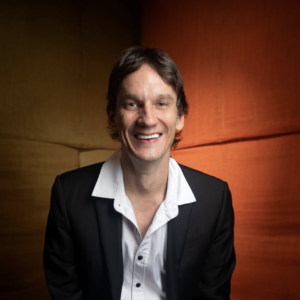
Cody Dickinson is a multifaceted artist whose journey through American roots music is deeply grounded in family heritage and a collaborative spirit. As a member of North Mississippi Allstars, which he co-founded with his brother Luther Dickinson in 1996, Cody has established himself as a Grammy-nominated musician, songwriter, producer, and filmmaker. His musical lineage traces back to his father, Jim Dickinson, a Memphis musical icon who worked with legendary artists like the Rolling Stones and Bob Dylan, providing Cody with an extraordinary musical foundation from an early age.
Read MoreCorey Harris
Guitar, History
About
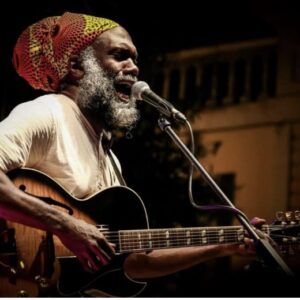
Corey Harris, a prodigious guitarist, vocalist, songwriter, and bandleader, was born in Denver, Colorado to parents from Texas and Kentucky. His musical journey began as a street singer in the vibrant city of New Orleans, and from there, he embarked on a transformative exploration of the blues throughout the southern United States. A year spent in Cameroon, West Africa during his early twenties had a profound impact on his artistic development, shaping his unique approach to the blues.
Read MoreDamon Stone
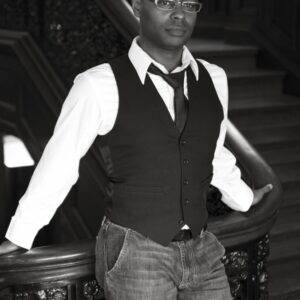
Blues Dance
About
Eleanor Ellis
Guitar
About
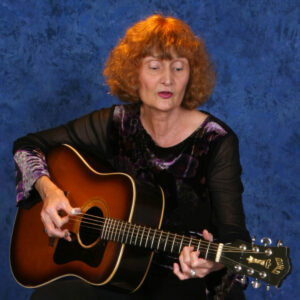
Eleanor Ellis, a native of Louisiana, has performed at clubs, festivals and concerts in the United States, Canada and Europe. She has also traveled and played with the late gospel street singer Flora Molton and bluesman Archie Edwards, and sometimes accompanied Delta Blues great Eugene Powell. She is a founding member of the DC Blues Society and the Archie Edwards Blues Heritage Foundation, has written about the blues for several publications, and is producer and editor of the video documentary Blues Houseparty, which features well-known Piedmont blues musicians such as John Jackson, John Cephas, and Archie Edwards. She also worked at the Archive of New Orleans Jazz at Tulane University in New Orleans, and at the New Orleans Jazz Museum.
Read MoreEthan Leinwand
Piano
About
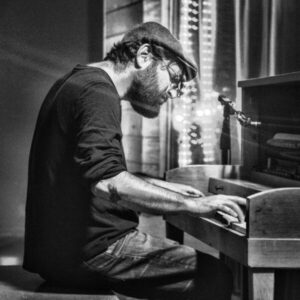
Ethan Leinwand is a St. Louis-based pianist who specializes in barrelhouse blues. A mostly self-taught pianist, he is a student of the music, and delights in bringing this lost art to life. His unique repertoire stretches from ragtime to boogie-woogie and tells the story of blues piano. Through performances, workshops, and an active YouTube channel, Ethan has gained world-wide recognition as a leading exponent of barrelhouse blues piano.
Ethan was born and raised in Middletown, CT and graduated from Wesleyan University in 2005. He began his music career in 2009, performing in bars, restaurants and nightclubs in New York City. He moved to St. Louis, MO in 2014 – a town with deep piano blues and ragtime traditions – and began collaborating with vocalist Valerie Kirchhoff (Miss Jubilee, The St. Louis Steady Grinders) and guitarist Nick Pence (The Bottlesnakes). In addition, he performs regularly with Georgia bluesman Jontavious Willis. He can be seen playing weekly in his hometown or in festivals across the United States and Europe.
Notable appearances include The Port Townsend Acoustic Blues Workshop (WA), The West Coast Ragtime Festival (CA), The Redwood Coast Music Festival (CA), The Savannah Music Festival (GA), The UK Boogie Festival (England), The Brooklyn Folk Festival (NY), The Scott Joplin International Ragtime Festival (MO), The LaRoquebrou International Boogie-Woogie Festival (France), and The University of Chicago Folk Fest (IL)..
George Aschmann
Violin
About
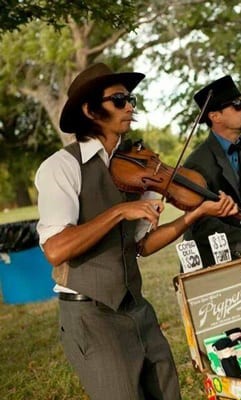
Among other musical endeavors, George plays violin and sings with the collective Frog and Henry, who’ve played the streets of New Orleans since 2013. They revive the music first made popular in the 1920’s and 1930’s in New Orleans, Chicago, and across the U.S., a mixture of jazz, jugband, stringband, blues, and popular songs. Most of the instruments are from the same time period.
Read MoreJason Ricci
Harmonica
About
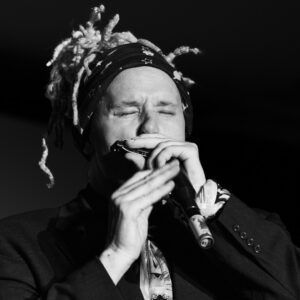
Jason Ricci born in Portland Maine USA is an award winning and decorated american singer and harmonica player. In his youth, Jason’s mother brought him to many live Blues shows in his early teens to witness performances of James Cotton, Charlie Musslewhite, Eddie Clearwater, Rod Piazza, Buckwheat Zydeco, Marcia Ball and many more.
In 1995 Ricci moved to Memphis Tennessee to be near and informally study with Johnny Winter sideman, harmonica player and singer Pat Ramsey. Ramsey would become Jason’s mentor on and off stage and a surrogate father for many years until his death. Also in 1995, a 21 year old Jason would win the Sonny Boy Blues Society Contest in Helena Arkansas, Michael Burks took third place in that same contest. By 22 Ricci was living in Potts Camp Mississippi with Junior Kimbrough’s oldest son David Malone Kimbrough. Every Sunday for over a year Ricci played Juke Joints and small clubs in Oxford, Senatobia and Holly Springs MS with David Kimbrough, RL Burnside and Junior Kimbrough.
Ricci would cut his first record in 1995 “Jason Ricci” (self Titled) for Blues Music Award Winner Billy Gibson’s label North Magnolia Music featuring Earl Hookers drummer Bobby Little and other prominent Memphis musicians. A year later for the same label Jason recorded his second release “Down at the Juke” with Kent “Kinny” Kimbrough, Eric Deaton, Enrico Crivellaro and many more notable musicians. Ricci would return home to Maine a few times and perform with his friend of the same age, the now legendary guitarist and singer Nick Curran.Ricci would cut two critically well received albums and tour with celebrated New York City singer songwriter JJ Appleton. In addition to recording and touring with Appleton by 2013 Ricci also formed a new band “Jason Ricci and The Bad Kind” with New Orleans guitarist John Lisi. Signing with The Eller Soul Label Jason Ricci and The Bad Kind would cut two records “Approved By Snakes” and “My Chops are Rolling“. Working with Appleton, The Bad Kind and occasional tours with Alligator recording artist and Chicago Blues icon Nick Moss would mark the start of a successful return. By 2015 Ricci was nominated and won another Blues Music Award for Best Harmonica. Also in 2015 Jason Ricci was invited to induct The Paul Butterfield Blues Band into the Rock and Roll hall of Fame. At the Rock and Roll Hall Of Fame Ricci would appear televised on HBO for twelve and half million viewers performing Butterfields song “Born In Chicago” with Zac Brown, Rage Against The Machine’s Tom Morello, Paul Shaffer, Anton Fig, Felicia Collins and Willie Weeks. The same yearJason Ricci would go on to work with and record on Johnny Winter’s Grammy Award Winning recording “Step Back” as a featured performer alongside Eric Clapton, Joe Bonamassa, Dr John, Brian Setzer, Paul Nelson, Joe Perry, Ben Harper, Billy Gibbons and more.
Kelsy Lynn Stone
Blues Dance
About
Lakota John
Slide Guitar
About
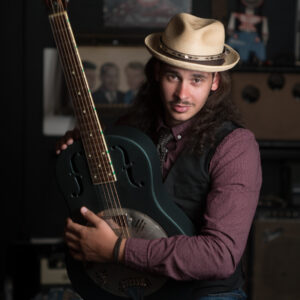
Lakota John is a musician, producer and songwriter from Southeastern, North Carolina. Influenced by his dads music collection, he picked up the guitar at 7 years old and learned to play left-handed as well as slide guitar in standard tuning. Lakota John blends styles of Folk, Blues, Rock & Jazz with various instruments while mixing in part of his Indigenous heritage with sounds of the Native American flute.
Lakota John received two scholarships in 2008 and 2009 to attend Centrum’s Acoustic Blues Festival in Port Townsend, WA. There he participated in a week of guitar workshops and jam sessions, learning in the classrooms of blues masters. In 2009 he began working with Music Maker Relief Foundation, performing as one of their Next Generation Artists. While learning alongside older Bluesmen, Lakota John began to broaden his musical abilities, while incorporating sounds of American Music.
Lakota John released his first album, “Old Bluez That’s Newz to Me,” in 2009. In 2013, Lakota John & Kin released a self-titled album. In 2017 Lakota John released a solo album, called “The Winds of Time,” on the International Artists label.
Lakota John was nominated for an American Music Award for Best Blues Recording. He won a Carolina Music Award in the Best Americana/Bluegrass Category, as well as first place in the 2019 Road to Memphis PBPS Blues Challenge Solo/Duo Competition.
Lakota has opened for, or shared the stage with Joe Bonamassa, Jimmy Vivino, Josh Smith, Native artists Pura Fe, Cary Morin, Keith Secola, American Songster Dom Flemons, and Taj Mahal to name a few. He tours nationally and internationally, including selected performances at the John F. Kennedy Center and the Library of Congress in Washington, D.C., in addition to repeated performances throughout the world.
Read More
Lightnin’ Wells
Ukulele, Guitar
About
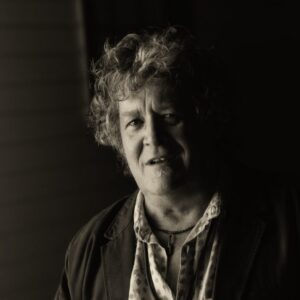
Mike “Lightnin'” Wells breathes new life into the vintage tunes of the 1920s and depression era America employing various appropriate stringed instruments in a dynamic style which he has developed in over 50 years of performing experience. Raised in eastern North Carolina, Wells learned to play harmonica as a young child and taught himself to play the guitar as he developed a strong interest in traditional blues and folk music. His many years of public performance began in Chapel Hill, N.C. in the early 1970s. During the following decades he has presented his brand of acoustic blues throughout North Carolina, the United States and Europe.
Read MoreLloyd Buchanan
Gospel Choir
About
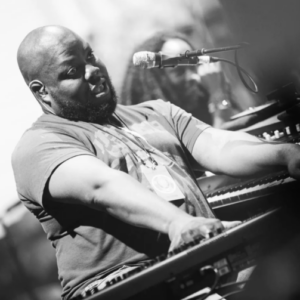
Lloyd Buchanan’s musical roots run deep in Gospel and Blues. His love for the Hammond organ began early, playing alongside his mother in church. This foundation led him to formal studies at LaGrange College, where he honed his skills in jazz improvisation under the guidance of renowned pianist/composer Randy Hoexter and guitarist Trey Wright.
Read MoreMara Kaye
Voice
About
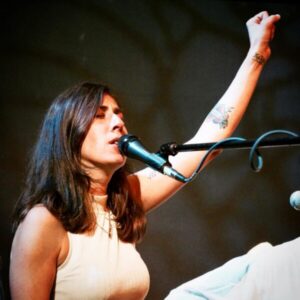
Referred to by Jazz Lives as “one of New York’s great gifts to the world,” blues and jazz vocalist Mara Kaye is “like some lost pocket of the blues that had never been explored in the old days, all wrapped up in a ball of 21st-century Brooklyn-bred attitude.” For over a decade she has traveled internationally and throughout the US, sharing legendary stages with champions of the genre, singing beloved songs of the past with a deep passion and respect for its original storytellers. Imagine a new artist with deep roots, one with the emotional power and swing of Billie Holiday, the deep-blue sorrows and joys of Bessie Smith, all the while leavened with Brooklyn spice. Her heart is in her music and there is no pretense, no distance as audiences from Moscow to Lincoln Center have found out. Mara’s voice has been compared to “Louis Armstrong’s trumpet at a rent party” by blues legend Jimmy Vivino and praised by The Wall Street Journal as proof that things are getting better. Her debut EP, It Had to Be You, recorded straight-to-tape by Bigtone Records, was released in February of 2022 and features incomparable piano legend, Carl Sonny Leyland. Mara will be accompanied at the gathering by Tim McNalley, is a multi-instrumentalist, composer, and songwriter from Southern California. While most commonly seen on the upright and electric bass, he also performs, records and tours on guitar, cello, mandolin and sitar- a breadth that has allowed him the opportunity to collaborate with artists such as Ariana Grande, Lianne La Havas, Changuito, Steve Grand, Miguel Atwood-Ferguson, Lianne La Havas, lostboycrow, Juanita Stein, Aashish Khan, Earl Thomas, Jim Kweskin, Burt Turetzky, and more.
Read MoreMark Puryear
Improv, Blues Talks
About
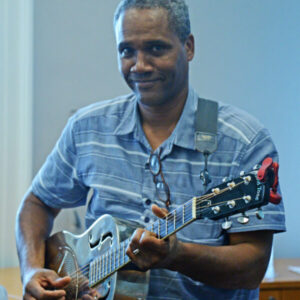
Mark Puryear is a musician, ethnomusicologist, and curator. For the Smithsonian Folklife Festival, he curated the 2011 Rhythm and Blues: Tell It Like It Is program as well as the Freedom Sounds event that celebrated the opening of the National Museum of African American History and Culture. He was nominated for a Grammy for producing the Smithsonian Folkways album Fannie Lou Hamer: Songs My Mother Taught Me.
Read MoreRicky Nye
Piano
About
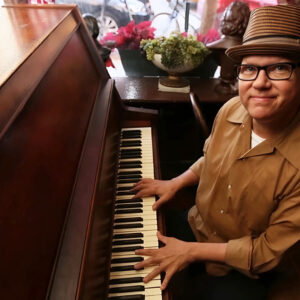
Ricky began his performing career at age twelve with his family’s band, and in his twenties and thirties established working relationships and friendships with artist such as world renowned jazz guitarist Wilbert Longmire, Cincinnati blues icons Big Ed Thompson, H-Bomb Ferguson and fellow pianists Big Joe Duskin and Pigmeat Jarrett.
Read MoreRodrigo Mantovani
Bass
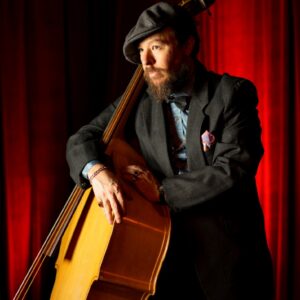
About
Born and raised in Brazil, Rodrigo has always had a deep love for American blues and roots music from a very young age.
Read MoreSunpie Barnes
Accordion
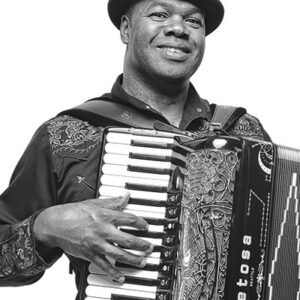
About
Bruce Sunpie Barnes is a veteran New Orleans musician, former Park Ranger with the National Park Service for 30 years, actor, photographer, book author, former high school biology teacher, former college football All-American, and former NFL player (Kansas City Chiefs). Sunpie Barnes’ many careers have taken him far and wide. He has traveled to over 50 countries playing his own style of what he calls Afro-Louisiana music incorporating Blues, Zydeco, Gospel, Caribbean and African influenced rhythms and melodies. He is a multi-instrumentalist, master accordion and harmonica player, also piano, rubboard, talking drum, and dejembe. He learned accordion from some of the best Zydeco pioneers in Louisiana including Fernest Arceneaux, John Delafose, and Clayton Sampy. Along with his musical group Sunpie and the Louisiana Sunspots, he has performed at festivals and concerts across the US and around the globe. Sunpie has recorded 6 critically acclaimed CDs with his compositions currently featured in 16 Hollywood film productions.
Read MoreTevis Hodge, Jr.
Guitar
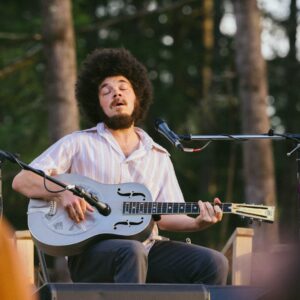
About
Born in Virginia, and inspired by his southern black heritage, Tevis began playing blues at the age of 12 years old, though he first started guitar at the age of six. With a deep love for Black American music, Tevis is compelled to bring the traditions of his heritage to life.
Read MoreTim McNalley
Vocal Support
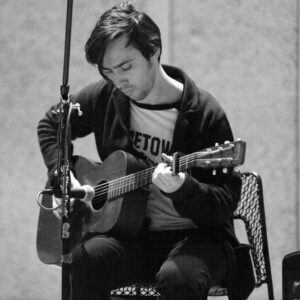
About
Tim said he didn’t have much interest in music until he started playing it. Because his dad (bassist Joe McNalley) is a musician, he was always around it, went to concerts all the time and was “tripping over upright basses his whole life.”
Tim started playing the electric bass and guitar at the same time when he was twelve. He had a good friend who was doing Band Camp in Encinitas. He was playing guitar and said Tim should play bass. He had never thought about music seriously, and when he went home and told his dad his dad said, “Great! Here’s an electric bass, here’s an amp, here’s a cable, here’s everything you need.” He also started playing guitar that week as well.
Workshop
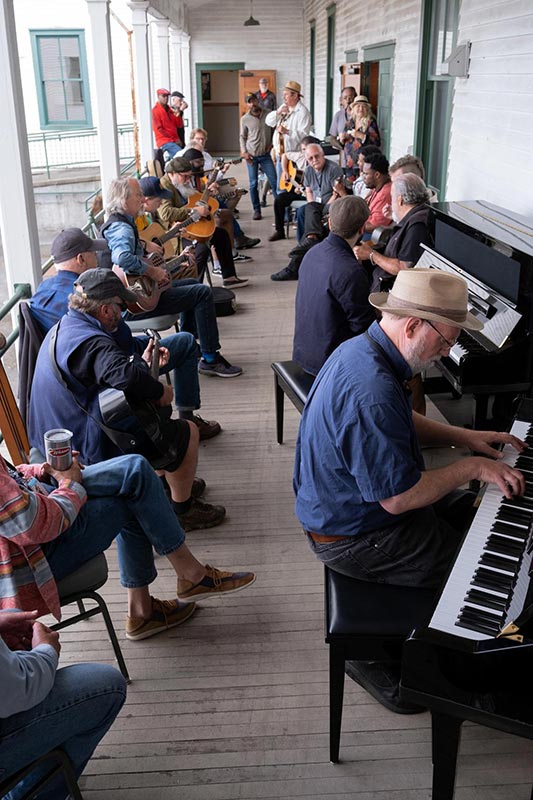
Participants learn “knee-to-knee,” in intimate sessions with diverse instruments and artist faculty. Daily classroom instruction covers traditional blues, performance, history, songs, and styles, as well as technical skills and how to play well with others. Afternoons include discussions on relative topics. Each evening, participants enjoy faculty concerts, chats, jam sessions, and house parties.
Most artist faculty teach two one-hour instrument sessions daily. Sessions are in various styles and techniques and focus on certain traditional methods. Instrumentation includes guitar, harmonica, piano, mandolin, violin, bass, banjo, ukulele, washboard, voice, steel guitar and accordion. Classes are also offered in performance, improv, ensembles, and a gospel choir that gathers in the afternoon.
FIRST DAY:
4–5:30pm – Check-in, Centrum office
6–8pm – Dinner
8pm – Orientation
TUESDAY-FRIDAY:
Most artist faculty teach two one-hour instrument sessions daily, Tuesday through Friday. Sessions in various styles and techniques focus on certain styles and tradition bearers. Instrumentation includes guitar, harmonica, piano, mandolin, violin, bass, banjo, ukulele, washboard, voice, and accordion. The Gospel Choir gathers late afternoons. Evenings include events and performances, planned and spontaneous jams.
FESTIVAL
At the end of the week, the artist faculty take to the stages and share in performance a festive celebration of the traditions they carry as well as their own music and style. Friday and Saturday nights, our legendary Blues in the Clubs series hosts a variety of intimate stages, where each artist gives their own unique performance. We’ll host a show or two in McCurdy Pavilion, a former blimp hanger turned performance space, break bread together, and have a really good time basking in and soaking up the traditions passed along at the gathering.
Gospel Choir
CENTRUM Traditional Blues GOSPEL CHOIR
2026 Registration for Gospel Choir is full.
Lloyd Buchanan and Chris Wallace return to direct Centrum's Gospel Choir. Both gentlemen are musical directors of their respective Baptist churches in Georgia, USA. We were very honored to host these gentlemen and thrilled to hear the sounds of your voices in concert after a week under their direction!
You can take the Gospel Choir track exclusively and receive admission to the gospel class Tuesday through Friday, and all evenings in Building 204, through Thursday. The choir performs on Saturday at the USO Hall. Gospel tuition includes admission to the Saturday afternoon mainstage concert and Wednesday dance at the McCurdy Pavilion. Gospel tuition does NOT include Blues in the Clubs or other public events.
Gospel Choir is available for youth however, anyone under the age of 18 must attend with a registered participant or registered guardian over the age of 21. Registered Traditional Blues participants can participate in the Gospel Choir at no additional fee.
In 2026, the Gospel Choir will meet daily starting Tuesday, July 28 through Friday, July 31 from 3:00pm to 5:00pm in the USO Hall and perform at 11:00am on Saturday, August 1 at 11:00am in the USO Hall.
Join us and lift your voices on high!
TRADITIONAL BLUES DANCE
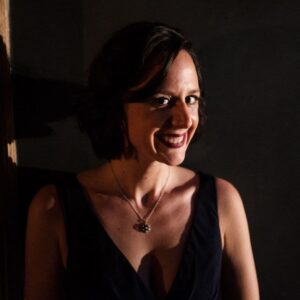
2026 Centrum Traditional Blues workshop welcomes the return of Traditional Blues dancers Damon and Kelsy Lynn Stone! In addition to offering Traditional Blues musicians fun approachable dances during a drop-in session each evening this year, Damon and Kelsy Lynn are offering a full Traditional BLUES DANCE TRACK for those of you who… just want to dance!
TRADITIONAL BLUES DANCE
Traditional Blues dancers purchase a week-long pass, (similar to the Gospel Choir track at Traditional Blues).
Dance track includes 4-hours of dance instruction each of 4 days. One 2-hour session each morning and one 2-hour session each afternoon.
Early evenings Damon and Kelsy Lynn will offer a half-hour, beginner-friendly, drop-in dance class open to Traditional Blues musician participants. On Wednesday, this class will be taught before the public dance at the McCurdy Pavilion. These sessions will offer fun, approachable dances to get folks comfortable moving to the music. Traditional Blues Dance students are encouraged to attend these nightly lessons to help our musicians feel comfortable as well as provide the opportunity for them to dance with experienced dancers.
Each evening Blues Dancers will have access to events and live Traditional Blues music during the week in Building 204, making for a unique and rich experience with highly acclaimed instructors in a blend of two Traditional Blues communities.
Traditional Blues Dance tuition includes admission to the Wednesday dance and Saturday afternoon mainstage concert at McCurdy Pavilion and Blues in the Clubs on Friday and Saturday nights. Sessions will run days Tuesday July 28 through Friday July 31, 2026. Exact times TBD
This workshop has a maximum of 100 participants.
CLASS DESCRIPTIONS
2026 Traditional Blues Class Descriptions
Rodrigo Mantovani - Upright Bass for Country Blues
This course focuses on the essential techniques and musical concepts needed to play upright bass in traditional country blues and early acoustic blues styles. Through practical examples and listening, students will learn how to create solid, driving bass lines that support the groove, and spirit of the music.
Topics covered include:
- Right-hand techniques, including traditional plucking and slap bass.
- Developing time and groove, in two-beat, shuffle, and walking feels.
- Ear training for blues bass players: learning to recognize chord changes, bass movements, and traditional patterns by listening.
- Common blues song structures, including 12-bar blues, 8-bar forms, and variations used in country blues.
- Building bass lines that support singers and guitar players.
- Dynamics and tone production on the upright bass.
- Listening and stylistic analysis of classic country blues and early acoustic blues recordings.
- Playing in acoustic ensembles, learning how the bass interacts with guitar, harmonica, and vocals.
Damon and Kelsy Stone - Blues Dance
- Good Time Tonight
Blues music was the party music of its time, and the idiom and freestyle dances were the accompanying party dances. We'll work on how to channel that party vibe in our dancing and learn how to get out of heads and let the music move us.
- The Slow Drag
The first known and most versatile social partnered dance to Blues music, the Slow Drag, was done from New Orleans to Chicago, from New York to Los Angeles, from the late 19th century to nightclubs and bars today. We'll go over the most basic elements that define the dance and explore how it changes from place to place and from decade to decade.
- The Dances of the Jook Joints: Knees and Hips
Jook Joints were Black social centers originating in the rural South. The place to be for filling food, cheap drinks, a card or dice game, camaraderie, companionship, and music; jook joints were also a hotbed of innovation for dancing. In this class we'll look specifically to the hip and knee centric dances like, the Mooche, Grind, Fish Tail, and Knee Rock.
- The Dances of the Jook Joints: Fancy Feet
Jook Joints were Black social centers originating in the rural South. The place to be for filling food, cheap drinks, a card or dice game, camaraderie, companionship, and music; jook joints were also a hotbed of innovation for dancing. In this class we'll look specifically to the foot centric dances like, Tick-Tocks, Heel-Toe, Shuffle, Camel Walk, and Sand.
- Barrelhouse, Stride and Boogie
Rolling rhythms, light-hearted playfulness, and thunderous jams- this class will focus on footwork, internal rhythms and, always staying cool as we dance to Pinetop's piano blues.
- Cross Road: Blues Fundamentals
Blues dances as an improvisational folk-art form depend on a shared set of value-based rules that define the grammar and vocabulary of the language of Blues movement. In this class we'll teach the rules that will give you a foundation to build your Blues dances upon.
- Memphis Movement
This class will focus heavily on the dances popular on and off Beale St. We'll cover how the Black urban residents of Memphis and the Black rural residents of its outlying areas shared music and movement from jook joints to backroom clubs and some of the styles of dances that came out of this cross-pollination.
Ricky Nye – Blues Piano
Fundamentals of Boogie Woogie, left-hand patterns and right-hand vocabulary; Blues piano building blocks. Insight into New Orleans style approach to piano. Nuts and bolts approach to music theory. Historical information and stories provided as part of the experience. Ricky encourages attendees to bring a notebook, and to make video clips to study afterwords. Ricky welcomes attendees to email him if they'd like to touch base ahead of time rickynyepiano@gmail.com
Mark Puryear - Blues Improvisation Techniques
The sessions will explore techniques and skills for blues improvisation. Employing select blues forms including 8 and 12 bar blues, participants will explore the importance of phrasing, timing and rhythmic accuracy to develop improvisational skills useful in refining one's playing and jamming ability. The sessions will focus on active listening and playing with other musicians. And sessions will focus on expanding the participant's melodic, harmonic and rhythmic ear. When talking, we use pitch, tone, and rhythm fluidly to enhance our verbal communication. With practice, improvising, in traditional blues music, one can employ similar techniques to develop a personal style. Appropriate for all instruments at the advanced beginner to intermediate level.
Lightnin’ Wells - Ukulele Techniques
In this class we will deal more with techniques to improve or add new tricks to your ukulele skills. Again, ukes should be tuned in the C tuning (G-C-E-A). We will cover various strumming techniques associated with the uke including the basic strum, the double strum and the triple strum as well as sliding to chords. We will introduce finger picking and teach an exercise to make this technique familiar and adapt it to fit in every key. Introductions and outros introduced by past uke master’s as Roy Smeck and Johnny Marvin will be taught in the key of F and we will employ its use in several uke tunes. We will also learn several vintage uke tunes from the roaring 20s to help demonstrate how these ukulele techniques can be put, to use. Finally, an entertaining as well as instructional film compilation of ukulele players dating back to the 1920s will be presented where we can observe first-hand how it was done in years gone by.
Lightnin’ Wells - Vintage Tunes for the Uke
In this class, we will be dealing with the mainland style of uke which was made popular during the jazz age during the 1920s. Ukes (soprano, concert or tenor) tuned in the C tuning (G-C-E-A) are OK for this class; baritones are not. We will learn some ageless tunes mostly from the 1920s from the time when uke was king in America. Examples may include:
- Love Songs for the Uke (It Had to Be You – Sweet Someone – Baby Face – A Garden in the Rain – ‘Deed I Do – Ain’t Misbehavin’)
- Blues Songs for the Uke (The Blues Ain’t Nothin’ – ‘Lassas Blues – Crazy Blues – Waitin’ for the Evening Mail – Am I Blue? – Sweet Georgia Brown)
- 1920s Songs About the Ukulele (Ukulele Lady – Ukulele Baby – Crazy Words, Crazy Tune – Oh, How She Could Play a Ukulele)
- Novelty Songs for the Ukulele (It Ain’t Gonna Rain No Mo’ – Who Takes Care Of The Caretaker’s Daughter – Old Uncle Bill – Doodle Doo Doo – Insufficient Sweetie)
Handouts will include revised vintage sheet music sheets with lyrics and chords, making it easy to learn these pieces and take home for further practice and enjoyment. Different songs will be taught each day.
Jason Ricci - Harmonica
Open to all ability levels, recording, photographing and note taking are strongly encouraged and recommended. Participants are encouraged to bring recording devices, note pads and at least one harmonica in the key of C. If there are things you don't understand, these recordings and notes together may be very valuable later as you progress. Interactive classes will focus on the following topics (no prerequisite music theory is needed). We will learn as we go.
I: Playing Alone (Being your own Band)
- A.) Tone, achieving single notes, embouchure, rhythm, bending and overblows.
- B.) Root notes, what are they, why are they important? Understanding 12 bar blues structure with three simple root notes. Timing and phrasing to be able to jam, with yourself in a basic simple structured form with just a few notes.
- C.) Listening, incorporating licks/riffs into improvisation and the importance of playing without and learning what the band is doing. Understanding blues as a language.
- D.) Developing practice routines.
- D.1:) Music as a way of life regardless, if you are a hobbyist or inspiring professional. K. Anders Erikson and Deliberate Focused Practice.
II: Basic Harmony (Chords and More)
- A.) Scales. Major Pentatonic, Minor Pentatonic, Blues and more. The difference between major and minor music, cords and scales.
- A.1:) What's important about learning and practicing scales? How to practice them. Where and when to use them and how.
- A.2:) Scale Exercises: Breathing, Patterns, International and more.
- B.) Major Triads and 6th and 7th Chord Arpeggio and more.
- C.) Minor Chords and how to play them.
- D.) Approach Tones, enclosures, chromaticism and very basic jazz improvisational approaches to blues improvisation.
III: Harmonica Positions.
* 1st Position / * 2nd Position / * 3rd Position / * 4th Position / * 5th Position / * 12th Position
IV: What are modes and modal Playing?
- A.) How do modes relate to harmonica positions and do they have to?
- B.) Modes as scales or hacks/shortcuts to harmony and choosing them for different music.
- C.) Harmony and Modes together!
V: Playing with a band or duo.
- A.) Comping or leaving spaces with singers, respect, listening and etiquette.
- B.) Gear and more. What do I or don't I need to jam or join a band:
- B.1:) Microphone
- B.2:) Pedals
- B.3:) Amplifiers
- C.) Busking
* Q & A is encouraged THROUGH OUT and students are ENCOURAGED to interrupt with raised hands and any questions at ANY time in any of the presentations. I’m Italian from a NYC Italian family I’ll ask if there are questions, but interrupting is GOOD and not an interruption just a further clarification to whatever subject we're on.
Mara Kaye - Sourcing from The Well: A Storyteller's Guide to Singing the Blues
Through the brave and transformative act of singing, students will learn how to connect to the stories of the songs they love and free their voices in the process. We will be using the works of some of the greatest traditional blues singers as our guide to explore the richness and depth of storytelling through song, phrasing, lyric coloring and space. These classes encourage singers to dig deep into their well, to find their own voice, love their own voice, and sing the stories of their soul with a grounded sense of connection.
Singing has shown us to improve our health and happiness. An experience of expression that not only brings us closer to our own pathway to joy but sharing the experience of singing together as a group creates an increased sense of community and belonging.
Students should come prepared with a blues song of their choosing that they feel connected to work on in class. Live guitar accompaniment by Tim McNalley
Eleanor Ellis - Acoustic Blues Repertoire
One reason I'm drawn to old-time acoustic blues is because no matter what the song or who the musician, you can almost always find something unique or peculiar or interesting going on, whether in the subject matter, the structure of the song, the guitar accompaniment, the style of the singer or a combination of the above. We'll find and learn some interesting songs from the acoustic country blues tradition, songs which you can play as is or adapt to your own style and make your own.
Eleanor Ellis – Blues Guitar in Dropped D Tuning
Alternate tunings can be a useful way to get fresh ideas for arrangements, voicings, and sounds on the guitar, and this simple tuning has been used by many blues musicians and works well with many styles of music. We'll begin with an overview of the tuning - basic chords, turnarounds, intros etc. and will put these elements together to learn songs from musicians such as Tommy Johnson, Ragtime Henry Thomas, Pink Anderson etc.
Andrew Alli – Beginning Blues Harmonica
Getting going with the basics. This class focuses on establishing good harp habits and approaches without being overwhelmed. Key of C and A harp.
Andrew Alli – Intermediate Blues Harmonica
Meat and Potatoes: Thickening up your sound with layers and technique. Key of A harp
George Aschmann – Blues Violin
The blues violin course will be a three-part workshop focusing on blues fiddle tunes, song melody playing, and improvisation. We will be flexible in how much time we spend on each of these subjects depending on the interests and levels of participants.
- Blues fiddle tunes
Learn one or several tunes that fall into the “blues” style of fiddling, focus on styles, technique, note choice, and variations-introducing the idea of micro improvisation
- Song and melody playing
Learn the melody to a song from the 1920s/30s, learn to back up a vocalist, solo around the melody-also micro improvisation. Think Mississippi Sheiks style…
- Improvisation
If there is time at the end of the week and students are interested, we will continue to build on the idea of micro improvisation and move toward improvising in a Blues-oriented style over songs that allow more freedom…a blues progression or simple jazz tune in the 1920/30s style.
Sunpie Barnes – Accordion
Sunpie will teach his unique mixture of zydeco, Blues, gospel, jazz, and African and Afro-Caribbean music into a musical gumbo that he dubbed “Afro-Louisiana” music.
Clinton Davis – Ragtime Guitar
Ragtime guitar, both classic and barrelhouse styles, from players like Pink Anderson, Blind Blake, Willie McTell, and Luke Jordan.
Clinton Davis – Blues Banjo
Incorporating standard blues ideas, such as turnarounds, intros, and endings. Use of 7th chords, 12-measure rhythm patterns, playing with a shuffle beat, a swing feel, or even the “banjo bounce.” 8th notes have a little more separation than normal when playing with a shuffle. Incorporating rhythm ideas from guitar, blue notes in your leads, anticipating the beat, beginning or ending on the "and" of the beat.
Cody Dickinson –Blues Percussion on a Pizza Box
Blues drumming with brushes on pizza boxes, shuffles, swing and regional styles of Mississippi, Little Rock, Tennessee, Chicago and the Delta.
Billy Flynn – Chicago Blues Guitar
Based on earlier blues idioms, such as Delta blues, but performed in an urban style more codified, elaborate and plugged in.
Billy Flynn – Blues Mandolin
In the hands of the black string band performers, the mandolin was there to nurture the infancy of ragtime and blues. Inspiration to composers Scott Joplin and W.C. Handy, the mandolin helped to shape blues, folk, and bluegrass music. We'll go over some of the roots of the instrument and how it shaped country and urban Blues.
Dr. Corey Harris – Country Blues Guitar
With deep reverence for Delta and country Blues, blended with his ethnographic exploration of African guitar styles, traditional acoustic fingerstyle playing, slide & alternative tunings, Corey bridges the gap between American blues and West African music by incorporating traditional Malian guitar and kora-style picking into Country Blues guitar.
Dr. Corey Harris – Race Records
The 1920s witnessed the rise of modernism combined with unprecedented technological progress. The phonograph ushered in a new wave of entertainment possibilities, and the rise of the Black consumer opened the eyes of the phonograph companies, and each had a "race music" label. For the first time, Black audiences were provided with music that was relatable and without the demeaning baggage of minstrelsy. Dr. Corey Harris will walk us through the history of the phonograph and Race Records as it was and as it stands today.
Alvin Youngblood Hart – Country Blues Guitar
Blending the raw Delta acoustic tradition with 1960s/1970s guitar rock, western swing, and traditional country. Alvin will be teaching his faithful renditions of historical blues artists like Lead Belly, Sleepy John Estes, and Charley Patton.
Benjamin Hunter – Blues Mandolin
We’ll look at building blocks of the Blues, the classic blues progression, several easy shuffle patterns and a couple of turnarounds and ending licks that are staples of the blues sound.
Benjamin Hunter – Jam Band Etiquette
How to step into the Jam, feel the rhythm, hear the form, find the key, know when and where to jump in, when to take a lead, when to comp, when to lay back, when to sit out and not to play at all. Once you understand the norms, it is easier to relax into the music and have a good time playing with a community of fellow musicians.
Lakota John – Slide Guitar in Standard tuning
Both beginning slide (not beginning instrument) and intermediate slide sessions will be offered.
Tevis Hodge Jr. - National Resonator Guitar
How the Blues got to the West Coast
Tevis Hodge Jr. - Jug Band Lab
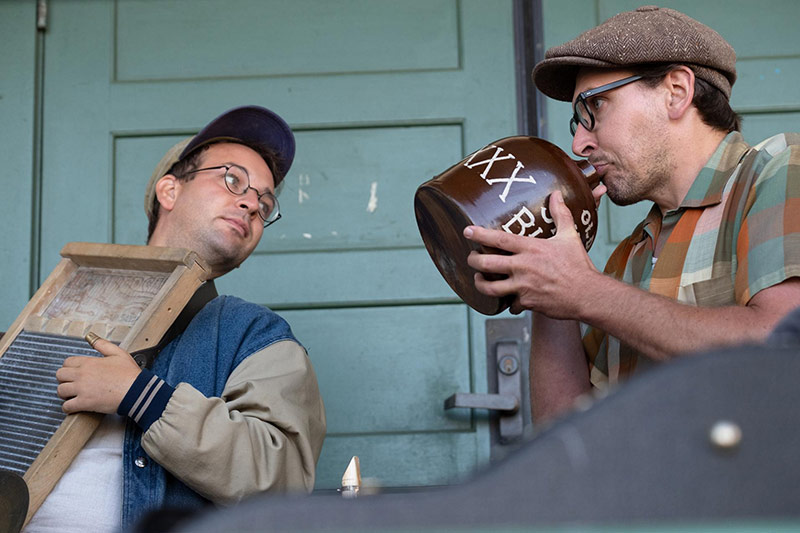
Bring your jug, your banjo, your washboard, your guitar, your mandolin, violin, ukulele, bass, tuba, trumpet, kazoo or your beautiful full-throated voice and let's make some jug band music! The Jug Band will perform their prepared tunes on Saturday before the showcase.
Washboard Chaz Leary - Washboard Percussion
For folks of all levels, whether you want to play polyrhythms at jams, want to add another percussive instrument to your skills or just want to check it out! Chaz will help you get there. Class is always fun, with emphasis on playing with others, soloing and more.
Ethan Leinwand - Piano
Hand Positions and Phrasing - This right-hand focused class is all about the foundations of playing blues melodically. Instead of aimlessly floating up and down the blues scale, we'll find quality hand positions you can lock into, and from those hand positions we'll explore the cadence of blues phrasing.
Ethan Leinwand - Piano
Two-Handed Grooves - This class is focused on rhythms and feels. We'll look at how the right hand can team up with the left-hand bass figures to establish rock-solid pockets.
Jontavious Willis - Songwriting
We will choose a style and compose our own music and lyrics to create a complete song with your personal expressions, through specific techniques, including understanding song structures, chord progressions, and lyrical phrasing.
Beginners
There is no age or skill restriction, however, to get the most out of the workshop, one should be familiar with your instrument and be able to move about on it.
Kids & Teens
Most of our workshops are family events, and we welcome musicians of all ages and abilities to participate.
Info for Parents of Under-18 Participants
If under 18 and participating in the workshop, a parent or guardian over 21 years old must register and accompany the minor. Blues participants under 18 years of age are required to review a Centrum Student Contract. If staying in the dorm a parent or guardian must also stay in the dorm.
Costs
Centrum has a variety of ways to be able to attend our workshops even if you’re on a budget. If you need financial assistance, Centrum has a robust tuition scholarship program awarded on a first-come, first-served; and as-needed basis.
Workshop tuition includes admission to everything including great seats at all public performances.
We have room and board choices to keep your costs as affordable as possible.
A full meal ticket is good for three meals per day starting with dinner on Monday, July 27 and ending with breakfast on Sunday, August 2, 2026.
Tuition, Adult: $675. ($100. non-refundable deposit to hold your place)
Tuition, Youth (Under-18): $575. ($100. non-refundable deposit to hold your place)
Tuition, Gospel Choir: $175.
Tuition, Blues Dance Adult: $400
Tuition, Blues Dance Youth: $300
Room & Board: $870.
Meals Only: $450.
Our new food service provider is locally based Planted. Planted offers nourishing plant-based meals and ingredients that are locally sourced from the Olympic Peninsula. For more info on Planted, visit plantedporttownsend.com.
Those who stay on the Fort Worden campus are provided with private-locking dorm rooms in Buildings 203 and 225 with shared bathrooms. There is late night jamming in Building 204 and all-night jamming in Dorm 203. Dorm 225 will remain quiet, so folks can rest anytime. Choose the jam or quiet designation when signing up for a dorm room.
FAQ
TRADITIONAL BLUES - FAQ
Scholarships
Apply online as you register. Please note that except in rare cases, scholarships are available for tuition only. Centrum requires a $50 deposit of scholarship applicants, which is fully refundable if you are unable to attend.
If you are interested in a work trade position, please contact Mary Hilts at mhilts@centrum (dot) org.
Cancellation/Refund Policy
Full payment is due June 22, 2026. If your full payment is not made at this time, your registration could be canceled; $100 of your deposit is nonrefundable.
Any fee that includes a room: no refunds available after June 22, 2026.
Tuition, meals and/or airport shuttle: no refunds available after June 22, 2026.
Meals
Meals are served at Fort Worden Commons. The first meal is dinner on Monday, July 27; the last meal is breakfast on Sunday, August 2, 2026.
Our new food service provider is locally based Planted. Planted offers nourishing plant-based meals and ingredients that are locally sourced from the Olympic Peninsula. For more info on Planted, visit plantedporttownsend.com.
Blues Travel Tips
Book flights so you:
Arrive at Sea/Tac airport Monday July 27, 2026 - by 1pm Pacific Time, and
Depart Sea/Tac no earlier than 1pm on Sunday August 2, 2026. (Port Townsend is two hours from Sea/Tac on a good day.)
If you’re interested in transportation from SeaTac Airport to Fort Worden, choose the shuttle option for when you register.
The shuttle costs: $120 round-trip or $60 one-way.
Traditional Blues shuttle schedule:
Arrive – Monday, July 27, 2026, pick-up at SEA/TAC airport, 2pm, Pacific Time.
Depart – Sunday, August 2, 2026, depart Centrum at Port Townsend, 9am sharp, Pacific Time.
If you have any more questions about Centrum’s Traditional Blues, please contact Mary Hilts at 360-385-3102, x116, or mhilts@centrum (dot) org.
PERFORMANCES
Workshop tuition includes admission to everything, including the public performances listed below.
CENTRUM TRADITIONAL BLUES FESTIVAL
Traditional Blues Dance
Wednesday, July 29, 2026 7:30 p.m.-10:00 p.m.
McCurdy Pavilion with the big doors open to Littlefield Green.
Bring a lawn chair to put your sweater on while you dance.
Traditional Blues - Gospel Choir Performance
Saturday, August 1, 2026 11:00 a.m., USO Hall
Traditional Blues Showcase
Saturday, August 1, 2026
1:30 p.m., McCurdy Pavilion
Blues in the Clubs
Friday, July 31, 2026
Saturday, August 1, 2026
Various Fort Worden Venues
7:30 p.m. - 10:30 p.m.
PAST ARTIST FACULTY
Andrew Alli
Harmonica
About
This Richmond, Virginia native was always passionate about music and stumbled upon the blues while taking up his first instrument, the harmonica. He instantly fell in love with the blues and committed himself to the harmonica. The harmonica has changed his life as he has been professionally and teaching all over the world. His sound has developed into a unique mix of traditional influences mixed with his own flavors of feeling and swing.
Read MoreBenjamin Hunter
Mandolin
About
Benjamin Hunter is an award-winning multi-instrumentalist, composer, community activist, social entrepreneur, and educator. Benjamin’s work explores the intersections of music & art, community, policy, and culture.
Read MoreChaz Leary
Washboard
About
Though comfortable in all forms of our diverse American musical heritage, Washboard Chaz Leary has achieved dominance and international recognition in acoustic country blues. He has played professionally with an impressive array of world-class musicians, both on the stage and in the recording studio. His reputation as a consummate musician and performer – along with a delightful stage presence has brought him countless excellent reviews and wide popularity. Originally from New York, Chaz lived in Boulder, CO from 1975-1997, and played with a wide variety of bands including the legendary Ophelia Swing Band, Prosperity Jazz Band, BBQ Bob & Washboard Chaz, Judy Roderick and the Forebears, and Bleecker St. During this time, Chaz was a two time finalist in KBCO’s Boulder songwriting contest. Upon arrival in New Orleans in December 2000, Chaz established himself as a seasoned musician, forming his Washboard Chaz Blues Trio with Ben Maygarden on harmonica and Roberto Luti on slide guitar. Shortly afterward, Chaz joined Alex McMurray and Matt Perrinne on sousaphone to form the Tin Men, one of New Orleans’ most unique and recognized bands. Since then, Chaz has also played with the cream of New Orleans musicians, including the New Orleans NightCrawlers, The Iguanas, Tuba Fats, Royal Fingerbowl, The Jazz Vipers, the Tin Men, The Palmetto Bug Stompers and Washboard Rodeo.
Read MoreChris Wallace
Gospel Choir
About
Chris Wallace, hailing from the small town of West Point, Georgia, has been immersed in music for as long as he can remember. Starting out at just 11 years old, Chris began playing music for churches, and it’s been his passion ever since. Currently, he serves as the Minister of Music at The Friendship Baptist Church in Columbus, GA, with past roles at Spirit Filled Ministries, Bethlehem Baptist Church, Asbury United Methodist Church, and Sightseeing Road Chapel at Fort Benning. Chris’s musical journey has put him on stage with some of the biggest names in the industry, including Shirley Caesar, Kirk Franklin, the Clark Sisters, and William Murphy. A true advocate for music education, Chris founded the Fountain City Battle of the Bands and co-founded the Columbus All-Star Marching Band. Chris has made his mark as Assistant Band Director and Band Director at William H. Spencer High School and as Choral Director and Band Director for Quitman County Schools. He also founded “The League of Extraordinary Musicians,” a platform to teach young people about music through piano and vocal training. In addition, he’s served as Director of Music for both the Columbus Interdenominational Ministerial Alliance and the Mount Calvary Baptist Association. Over the years, he’s led workshops and taught on local, state, and national levels, including at the General Missionary Baptist Convention. As a creator, Chris has produced six gospel albums, with his latest release, God Vibez, blending modern hip-hop and R&B influences with gospel music. Alongside his ministry work, Chris is also a vocalist for the globally acclaimed rock band, The Heavy. He’s toured the world, performing on iconic stages like Madison Square Garden, Coachella, and making appearances on shows like Late Night with David Letterman, Conan O’Brien, and The Daily Show with Trevor Noah. From Amsterdam to Paris to Berlin, Chris’s voice has echoed across the globe, making waves both in the gospel and mainstream music scenes.
Read MoreClay Swafford
Piano
About
Firmly rooted in the blues tradition, Clay Swafford was raised in the small rural community of Providence, Alabama. Born into a musical family; he was immersed in the sounds of Baptist Hymnals, Country and Bluegrass. He took interest in the piano at an early age and, after hearing the music of B.B King and Bobby Blue Bland at age 15, Clay was hooked on the blues.
Read MoreDamon Stone
Blues Dance
About
David Steele
Guitar
About
Dave began performing as a barroom acoustic solo guitarist and singer while attending Allegheny College in Northwest Pennsylvania in the 1970’s. During the 80’s, Steele expanded his interest to electric blues, as a founding member of the Zipper City Blues Band. After seven years as a popular regional act, Steele moved to Ann Arbor, Michigan where he formed and led the popular blues band Big Dave and the Ultrasonics. The band featured his big-voiced singing and sly lead guitar work as they swung throughout the U.S. and Canada 150 nights a year, regularly lighting up blues clubs like Buddy Guy’s Legends and the Zoo Bar, while making main stage appearances at festivals like the Montreal Jazz Fest and repeat performances at Portland Waterfront Blues Festival. After four recordings, (the final one on the Burnside label,) the Ultrasonics disbanded. Dave took a break from performing at the turn on the century but continued to play at home with Shari. Dave brings a basket of guitar influences to the partnership- single note lines inspired by B. B. King and Charlie Christian, acoustic ragtime and blues fingerpicking, and rhythm guitar, ala Count Basie accompanist Freddie Green – that mesh seamlessly with his wife’s dynamic fingerstyle and slide playing.
Read MoreDean Mueller
Band Lab
About
Dean’s journey from bass player to front man was an unexpected but powerful transformation. After years of performing with renowned bands and blues legends, he stepped into the spotlight with his debut solo album, Life Ain’t All Roses (2023). The album showcased his storytelling abilities and the rich blend of his blues roots with folk-inspired melodies. Based in Oregon since 1998, Dean has become a key figure in the state’s music scene, both as a performer and a promoter. With Wishes Never Gone, he continues to carve his own path, crafting songs that resonate with authenticity and invite listeners to hold on to the wishes that never truly fade. Inspired by his hero John Prine, Dean’s music captures life’s ups and downs with warmth, humor, and a touch of nostalgia. His songs tackle themes ranging from personal transformation to social issues, as seen in the poignant “Teach No Lies” and the playful “Fireflies,” connecting with listeners on a deep emotional level.
Read MoreEden Brent
Piano
About
Blues lady Eden Brent is a modern-day piano-pounding, juke-joint hollering powerhouse of American roots music. A legendary performer and southern songwriter, she spent the first two decades of her career under the tutelage of Abie “Boogaloo” Ames, before winning The Blues Foundation’s Challenge and bouncing onto the international scene. Since then she lands steady honors, three Blues Music Awards among them. Her new album Getaway Blues presents nine original songs recorded in London with a four-piece band. Laid down in London. Mixed up in Memphis. Made in Mississippi.
Eden was born into a family of riverboat captains and guitar pickers in the river port of Greenville, the largest town in the Mississippi Delta, renowned for its literary history.
Eden’s hometown hosts The Mississippi Delta Blues & Heritage Festival, the oldest blues festival in the world, which she attended annually as a youngster. Through the years the festival hosted the greats, from Albert King to Denise LaSalle and from Koko Taylor to Memphis Slim. Locals, who were noted internationally, played the festival annually, people like Sam Chatmon of the Mississippi Sheiks, T-Model Ford, James “Son” Thomas, and Eugene “Sonny Boy Nelson” Powell. The local VFW presented acts like Bobby Blue Bland while Little Milton Campbell played Nelson Street, and of course there were the annual homecoming visits by B. B. King. Eden was in the right place at the right time, immersed in the Blues at its Mississippi Delta birthplace during this revival.
Eden studied jazz and was classically trained in piano and voice at the University of North Texas, earning her degree in music theory. She started learning piano at age three and was given her first guitar at age nine. Piano lessons were part of her formal education from elementary school through music college and finally her apprenticeship with Boogaloo Ames, who according to Eden, “taught me how to really play.” The pair worked together for nearly twenty years until Boogaloo’s death in 2002. Thereafter, Eden began her solo career and along the way worked with folks like Lil’ Bill Wallace (an early contemporary of B.B. King’s), and Eddie Cusic (a member of the Rhythm Aces and Little Milton’s guitar teacher). Eden also worked with guitar sensation Lil’ Dave Thompson and harmonica legend Willie Foster and was a member of the Mississippi Delta Blues Revue, a local favorite featuring John Horton, Mississippi Slim, and Mickey Rogers. She eventually established her solo act and became an annual performer at the Mississippi Delta Blues & Heritage Festival, a festival that inspired her career.
Eden is a Yellow Dog Records recording artist and there are six solo albums in her catalogue: Something Cool (2003); Mississippi Number One (2008); Ain’t Got No Troubles (2010); Jigsaw Heart (2014); An Eden Brent Christmas with Bob Dowell (2018), and Getaway Blues (2024). She sings the duet “Southern Honey” with bluesman Johnny Rawls on his 2016 Tiger in a Cage album and boogies on Kern Pratt’s 2015 release Broken Chains. In 2012 she recorded Party Dress, an album of songs written by their late mother, Carole Brent, with her sisters, Jessica and Bronwynne, both songwriters.
Ethan Leinwand
Piano
About
Ethan Leinwand is a St. Louis-based pianist who specializes in barrelhouse blues. A mostly self-taught pianist, he is a student of the music, and delights in bringing this lost art to life. His unique repertoire stretches from ragtime to boogie-woogie and tells the story of blues piano. Through performances, workshops, and an active YouTube channel, Ethan has gained world-wide recognition as a leading exponent of barrelhouse blues piano.
Ethan was born and raised in Middletown, CT and graduated from Wesleyan University in 2005. He began his music career in 2009, performing in bars, restaurants and nightclubs in New York City. He moved to St. Louis, MO in 2014 – a town with deep piano blues and ragtime traditions – and began collaborating with vocalist Valerie Kirchhoff (Miss Jubilee, The St. Louis Steady Grinders) and guitarist Nick Pence (The Bottlesnakes). In addition, he performs regularly with Georgia bluesman Jontavious Willis. He can be seen playing weekly in his hometown or in festivals across the United States and Europe.
Notable appearances include The Port Townsend Acoustic Blues Workshop (WA), The West Coast Ragtime Festival (CA), The Redwood Coast Music Festival (CA), The Savannah Music Festival (GA), The UK Boogie Festival (England), The Brooklyn Folk Festival (NY), The Scott Joplin International Ragtime Festival (MO), The LaRoquebrou International Boogie-Woogie Festival (France), and The University of Chicago Folk Fest (IL)..
George Aschmann
Violin
About
Among other musical endeavors, George plays violin and sings with the collective Frog and Henry, who’ve played the streets of New Orleans since 2013. They revive the music first made popular in the 1920’s and 1930’s in New Orleans, Chicago, and across the U.S., a mixture of jazz, jugband, stringband, blues, and popular songs. Most of the instruments are from the same time period.
Read MoreHubby Jenkins
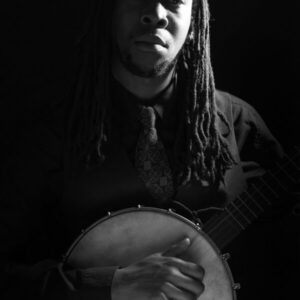
Banjo
About
Hubby Jenkins is a talented multi-instrumentalist who endeavors to share his love and knowledge of old-time American music. Born and raised in Brooklyn he delved into his southern roots, following the thread of African American history that wove itself through America’s traditional music forms. As an integral member of the Carolina Chocolate Drops and later Rhiannon Giddens band, Hubby has performed at festivals and venues around the world, earning himself both Grammy and Americana award nominations. Today he spreads his knowledge and love of old-time American music through his dynamic solo performances and engaging workshops.
Read MoreJason Ricci
Harmonica
About
Jason Ricci born in Portland Maine USA is an award winning and decorated american singer and harmonica player. In his youth, Jason’s mother brought him to many live Blues shows in his early teens to witness performances of James Cotton, Charlie Musslewhite, Eddie Clearwater, Rod Piazza, Buckwheat Zydeco, Marcia Ball and many more.
In 1995 Ricci moved to Memphis Tennessee to be near and informally study with Johnny Winter sideman, harmonica player and singer Pat Ramsey. Ramsey would become Jason’s mentor on and off stage and a surrogate father for many years until his death. Also in 1995, a 21 year old Jason would win the Sonny Boy Blues Society Contest in Helena Arkansas, Michael Burks took third place in that same contest. By 22 Ricci was living in Potts Camp Mississippi with Junior Kimbrough’s oldest son David Malone Kimbrough. Every Sunday for over a year Ricci played Juke Joints and small clubs in Oxford, Senatobia and Holly Springs MS with David Kimbrough, RL Burnside and Junior Kimbrough.
Ricci would cut his first record in 1995 “Jason Ricci” (self Titled) for Blues Music Award Winner Billy Gibson’s label North Magnolia Music featuring Earl Hookers drummer Bobby Little and other prominent Memphis musicians. A year later for the same label Jason recorded his second release “Down at the Juke” with Kent “Kinny” Kimbrough, Eric Deaton, Enrico Crivellaro and many more notable musicians. Ricci would return home to Maine a few times and perform with his friend of the same age, the now legendary guitarist and singer Nick Curran.Ricci would cut two critically well received albums and tour with celebrated New York City singer songwriter JJ Appleton. In addition to recording and touring with Appleton by 2013 Ricci also formed a new band “Jason Ricci and The Bad Kind” with New Orleans guitarist John Lisi. Signing with The Eller Soul Label Jason Ricci and The Bad Kind would cut two records “Approved By Snakes” and “My Chops are Rolling“. Working with Appleton, The Bad Kind and occasional tours with Alligator recording artist and Chicago Blues icon Nick Moss would mark the start of a successful return. By 2015 Ricci was nominated and won another Blues Music Award for Best Harmonica. Also in 2015 Jason Ricci was invited to induct The Paul Butterfield Blues Band into the Rock and Roll hall of Fame. At the Rock and Roll Hall Of Fame Ricci would appear televised on HBO for twelve and half million viewers performing Butterfields song “Born In Chicago” with Zac Brown, Rage Against The Machine’s Tom Morello, Paul Shaffer, Anton Fig, Felicia Collins and Willie Weeks. The same yearJason Ricci would go on to work with and record on Johnny Winter’s Grammy Award Winning recording “Step Back” as a featured performer alongside Eric Clapton, Joe Bonamassa, Dr John, Brian Setzer, Paul Nelson, Joe Perry, Ben Harper, Billy Gibbons and more.
Jayy Hopp
Guitar, Percussion
About
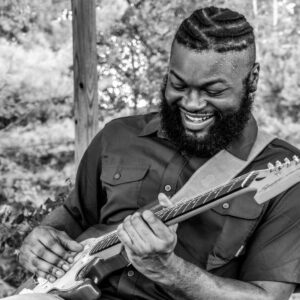
Jayy Hopp was born in Lagrange and started playing music with Gospel (drumming at first, until his cousin formally introduced him to the guitar). Gospel and R&B music was very influential in his formative years. The guitar grooves and distinctive sounds always caught his ear. As he aged, Jayy Hopp expanded his musical vocabulary. He started listening closely to Jimi Hendrix playing style, which led him to Buddy Guy, Albert Collins, Jimmy Dawkins, Johnny “Guitar” Watson, Son Seals, Hubert Sumlin, Robert Ward (his uncle) and Ike Turner. Jontavious Willis enlightened him about the roots of blues and different playing styles and how they effected the different genres we have today. He has become more fluent in the Country Blues playing style and plays with a solid syncopation.
Read MoreJerron Paxton
Guitar
About
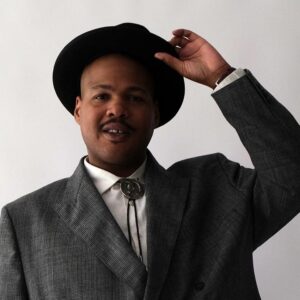
Born and raised in South Central Los Angeles, Paxton’s music is steeped in the rich cultural heritage of the Great Migration. His family’s journey from Shreveport, Louisiana, to the Athens neighborhood of South LA in the 1950s laid the foundation for his appreciation of Southern Black culture. As an only child, he spent much of his upbringing absorbing the culture his family had taken with them to California from the South. Paxton grew up very close with his grandmother, often shadowing her mannerisms and adopting them as his own. While Futurama or King of the Hill were on the family TV, he’d find himself sitting down with her, practicing banjo chords he’d heard on her favorite records. Since relocating from Los Angeles to New York City in 2007, Paxton has found an embracing audience within the city’s diverse cultural communities and vibrant music scene. He discovered that New Yorkers are sensitive to the kind of authenticity in storytelling that he was exposed to as a child.
Read MoreJohn Maxwell
Slide Guitar
About
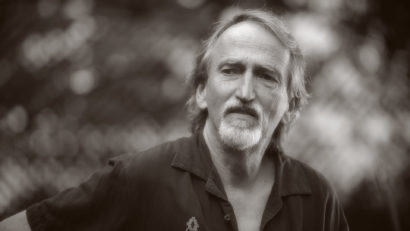
John “Greyhound” Maxwell brings his singular approach to slide guitar and mandolin, paying homage to the craft and tradition of the masters, while infusing the music with fresh energy. David Lindley is quoted as saying, “John is the best bottleneck player I’ve heard in a long time.” With an approach that is authentic and understated, Maxwell plays with the warmth and dexterity of someone who has loved the blues over a lifetime. Indeed, his education began as a teenager after seeing B.B. King play a set in Chicago in 1971. At Chicago’s historic Old Town School of Folk Music he took lessons from a young Johnny Long, himself a student of Homesick James. When Maxwell left for college in St. Louis, he originally studied classical, but grew restless and eventually fronted a blues trio.
He counts himself lucky enough to have mingled with blues legends Tommy Bankhead and Henry Townsend, with whom he later shared the stage and formed a friendship. He’s been drawn to slide since the beginning. “It increases that conversational aspect between the instrument and the voice,” he says. That lineage is evident in the conversations he’s still having. In his capable hands, classics are given a deep bow and a quick wink, at once subtle and surprising. Likewise, his originals feel
familiar to the genre, at home on a back-roads front porch or a downtown speakeasy. His style is grounded and focused yet delivered with an ease and a lightness. He says the nice thing about getting older is, “Whatever you do, if you’ve been doing for most of your life, you reach a proficiency level that’s really enjoyable.” That comfort and skill is obvious whether he’s playing with a full band, as a duo, or just his caramel smooth voice and his silver National. One gets the feeling he’d be equally at home with a symphony or a jug band. In fact, he’s travelled the country, playing bluegrass in Tulsa and punk-rock in San Francisco, with forays into jazz, folk and rock and roll. No matter the genre, he always found himself coming back to the blues. He explains that his interpretation is not about a specific chord pattern or scale, but rather the emotion behind it. “I think that helps cross physical and cultural borders,” he says. Now, having rounded the corner of 65, Maxwell is a master of his craft, garnering the admiration of his contemporaries. His recording, Blues for Evangeline, made the top five in the Best Self-Produced CD competition at the 2016 Memphis International Blues Challenge. In 2017, he had a song placed in a film at the Sundance Festival and he taught at the prestigious Port Townsend Acoustic Blues Festival in Washington state, where he now resides.
The Washington Blues Society recently nominated John “Greyhound” Maxwell for best solo artist in 2023. He previously was the 2018 award recipient for Best Acoustic Blues Guitar. His second self produced CD, “Even Good Dogs Get the Blues”, represented the WBS at the 2018 International Blues Challenge. “It’s really exciting,” he says. “I feel like I’m finally coming into my own.” In past years Maxwell has recently shared the stage with well-known blues greats, opening shows for Ruthie Foster, Sonny Landreth, Keb’Mo and Taj Mahal. “Back when I was 16 or 17, I would tell myself I wanted to have a successful music career, and it was okay if it happened at 60, as long as it happened.” He laughs softly. “I think I set my course there.”
Johnny Nicholas
Blues Songs
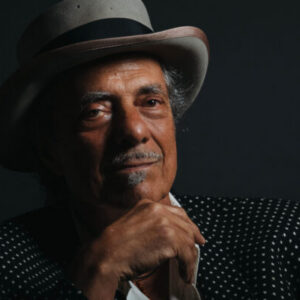
About
Time is a river and you can never step in the same river twice. It’s all gonna change, but what came before shapes what comes after. There are certain people who seem to be in both places at once. Johnny Nicholas has played music and rambled with some of the most original and artistically powerful individuals of the American 20th century. To name a few, Big Walter Horton, Mississippi Fred McDowell, Koko Taylor, Jimmie Vaughan, Nathan Abshire, Houston Stackhouse, Carol Fran, Lightnin’ Slim, Roosevelt Sykes, Arthur ‘big boy’ Crudup, BB King, Bonnie Raitt, S.P. Leary, Marcia Ball, Lazy Lester, Snooky Pryor, Robert jr. Lockwood and Johnny Shines. Johnny’s live performances and the music on his nine solo albums attest to this journey along these age-old paths. There’s no way that they couldn’t be with the life that he’s led and the people he’s known. Yes, there are people who seem to be able to stand in two places at once. Where they are now and where it all began. Destroy the illusion of time and live in the truths that spoke to you as a child. The sounds of the summer night, the train whistle and the open tuned guitar. Surely you are there at least as much as you are here.
Read MoreJudy LaPrade
Piano
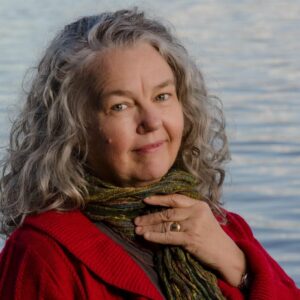
About
Judy LaPrade is a life-long musician and teacher. She grew up in West Virginia where she played and sang in church. By junior high school she led and accompanied the patient choir at the local state mental hospital, then as an adult took the Blues into schools and music therapy groups for people with developmental challenges. These experiences set a path to build bridges between therapy and the creative arts, and she’s been teaching both ever since. She also played, sang, and wrote music for several years with the Elktones, an eight piece band of wild and wonderful West Virginia women.
Read MoreKelsy Lynn Stone
Blues Dance
About
Lakota John
Slide Guitar
About
Lakota John is a musician, producer and songwriter from Southeastern, North Carolina. Influenced by his dads music collection, he picked up the guitar at 7 years old and learned to play left-handed as well as slide guitar in standard tuning. Lakota John blends styles of Folk, Blues, Rock & Jazz with various instruments while mixing in part of his Indigenous heritage with sounds of the Native American flute.
Lakota John received two scholarships in 2008 and 2009 to attend Centrum’s Acoustic Blues Festival in Port Townsend, WA. There he participated in a week of guitar workshops and jam sessions, learning in the classrooms of blues masters. In 2009 he began working with Music Maker Relief Foundation, performing as one of their Next Generation Artists. While learning alongside older Bluesmen, Lakota John began to broaden his musical abilities, while incorporating sounds of American Music.
Lakota John released his first album, “Old Bluez That’s Newz to Me,” in 2009. In 2013, Lakota John & Kin released a self-titled album. In 2017 Lakota John released a solo album, called “The Winds of Time,” on the International Artists label.
Lakota John was nominated for an American Music Award for Best Blues Recording. He won a Carolina Music Award in the Best Americana/Bluegrass Category, as well as first place in the 2019 Road to Memphis PBPS Blues Challenge Solo/Duo Competition.
Lakota has opened for, or shared the stage with Joe Bonamassa, Jimmy Vivino, Josh Smith, Native artists Pura Fe, Cary Morin, Keith Secola, American Songster Dom Flemons, and Taj Mahal to name a few. He tours nationally and internationally, including selected performances at the John F. Kennedy Center and the Library of Congress in Washington, D.C., in addition to repeated performances throughout the world.
Read More
Lauren Sheehan
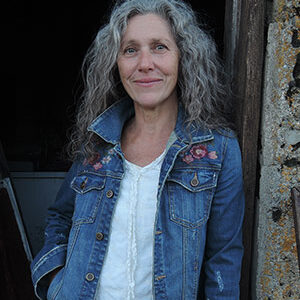
Band Lab
Leroy Etienne
Percussion
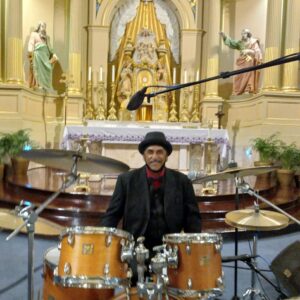
About
Leroy Etienne is a drummer, percussionist, washboard player, and vocalist, based in Lafayette, Louisiana. His critically album released in 2018 features original compositions by Etienne composed in Louisiana Creole. Featured song writer on the album and book ‘Le Kér Creole’ (Creole Compositions and Stories from Louisiana) native Creole speaker Leroy Etienne said in the 1950s, he was told by teachers not to speak “French” in school. The 1921 decision to outlaw francophone languages obscured the differences between standardized French, Creole, and Cajun and Houma French in the region, and for many families, their home languages went underground. Often spoken only by adults, they were not passed on to the next generations. Etienne, held onto Louisiana Creole as his first language. He was raised up with Creole musicians like his brother, Clarence “Jockey” Etienne, who taught him how to play the rhythms of zydeco and R&B, and came of age at a time when the language was still sung in dancehalls around the state. After touring with musicians such as Buckwheat Zydeco, he joined a new band, Sunpie and the Louisiana Sunspots, in the late 1990s, and has been the drummer ever since.
Read MoreLightnin Malcolm
Guitar
About
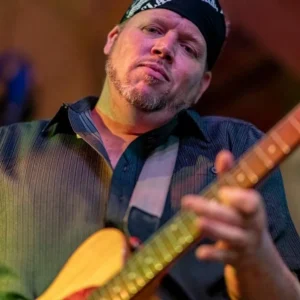
Cutting edge Mississippi Bluesman Lightnin’ Malcolm, a charismatic and energetic guitarslinger with a deep soulful voice, has taken his irresistible dance grooves from Juke Joint teen years to World Stages with mainstream artists such as Robert Plant, Jimmy Buffett, Robert Cray, The Black Keys, Widespread Panic, Big Head Todd, North Mississippi Allstars, Lucero and Gary Clark Jr.
Read MoreMark Brooks
Bass
About
Mark Brooks is one of New Orleans’ premiere bassist. He is noted for his versatility vocally as well as instrumentally. Mark is a protégée of the late great Jazz Master, Alvin Batiste along with several of his close friends Branford Marsalis, Donald Harrison, and Henry Butler. Mark has toured and performed with an array of artists across genres such as Jazz, Blues, R&B, and Gospel. Mark has shared stages with greats such as Dr. John, the Neville Brothers, Henry Butler, Charles, and Aaron Neville, Lou Rawls, the Preservation Hall Jazz Band, and Fats Domino’s Band. Most recently Mark traveled on tour in Germany with the New Orleans Jazz Band of Colonge as the special guest (October 2022) and to Cape Cod with Dr. Michael White (August 2022). Mark also possesses numerous recording credits and has appeared on a multitude of national and local television and news shows, as well as festivals around the world. His most highlighted career moments was his opportunities to appear on screen and the recording soundtrack of Clint Eastwood’s film “The Bridges of Madison County” and his appearance in the biopic of Ray Charles’ life “Ray”. Mark also notes his appearance on “The Regis and Kathy Lee Show” also as a cherished career defining moment. Mark has also appeared in episodes of the HBO Special “Treme”, several episodes of the TNT series “Memphis Beats”, and PBS special “River of Songs”. Most recently Mark has added to his credits episodic series such as “American Horror Story”, Cinemax pilot “Banshee”, “NCIS New Orleans”, HBO’s “Roots” remake, “Interview with The Vampire”,Queen of the South”, and the much anticipated film “One Night in Miami”. In addition to his onscreen credits, Mark has also found great success behind the scenes as an emerging and much sought after on-set bass coach. His work with actors such as Larenz Tate for his role in the film “Girls Trip” and Josh Hartnett for his role in the series “Paradise Lost” has led to a myriad of other opportunities that Mark counts a true blessing and privilege for this added avenue to share his art. As Mark has navigated film and television over the years, he has most recently found success also in the licensing of his original song placement in series such as his two songs in the final season of “Queen of the South”.
Read MoreMark Puryear
Improv, Blues Talks
About
Mark Puryear is a musician, ethnomusicologist, and curator. For the Smithsonian Folklife Festival, he curated the 2011 Rhythm and Blues: Tell It Like It Is program as well as the Freedom Sounds event that celebrated the opening of the National Museum of African American History and Culture. He was nominated for a Grammy for producing the Smithsonian Folkways album Fannie Lou Hamer: Songs My Mother Taught Me.
Read MoreMary Flower
Guitar
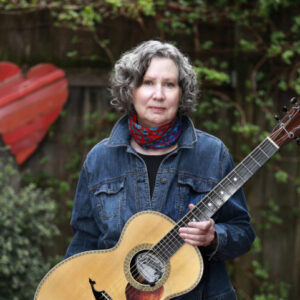
About
Mary Flower’s immense finger picking guitar and lap-slide prowess is soulful and meter-perfect, a deft blend of the inventive, the dexterous and the mesmerizing. Her supple honey-and-whiskey voice provides the perfect melodic accompaniment to each song’s story. An internationally known and award-winning picker, singer/songwriter and teacher, the Midwest native relocated from Denver to the vibrant Portland, Oregon music scene in in 2004. She continues to please crowds and critics at folk festivals, teaching seminars and concert stages domestically and abroad, that include Merlefest, Kerrville, King Biscuit, Prairie Home Companion and the Vancouver Folk Festival, among many. A finalist in 2000 and 2002 at the National Finger Picking Guitar Championship, a nominee in 2008, 2012 and 2016 for a Blues Foundation Blues Music Award, and many times a Cascade Blues Assn. Muddy Award winner, Flower embodies a luscious and lusty mix of rootsy, acoustic-blues guitar and vocal styles that span a number of idioms – from Piedmont to the Mississippi Delta, with stops in ragtime, swing, folk and hot jazz. Flower’s 11 recordings, including her four for Memphis’ famed Yellow Dog Records — Bywater Dance, Instrumental Breakdown, Bridges and Misery Loves Company — show a deep command of and love for folk and blues string music. For Flower, it’s never about re-creation. Her dedication to the art form is a vital contribution to America’s music.
Read MoreNick Pence
Guitar
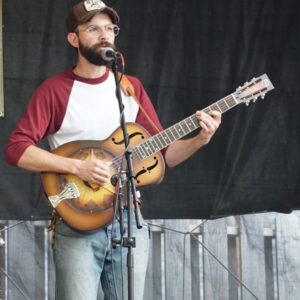
About
Nick Pence is a well-known guitar player from St. Louis. Nick plays with The Bottlesnakes, The Dust Covers or The New Missouri Fox Hunters. These two have worked together in the past, including forming a gospel group The Houndsteeth.
Read MorePamela English
Gospel Choir
About
Robert Jones
Guitar
About
Rev. Robert Jones, Sr. is a native Detroiter and an inspirational storyteller and musician celebrating the history, humor and power of American Roots music. His deep love for traditional African American and American traditional music is shared in live performances that interweave timeless stories with original and traditional songs. For more than thirty years Robert has entertained and educated audiences of all ages in schools, colleges, libraries, union halls, prisons, churches and civil rights organizations. At the heart of his message is the belief that our cultural diversity tells a story that should celebrate, not just tolerate. Rev. Robert Jones makes his home in Detroit while performing throughout the United States, Canada and Europe. An award-winning multi-instrumentalist, he is accomplished at guitar, harmonica, mandolin, banjo and fiddle. He has recorded six albums of original and tradition songs. Robert is the former host of the award-winning radio programs “Blues from the Lowlands” and “Deep River” broadcast on Detroit Public Radio’s WDET-FM Detroit. And he has taught at music history courses at Wayne State University in Detroit. As an ordained minister and a Baptist pastor, he has an unwavering faith the cultural importance of sacred and traditional American roots music.
Read MoreShari Kane
Guitar
About
Shari started playing guitar at the age of five. By the early 1970’s she had become a devoted blues fan, and learned how to play fingerstyle blues on the acoustic guitar. When she was sixteen, she began teaching guitar. She continues to teach, offering workshops in many of the cities where she performs.
Read MoreShirley Smith
Gospel Choir
About
Shirley Smith is a Detroit native who studied under the tutelage of one of Detroit’s premier harpists and vocal instructors, Patricia Terry-Ross, who was her teacher at Detroit’s Cass Technical High School. Shirley studied voice, piano, and harp under Mrs. Ross. She also studied voice with Professor Dennis J. Tini at Wayne State University. Shirley’s passion for music shows in her interaction with her students. She teaches piano from beginner to intermediate here at the studio. She is also a phenomenal vocal coach and loves to work with children as well as adults who aspire to enhance their vocal ability. She was the original music director/vocal coach for the gospel stage play Detroit’s own, Perilous Times, produced by TJ Hemphill. She has traveled extensively nationally and abroad to Melbourne, Australia and Jamaica to coach vocals in the Gospel genre. She was also the original Minister of Music for Bishop William H. Murphy, III and The Dream Center Church, Atlanta, GA.
Read MoreStephen Hull
Support Guitar
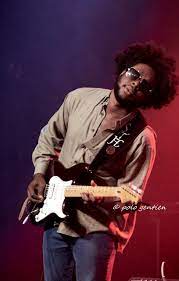
About
Born in 1999, a native of Racine, Wisconsin, Stephen Hull started playing blues at age 14 and never stopped, taking cues from Albert King and B.B. King as he developed his sweet, soulful guitar sound. Balancing that with his absolutely stellar lead vocals and infectiously buoyant personality, Stephen has been rising fast in the blues clubs of Chicago and venues across southeastern Wisconsin. Appearing in blues magazines such as Living Blues (U.S.) and Blues & Rhythm: The Gospel Truth (UK), Stephen has been interviewed by a myriad of media including Lake Effect (broadcast on Milwaukee’s NPR). From the Chicago Blues Fest to the Mississippi Valley Blues Fest. Stephen is an International Blues Musician. IBC 2nd Place Winner & Best Guitarist Award Winner 2024 and the Jus’ Blues Music “King Of The Blues” Award 2024.
Read MoreSunpie Barnes
Accordion
About
Bruce Sunpie Barnes is a veteran New Orleans musician, former Park Ranger with the National Park Service for 30 years, actor, photographer, book author, former high school biology teacher, former college football All-American, and former NFL player (Kansas City Chiefs). Sunpie Barnes’ many careers have taken him far and wide. He has traveled to over 50 countries playing his own style of what he calls Afro-Louisiana music incorporating Blues, Zydeco, Gospel, Caribbean and African influenced rhythms and melodies. He is a multi-instrumentalist, master accordion and harmonica player, also piano, rubboard, talking drum, and dejembe. He learned accordion from some of the best Zydeco pioneers in Louisiana including Fernest Arceneaux, John Delafose, and Clayton Sampy. Along with his musical group Sunpie and the Louisiana Sunspots, he has performed at festivals and concerts across the US and around the globe. Sunpie has recorded 6 critically acclaimed CDs with his compositions currently featured in 16 Hollywood film productions.
Read MoreTeeny Tucker
Voice
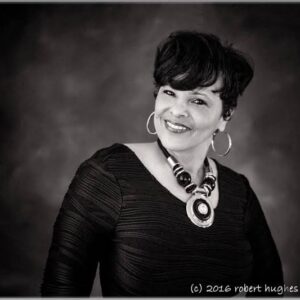
About
Although Teeny was born into blues royalty, (daughter of Tommy “Hi-Heel Sneakers” Tucker), one need only to hear Teeny to know that she has cultivated and developed her “gifts” into her very own uniquely compelling world-class package. As a child, this Dayton Ohio native began singing in the church choir. This experience, like so many other soulful success stories, undoubtedly began to chart the course of Teeny’s music career. The paths which would lead to her abilities to interpret with soulful, bluesy, and uniquely stylistic renderings was set. A 1994 performance at the Apollo Theatre won over the notoriously cruel and scrutinizing audience, which earned Teeny a standing ovation. Encouraged by the Apollo experience, Teeny started her professional singing career in November, 1996, when she caught the attention of a German blues promoter and manager who had promoted European tours for her father. Since then, her musical journey has seen Teeny performing at many of the major blues festivals in the U.S., Sweden, France, Switzerland, Belgium, and Italy. Teeny was chosen for the cover of July/August 2004 edition of King Biscuit Time Magazine accompanied by a featured story of her musical journey. Teeny has been invited to appear on the same bill with great blues artists such as: B.B. King, KoKo Taylor, Etta James, Buddy Guy, The Holmes Brothers, Calvin Owens, Robert Cray, Keb Mo, Deanna Bogart, Kenny Neal, Bobby Rush, John Mayall, and many others. Teeny wrote the lyrics for 8 of the 11 songs on her second CD, titled First Class Woman, which received substantial airplay on XM Satellite, Music Choice and blues radio stations all over the country. Her songwriting abilities earned Teeny a place as a top-ten finalist in the International Songwriting Competition. Teeny is a two-time, top-three finalist in the International Blues Challenge, which is held annually in Memphis, Tennessee. Teeny Tucker, and her Band, have been featured headline performers at some of the world’s most prestigious MAJOR Music Festivals in the USA, Canada, and Europe. Major Festival performances include venues such as; the Burghausen International Blues Festival, Duvel International Blues Festival, Salmon Arms International Blues Festival, Beaches International Blues Festival, Waterfront International Blues Festival, Mont Tremblant International Blues Festival, Chicago Blues Festival, B. B. King Homecoming Festival, White Mountain Boogie and Blues Festival, Cincinnati Blues Festival, PA Folk/Blues Festival, Pocono Blues Festival, Vermont Blues Festival, Monterey Blues Festival, D C Blues Festival, Tinner Hill Blues Festival, Old Town Blues Festival, North Atlantic Blues Festival, Camping With The Blues Festival, Briggs Farm Blues Festival, Spring Gulch Blues Festival, Niagara Buffalo Blues Festival, Penn State Concert Series, Attuck Theatre Concert Series, Blues At The Beach Festival, 2 Left Feet Blues Festival, Destination Blues Festival, and Live Oak Jazz & Blues Festival.
Read MoreTom Mitchell
Guitar
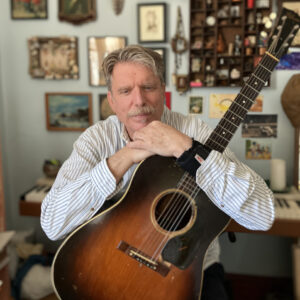
About
Tom Mitchell is a guitar player and singer rooted in the styles of the 1920’s and 30’s jazz, western swing, country blues and old-time music; he’s happily been both sideman and leader for a great variety of musical endeavors. In addition to singing and playing guitar, he’s played mandolin, banjo, tenor guitar or tiple when the need arose. Ten years of playing with legendary hipster Dan Hicks & His Hot Licks took him around the world and led to the recording of two acclaimed CD’s including “Beatin’ the Heat” which featured guest appearances by Bette Midler, Ricki Lee Jones, Tom Waits, Elvis Costello, and Brian Setzer.
Read MoreTrey Hensley
Guitar
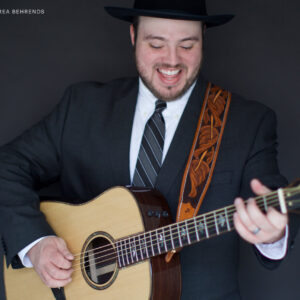
About
Trey Hensley is a GRAMMY®-nominated musician and singer/songwriter who was voted the 2023 Guitar Player of the Year by the International Bluegrass Music Association. He has been referred to as “Nashville’s hottest young player” by Acoustic Guitar magazine. In addition to a storied solo career and a duo career with award-winning resophonic guitarist Rob Ickes (NPR has called them “two musical phenoms”), Trey has worked with a diverse list of artists including Johnny Cash, June Carter Cash, Marty Stuart, Earl Scruggs, Dolly Parton, Taj Mahal, Tommy Emmanuel, Rodney Crowell, Old Crow Medicine Show, Nitty Gritty Dirt Band, Little Feat, Leftover Salmon and REO Speedwagon. Trey can be heard on the latest album by Ickes & Hensley, Living In A Song and collaborating with Rob Ickes and Molly Tuttle on “John Deere Tractor” on the A Tribute To The Judds album; as a member of the Taj Mahal Sextet on the newly released recording, Swingin’ Live at the Church in Tulsa; and with Alison Brown and Steve Martin on the song “Bluegrass Radio.”
Read MoreValerie Kirchhoff
Voice
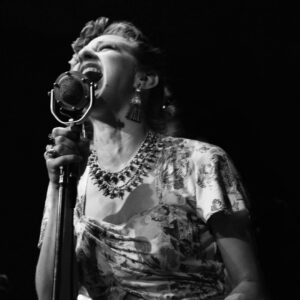
About
Valerie Kirchhoff (aka “Miss Jubilee”) is a vocalist and bandleader born and raised in St. Louis. Valerie grew up singing in church and school choirs, and discovered a passion for early jazz and blues while in her teens. She formed her first band in 2007 and has been a staple of the St. Louis music scene ever since. Valerie champions the female blues singers of the 20s and 30s, with a particular focus on the lesser known singers from St. Louis.
In 2014 she began collaborating with pianist Ethan Leinwand. In larger ensembles and as a duo (The St. Louis Steady Grinders), they have performed across the United States and Europe, and can be seen playing regularly in their hometown.