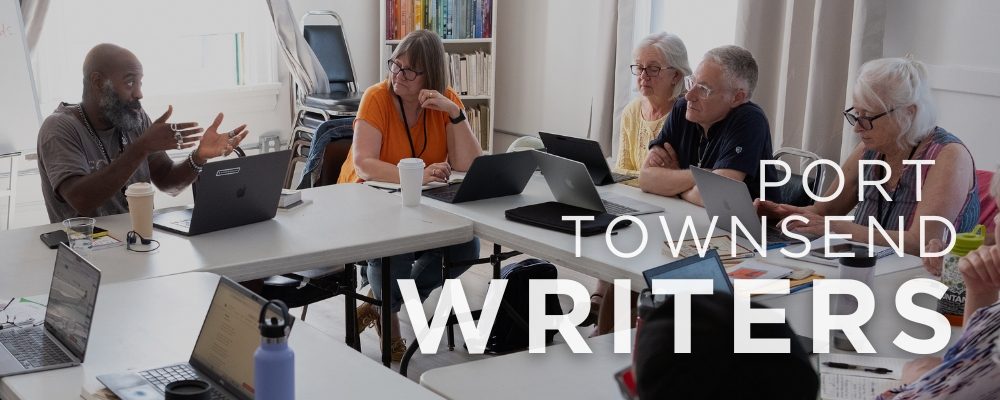
Artistic Director
Gary Copeland Lilley
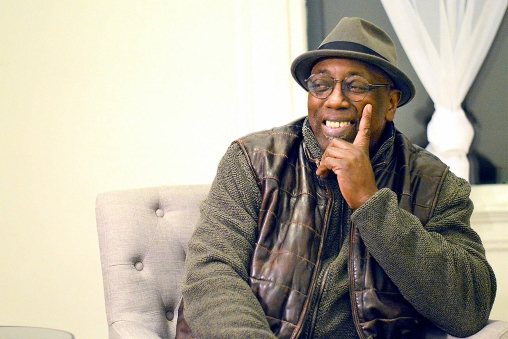
Gary Copeland Lilley is an award-winning poet and educator with a strong background in Southern American culture, blues poetry, and storytelling. He has published several collections of poetry and is renowned for his ability to bring raw emotion and narrative depth to his work. As Artistic Director of the Port Townsend Writers Conference, Gary selects faculty who challenge and inspire writers to explore the full range of their creative voices.
Faculty
2026 Faculty
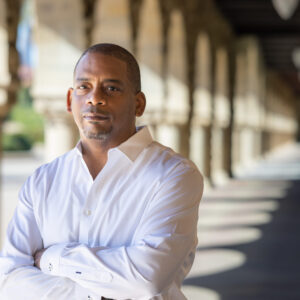
A. Van Jordan
Morning Workshop Faculty
About
A. Van Jordan is the author of five collections of poetry, including Rise (Tia Chucha Press, 2001), winner of the PEN/Oakland Josephine Miles Award; M-A-C-N-O-L-I-A (W.W. Norton & Co, 2005), listed as one the Best Books of 2005 by The London Times; Quantum Lyrics (W.W. Norton & Co, 2007); and The Cineaste (2013, W.W. Norton & Co). His latest collection, When I Waked, I Cried to Dream Again, winner of the 2024 Hurston Wright Legacy Award, was released in 2023 (W.W. Norton & Co). Jordan has been awarded a Whiting Writers Award, an Anisfield-Wolf Book Award, and a Pushcart Prize. He is also a recipient of a Guggenheim Fellowship (2007), a United States Artists Fellowship (2009), and a Lannan Literary Award in Poetry (2015). Among his many academic appointments, he most recently served as the Robert Hayden Collegiate Professor of English Literature at The University of Michigan, before coming to Stanford University, where he currently holds the Humanities and Sciences Chair in English, and where he also serves as part of the inaugural faculty in the Department of African & African American Studies. Read MoreBrian Gilmore
Afternoon Workshop Faculty
About
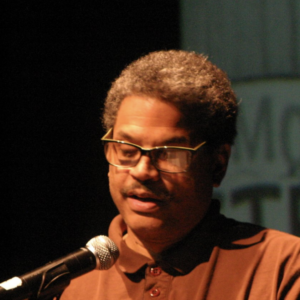
Native of Washington DC, Brian G. Gilmore is the author of four books of poetry—elvis presley is alive and well and living harlem; Jungle Nights and Soda Fountain Rags: Poem for Duke Ellington; We Didn’t Know Any Gangsters, an NAACP Image Award nominee and a Hurston-Wright Legacy Award nominee; and come see about me marvin, a Michigan Notable Book Award recipient. He is a public interest lawyer and a senior lecturer at the University of Maryland – College Park. His latest book is No More Worlds To Conquer: The Black Poet in Washington DC (Georgetown University Press – 2026).
Read MoreBryan Fry
Afternoon Workshop Faculty
About
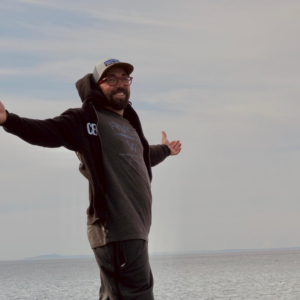
Bryan Fry earned his MFA in Creative Writing from the University of Idaho. He is the cofounder of Blood Orange Review and currently teaches at Washington State University. His work has appeared in various publications, including Brevity, Front Porch, The South Dakota Review, and The Blue Mountain Review.
Read MoreClaudia Rowe
Morning Workshop Faculty
About
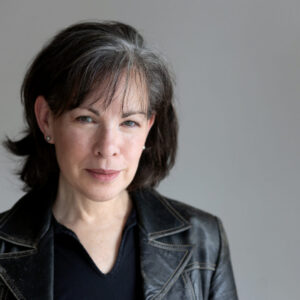
For 34 years, Claudia Rowe has been interrogating the experience of youth on the margins through journalism, narrative nonfiction, and memoir.
Read MoreDawn Pichón Barron
Afternoon Workshop Faculty
About
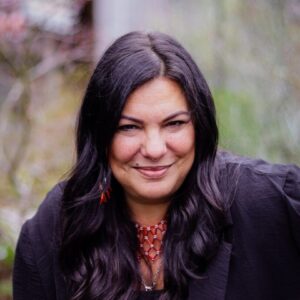
Dawn Pichón Barron is currently the academic director/faculty of the undergraduate interdisciplinary Native Pathways Program at the Evergreen State College. She writes across borders and genres, while dreaming of ripe lemon sunrays at the southern tip of the Salish Sea–on the lands of the Medicine Creek treaty tribes and bands—with her wingman and Chihuahuas. Her chapbook, ESCAPE GIRL BLUES, was published by Finishing Line Press, 2018. Other work can be found at A Socially Just Classroom: Transdisciplinary Approaches to Teaching Writing Across the Humanities (2022), Echoes: An Anthology of Native Women Writers (2022), Moss, Pittsburgh Poetry Review, Washington 129 Poetry Anthology (2017), Of A Monstrous Child: A Creative Writing Anthology (2011), Yellow Medicine Review and elsewhere. Lately, she has been obsessed with adornments and fascinated by (reimagining of) motifs and mythical creatures used to demonstrate the continuity of shared time and space through culture.
Read MoreElizabeth Thorpe
Editing Workshop Faculty
About
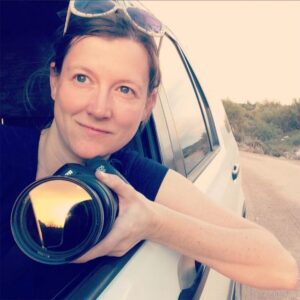
Elizabeth Thorpe teaches writing at Drexel University and Olympic College. She earned an MFA in Fiction from Goddard College, and is a literary editor for freelance clients and a proofreader for design company 160over90. Her short fiction collection, Cities, was published by Texture Press in 2015. Her short stories, poems, and essays have appeared in Per Contra, escarp, Kahini, Painted Bride Quarterly, and The Maine Review, among others. She lives in Port Townsend, Washington, where she has worked at the Port Townsend Writers’ Conference as an editor since 2011.
Read MoreErica Bauermeister
Morning Workshop Faculty
About
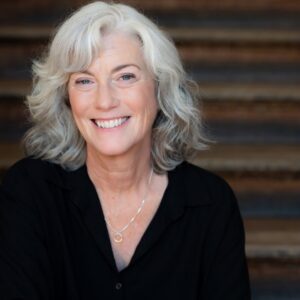
Erica Bauermeister is the NYT bestselling author of 5 novels, including No Two Persons, The Scent Keeper, and The School of Essential Ingredients, as well as her memoir House Lessons: Renovating a Life. Her books have been a Reese’s Book Club Pick, a Washington State Book Award Finalist, and Indie Next Picks, and have been translated into over 25 languages. Before becoming a full-time writer, she earned a PhD in literature and was a teacher and the co-author of two readers’ guides — 500 Great Books by Women and Let’s Hear it for the Girls. She has lived on both coasts of the United States as well as Italy, and currently lives in Port Townsend, WA.
Read MoreGary Copeland Lilley
Artistic Director
About
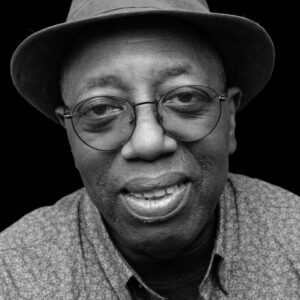
Gary Copeland Lilley is the author of eight books of poetry, the most recent being The Bushman’s Medicine Show (Lost Horse Press, 2017), and a chapbook, The Hog Killing (Blue Horse Press, 2018). He is originally from North Carolina and now lives in the Pacific Northwest. He has received the DC Commission on the Arts Fellowship for Poetry and is published in numerous anthologies and journals, including The Best American Poetry 2014, Willow Springs, The Swamp, Waxwing, Taos Journal of Poetry and Art, and African American Review. He is a Cave Canem Fellow.
Read MoreJacinda Townsend
Morning Workshop Faculty
About
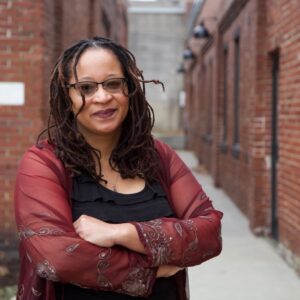
Jacinda Townsend grew up in Kentucky and took her first creative writing classes as an undergraduate at Harvard; after doing time as a broadcast journalist and then an antitrust lawyer, Jacinda got her MFA at the Iowa Writers’ Workshop before going on to spend a year as a Fulbright fellow. During her Fulbright year, she first witnessed modern-day slavery: this witness inspired the research that eventually would become her novel Mother Country, the 2022 winner of the Ernest Gaines Award for Literary Excellence. Jacinda is also the author of Saint Monkey, which is set in 1950’s Eastern Kentucky and is a love letter to a Black community that has all but disappeared. In 2015, Saint Monkey won both the Janet Heidinger Kafka Prize and the James Fenimore Cooper Prize: Saint Monkey was also the 2015 Honor Book of the Black Caucus of the American Library Association. Jacinda recently published her third novel, Trigger Warning, which is told in the alternating voices of Ruth Hurley, who changes her identity and moves across the country after her father is killed by police in the late eighties, and Myron Hurley, her soon-to-be-ex-husband, who spends the novel uncovering the truth about his wife. Jacinda is a former elected official who teaches in the MFA program at Brown University, and is mom to two children who amaze her daily.
Read MoreJamie Ford
Morning Workshop Faculty
About
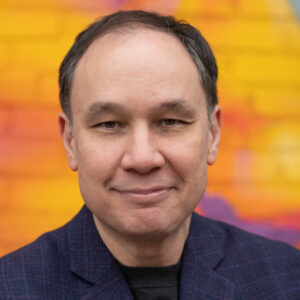
Jamie Ford is the author of Hotel on the Corner of Bitter and Sweet, which spent two and a half years on the New York Times bestseller list and won the Asian/Pacific American Award for Literature. This multi-cultural tale has been optioned for film and stage and is taught in hundreds of schools nationwide. His other bestselling novels include Songs of Willow Frost and The Many Daughters of Afong Moy, published in 2022 and optioned by Jenna Bush Hager’s production company, Thousand Voices.
Read MoreJonathan Evison
Long Form Faculty
About
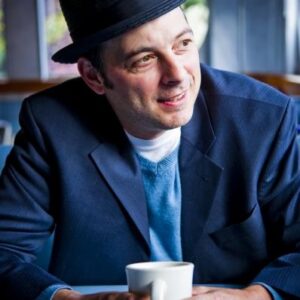
Jonathan Evison is an award-winning full-time novelist. He has published ten bestselling novels: All About Lulu, West of Here, The Revised Fundamentals of Caregiving, This is Your Life, Harriet Chance!, Lawn Boy, Legends of the North Cascades, Small World, Again and Again, and The Heart of Winter.
Read MoreKate Lebo
Afternoon Workshop Faculty
About
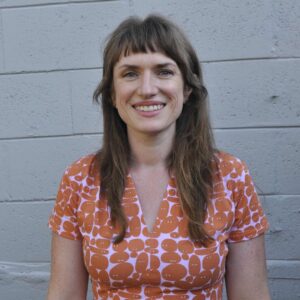
Kate Lebo’s first collection of nonfiction, The Book of Difficult Fruit (FSG), won the 2022 Washington State Book Award and was named a best book of the year by NPR, The Atlantic, New York magazine, Electric Literature, and The Globe and Mail. She is the author of the cookbook Pie School (Sasquatch Books), the poetry chapbook Seven Prayers to Cathy McMorris Rodgers (Entre Rios Books), and co-editor with Samuel Ligon of Pie & Whiskey: Writers Under the Influence of Butter and Booze (Sasquatch Books). She lives in Spokane, Washington, where she is an apprentice cheesemaker to Lora Lea Misterly of Quillisascut Farm.
Read MoreKristen Millares Young
Afternoon Workshop Faculty
About
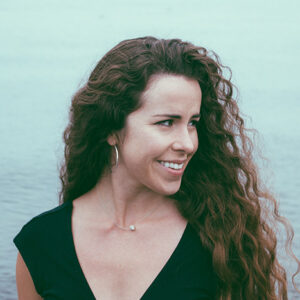
Kristen Millares Young is the author of the memoir-in-essays Desire Lines, forthcoming from Red Hen Press on October 6, 2026. Called “searching, generous, and unrelenting” by Melissa Febos, “alive with style and poetic lyricism” by Weike Wang, and “explosive and daring” by Luis Alberto Urrea, Desire Lines is a forensic investigation into the emotional topography of being a woman, a writer, and a mother. “In Desire Lines, Kristen Millares Young explores womanhood, human rights, and identity with a moral imperative and artistry that few can achieve,” writes Brandon Hobson. “She is an immense literary talent, and this remarkable book should be read by all.”
Read MoreLidia Yuknavitch
Morning Workshop Faculty
About
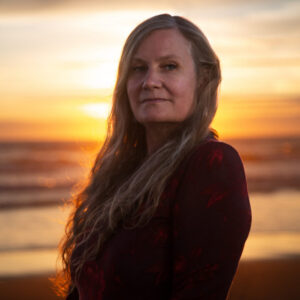
Lidia Yuknavitch is the nationally bestselling author of four novels: Thrust (Riverhead, 2022); The Book of Joan (Harper, 2017); The Small Backs of Children (Harper, 2015), winner of the 2016 Oregon Book Awards Ken Kesey Award for Fiction and the OBA Reader’s Choice Award; and Dora: A Headcase (Hawthorne Books, 2012). Her other works include Verge: Stories (Riverhead, 2020), a finalist for the Story Prize; The Misfit’s Manifesto (TED Books, 2017), based on her widely viewed TED Talk; and a critical book on war and narrative, Allegories of Violence (Routledge, 2001). Her widely acclaimed memoir The Chronology of Water (Hawthorne Books, 2011) was a finalist for a PEN Center USA award for creative nonfiction and winner of a PNBA Award and the Oregon Book Award Reader’s Choice. Her newest memoir, Reading the Waves, was published by Riverhead Books in 2025.
Read MoreMatt Morton
Afternoon Workshop Faculty
About
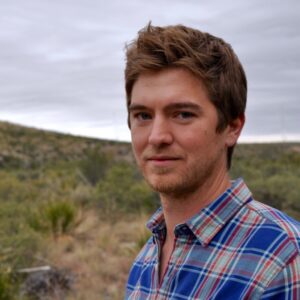
Matt Morton is the author of Improvisation Without Accompaniment (BOA Editions 2020), winner of the A. Poulin, Jr. Poetry Prize, and the chapbook What Passes Here for Mountains (Carnegie Mellon 2022). His poems have appeared in AGNI, Gettysburg Review, Harvard Review, the Los Angeles Review of Books, Missouri Review, and elsewhere. He has received fellowships and awards from the National Endowment for the Arts, the Fulbright Program, the Bread Loaf Writers’ Conference, and the Sewanee Writers’ Conference. He holds a BA from the University of Texas at Austin, an MFA from the Johns Hopkins University Writing Seminars, and a PhD in English from the University of North Texas. He serves as associate editor for 32 Poems and lives in Santa Fe.
Read MoreMaya Jewell Zeller
Afternoon Workshop Faculty
About
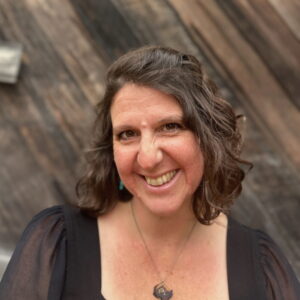
Maya Jewell Zeller is the author of several books, most recently the memoir Raised by Ferns (Porphyry, March 2026); the lyric exploration of fungi, The Wonder of Mushrooms (AdventureKEEN, September 2025); and the poetry collection out takes/ glove box, chosen by Eduardo Corral as winner of the New American Poetry Prize (November 2023). She is also co-author, with Kathryn Nuernberger, of Advanced Poetry: A Writer’s Guide and Anthology (Bloomsbury, 2024), and co-editor, with Sharma Shields, of the multi-genre anthology Evergreen: Grim Tales and Verses from the Gloomy Northwest (Scablands Books, 2021). Maya’s prose appears in The Rumpus, Diagram, Brevity, Bellingham Review, Booth Journal, and several anthologies, including the NY-Times bestselling This is the Place: Women Writing About Home (Seal Press, 2017) and the forthcoming Environmental and Nature Writing (Bloomsbury 2025). Her essay “Scavenger Panorama” was selected by Vivian Gornick as a Notable in Best American Essays 2023. Recipient of a Promise Award from the Sustainable Arts Foundation, a Fellowship from Artist Trust, and a Residencies in the H.J. Andrews Experimental Forest and Centrum’s Port Townsend Campus at Fort Worden, Maya has presented her work internationally at the University of Oxford (where she was a fellow in Spring 2024, as well as a visiting poet in Spring 2019) and in Madrid at the Unamuno Author Festival. She is Professor of English for Central Washington University, and Affiliate Faculty in Poetry and Nature Writing for Western Colorado’s low-residency MFA. She lives in the Inland Northwest with her children.
Read MoreMichael McGriff
Morning Workshop Faculty
About
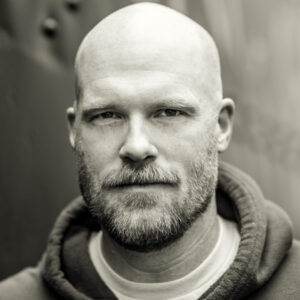
Michael McGriff is an author, editor, and translator whose work centers on the intersection of surrealism with place, working-class life, and poverty in rural America. He is the co-author, with J. M. Tyree, of the linked story collection Our Secret Life in the Movies, which was selected as one of NPR’s Best Books of 2014. His poetry collections include Inquest, Angel Sharpening its Beak, Eternal Sentences, Early Hour, Black Postcards, Home Burial, and Dismantling the Hills. He is the translator of Tomas Traströmer’s The Sorrow Gondola and editor of a volume of David Wevill’s essential writing, To Build My Shadow a Fire. His work has been honored with a Lannan Literary Fellowship, a New York Times Book Review “Editors’ Choice,” a Ruth Lilly Fellowship, and a grant from the National Endowment for the Arts. His writing has appeared in The New York Times, Poetry, Bookforum, The Believer, Tin House, American Poetry Review, Poetry London, and on NPR’s Weekend Edition Sunday and PBS NewsHour. He has taught creative writing at Stanford University, The Michener Center for Writers, and Lewis & Clark College, and for several years has mentored young writers as a Visiting Writer at American International School in Vienna, Austria, and as a faculty member in the Kenyon Review Young Writers Workshop. He directs the creative writing program at the University of Idaho.
Read MoreRoger Reeves
Morning Workshop Faculty
About
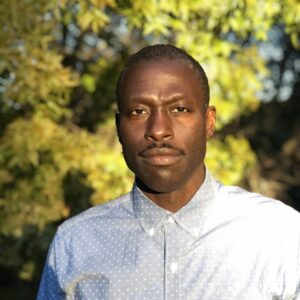
Roger Reeves is the author three collections: Dark Days: Fugitive Essays, winner of the GLCA New Writers Award for Creative Nonfiction and a finalist for the 2024 Pegasus Award in Poetry Criticism; Best Barbarian, recipient of the 2023 Griffin Poetry Prize and the Kingsley Tufts Poetry Award, and a finalist for the National Book Award; and his debut collection King Me, which won the Larry Levis Reading Prize, the PEN/Oakland Josephine Miles Literary Award, a John C. Zacharis First Book Award, and a Library Journal Best Poetry Book of the year. His poems have appeared in journals such as Poetry, Ploughshares, American Poetry Review, Boston Review, and Tin House, among others. Among other awards, he is the recipient of a Guggenheim Fellowship, a Radcliffe Fellowship from Harvard University, a Whiting Award, an NEA Fellowship, and a Ruth Lilly Fellowship from the Poetry Foundation. He is currently a Professor of English and creative writing at the University of Texas at Austin.
Read MoreSamuel Ligon
Afternoon Workshop Faculty
About
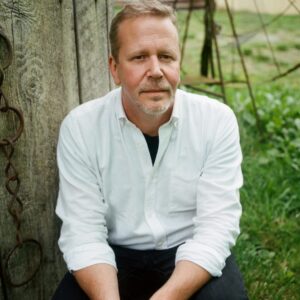
Samuel Ligon’s most recent novel—Miller Cane: A True & Exact History—was serialized for a year in Spokane’s weekly newspaper, The Inlander, as well as on Spokane Public Radio, and will be published in book form by Slant Books in 2026. The author of four previous books of fiction, including Wonderland and Safe in Heaven Dead, Ligon is also co-editor, with Kate Lebo, of Pie & Whiskey: Writers Under the Influence of Butter & Booze. His stories and essays have appeared in The Georgia Review, New England Review, The Gettysburg Review, Prairie Schooner, and elsewhere. He teaches at Eastern Washington University in Spokane, Washington and serves as EWU’s Faculty Legislative Liaison in Olympia. He’s been voted “most likely” twenty-three times and has won over seven thousand awards, far too many to mention, really.
Read MoreSayantani Dasgupta
Long Form Faculty
About
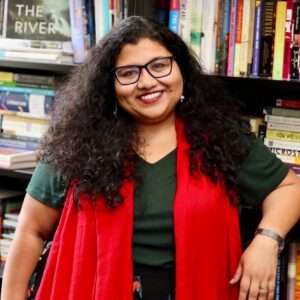
Born in Calcutta and raised in New Delhi, Sayantani Dasgupta is the author of BROWN WOMEN HAVE EVERYTHING: ESSAYS ON (DIS)COMFORT & DELIGHT, winner of the 2024 Foreword INDIES Book of the Year Awards. Her previous books include the short story collection WOMEN WHO MISBEHAVE and FIRE GIRL: ESSAYS ON INDIA, AMERICA, & THE IN-BETWEEN and also the chapbook THE HOUSE OF NAILS: MEMORIES OF A NEW DELHI CHILDHOOD. She is an Associate Professor of Creative Writing at the University of North Carolina, Wilmington. Her research spans Creative Nonfiction, Literary Fiction, South Asian History and Literature, Indian Cinema, World Religions, Fairy Tales, Folklore, and Mythology. She holds advanced degrees in History and Creative Writing and has taught diverse classes globally, including in India, Italy, Colombia, and Mexico. Since founding it in the spring of 2021, Sayantani has also been running the hugely successful, global writing initiative called Write Wilmington, wherein writers from all over the world gather to write in community.
Read MoreTessa Hulls
Morning Workshop Faculty
About
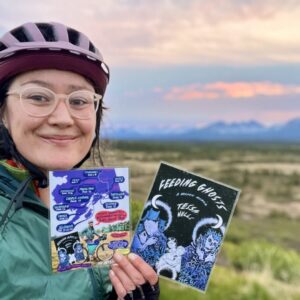
Tessa Hulls is an artist, writer, and adventurer. Her essays have appeared in The Washington Post, Atlas Obscura, and Adventure Journal, and her comics have been published in The Rumpus, City Arts, and SPARK. She has received grants from the Seattle Office of Arts and Culture and 4Culture, and she is a fellowship recipient from the Washington Artist Trust. Her debut graphic novel, Feeding Ghosts, was awarded the Anisfield-Wolf Book Award, National Books Critics Circle John Leonard Prize, a Will Eisner Comic Industry Award for Best Graphic Memoir, and the 2025 Pulitzer Prize for Memoir or Autobiography.
Read MoreMorning Intensive Workshops
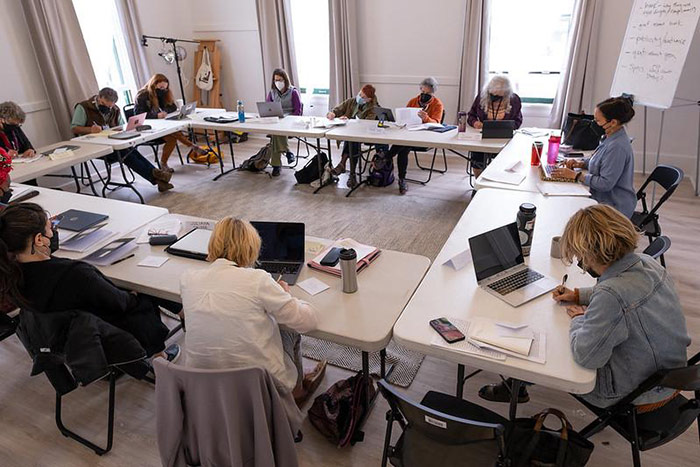
Registration for a morning intensive workshop includes a writing workshop from 9:00 to 11:30 a.m. July 13-15th, 17th and 18th (5 sessions with a break day in between on the 16th). Your morning workshop will include the same cohort of up to 14 of your peer writers throughout the week who are all led by a faculty member of your choosing when you register for the Port Townsend Writers Conference. Morning Workshops also include access to all afternoon and evening programming, including craft lectures, afternoon workshops, evening faculty readings, open mics, and social gatherings at Fort Worden State Park.
Please note: Morning workshops are in-person only and capped at 14 people per workshop. If you do not see a workshop listed here available when you register, it is full.
2026 Morning Intensive Workshops
Kristen Millares Young — Investigating a Silence
In this intensive, generative workshop, you will bring to light that which we were taught to keep hidden. Given prompts that can flex to poetry, fiction, or creative nonfiction, you will create new portals into long-held obsessions with daily writing, both within workshops and between them. To greet your story at its greatest moment of astonishment, we will move through several paradigm shifts, using self-inquiry, ekphrasis, changes of perspective and tense, and deliberate elision to craft lyric truths.
Workshops are about more than creative writing. Workshops are about building a sense of self and a body of work that you can believe in. We all have stories to tell. Our primary objective in workshop is to make of our society what James Baldwin called "a more human dwelling place." By producing and complicating our self-representations, we can put our difficult histories to work.
Using close reading, discussion, in-class writing, and breakout workshop groups, you will make art from hard-earned wisdom. Participants will leave with fresh pages, lasting strategies for designing your own prompts based on your favorite works of literature, and strength-based approaches for assessing sentences, scenes and narrative frameworks. Our workshop will culminate with an in-class reading of new pages you’ve produced during our time together.
Erica Bauermeister - The Writer’s Essential Toolkit
As writers, we are many things—magicians and mechanics, painters and singers and storytellers. And yet each of these roles calls on similar sets of skills. In this workshop, we will take a deep dive into five of the most important tools in your kit: Character, Description, POV, Style, and Editing. Along the way, we will delve into other crucial and practical questions, such as how do you establish a viable writing process and schedule? How do you create a successful writing group? How do I know when a piece is done? This class can serve as either introduction or rejuvenator, and the lessons can be applied to fiction, non-fiction, or poetry.
Jamie Ford - Inventing the Unexpected
Stories don’t come alive when they behave. Behaving is for tax forms and protagonists no one remembers. Fiction wakes up when things go sideways––when “normal” breaks, when a character says something they instantly regret, when the setting suddenly turns meddlesome, or when a desire comes true and makes everything worse.
This workshop is built to unleash that chaos.
We’ll start with scenes in the middle of trouble, build characters who contradict themselves, and use place as a conspirator instead of wallpaper. We’ll chase the kind of turns that feel surprising in the moment, yet weirdly inevitable in hindsight. Think less polishing, more experimenting. Less backstory, more disruption. Less behaving, and more choices that cost your characters something deliciously irreversible.
No tiptoeing. No apologizing.
Just invention that bites back and stories that surprise even their author.
Tessa Hulls - Exploring the Borders of Graphic Narrative
Comics combine words and images, but this workshop takes the idea of hybridity a step further to ask: what other forms can we draw from to inform how we make comics? Students need no prior experience in graphic narrative for this workshop; the only prerequisite is a desire to experiment and push the boundaries of genre.
Getting our hands dirty, we’ll use analog materials of pen, pencil, and color on paper, (though students are welcome to augment this by bringing iPads if they work digitally) to learn how to weave unexpected inspirations into graphic narratives to create works rich with surprise and deep emotional resonance. We’ll study comics artists such as Thi Bui, David B, Lee Lai, Nora Krug, Alison Bechdel, Christophe Chabouté, and Eleanor Davis— but we’ll also draw from poetry, visual art, cartography, somatics, and the works of genre-spanning creatives like Shing Yin Kor, Sophie Calle, and Twyla Tharp.
While the goal of this workshop is not to generate completed works, students will come away with the starting points of new comics that will push them to explore graphic narrative in fresh, innovative ways.
Michael McGriff - Let the Images Do the Talking (Poetry Workshop)
The common ground between Li Po’s first-century poem “Exile’s Letter” and Yusef Komunyakaa’s 1992 poem “My Father’s Love Letters” is the literary image. In these two poems, the images contain entire worlds of emotion, narrative, and subtext. To put it another way, images hold the complexities of human experience. Images are also slippery— they don’t explain; they don’t make mandates; they’re not expository; they don’t hold a reader’s hand. A good image happens twice, once as a literal detail anchored to space and time and once as something more figurative that ripples out beyond the margins of the page. In this generative workshop, we’ll look at several poems that use imagery in surprising and poignant ways. We’ll locate, discuss, and imitate a diverse range of image-making techniques from a wide range of poets. We’ll write a lot, share a lot, and sharpen a specific element of our craft. Think of this workshop as a laboratory space where all results move the writer forward.
Jacinda Townsend - Character to Conflict: Building from the Ground Up
So many of the characters dancing in the literary ballroom have sealed themselves indelibly into our memories: they’ve shocked us as much as they’ve thrilled us, and parked us on cliffs of yearning as we reflect on the human condition. In this workshop, we’ll talk about conjuring those dazzling people from the ground up, from quirk to conflict. Participants will be encouraged to write character sketches and scenes to aid in developing more dynamic protagonists and villains.
Roger Reeves - Poetic Vision
In this workshop, we’ll read writers like Jeffery Yang, Gjertrud Schnackenberg, Nathaniel Mackey, Kim Hyesoon, and Nicolás Guillén, writers who possess a way of seeing and making a lyric poem that obeys and is beholden only to that vision. These are poets who create longer works, works that constantly turn inward, turn toward themselves for finding new paths and methods of making and prolonging the poem. In this workshop, we’ll discuss these notions of making and seeing toward developing our own visions and poems. This workshop will be both generative and an opportunity to practice close, careful reading.
Claudia Rowe - The “I” of the Storm: Navigating First-Person in Nonfiction
Finding the right voice —a narrative persona —can be one of the trickiest parts of writing nonfiction. How much “I” is the right amount; how much is intrusive Should the tone of that voice be confessional?Explanatory?Conspiratorial? Poetic?The answer, of course, is it depends. In narrative nonfiction, your “I” is an omniscient persona, who moves a story forward by presenting information without hogging the spotlight. But in memoir, your “I” is the main character in an ensemble production who may, or may not, be a reliable guide. And what about creative nonfiction, which blends these two forms, moving in and out of memoir and omniscient narration, sometimes incorporating other forms, such as verse? In this workshop, we’ll gain inspiration through reading essays, journalism, and memoir excerpts tailored to the projects and needs of students. We’ll experiment with different personas to tell our stories. And we’ll bounce these voices off one another. By week’s end, each writer should feel more confident about their chosen voice on the page.
A. Van Jordan - Second Chances and Do Overs: (Poetry Workshop)
This workshop will focus on revision strategies. We’ll look at moving through time and space in the poems, ordering of information, closure, imagery, and cinematic movement. As the title implies, this is not a generative workshop, but we will generate ideas for how to move around in our poems. (Please come in hand with a few poems with which you’ve been struggling.) We will have a chance to write one poem in the workshop, but the rest of the time we’ll look at the few poems you bring for some focused feedback.
Lidia Yuknavitch - Put the Pieces Where you May: Working with the Narrative Fragment to Create Story Fields
Arrange whatever pieces come your way" is a quote from Virginia Woolf. She was describing how one might find and arrange meaning from disparate, small, or seemingly unimportant "pieces" of experience. As anyone has ever witnessed in her work, rather than linearity, she created patterns where stories emerged from kaleidoscopic turns. In this creative lab we will generate narrative fragments (fiction, nonfiction, poetic, doesn't matter) and explore different modes of arrangement to yield stories. In particular, we will look at examples of as well as create diptychs, triptychs, and narrative braids. Participants will leave the creative lab with draft material for further development, possibly (it happens!) juicy completed works, and even material that could inject vibrancy back into dormant or stuck work.
Craft Lectures
2026 Afternoon Craft Lectures
Erica Bauermeister – What's Form Got to Do with It? How Structure Creates Meaning.
Jamie Ford – The Art of the Opening Page: Hooking Agents, Editors, and Readers on Page One.
Tessa Hulls – One River, Many Braids: A Multidisciplinary Approach
Mike McGriff – Images Haunt
Roger Reeves -Poetry Isn't Revolution but a Way of Knowing Why it Must Come
Claudia Rowe - If It’s True, How Can You Call It Creative? The Question of Art in Literary Nonfiction
Jacinda Townsend - Gyroscopic Force as Narrative Strength
A. Van Jordan – Cinematic Movement: Using the Lens for Our Lines
Lidia Yuknavitch – The Beginning of the End of the Beginning
Kristen Millares Young - The Invitation and The Veil: On the Power of Withholding
Afternoon Workshops
Registering for afternoon workshops includes access to all afternoon and evening programming at the Port Townsend Writers Conference, including craft lectures, afternoon workshops, evening faculty readings, open mics, and social gatherings at Fort Worden State Park. Registering for a morning intensive workshop (see above) also includes access to afternoon and evening programming in addition to the morning intensive workshop. Please note, registering for afternoons only does not include access to a morning intensive workshop.
2026 Afternoon Workshops
Dawn Pichón Barron - Poetic Collage: A Collective Craft
Need inspiration? A break from a project? A tactile pursuit that still fulfills the need to write? Join this afternoon workshop and experience the art of creating collage poems. The purpose of this workshop is to create poems and participate in meaning-making through words and images. Practicing the “butterfly effect,” we will create and share our individual work, discuss its impacts on our immediate creative circle and how it can influence the greater world. We will begin by discussing examples of collage poetry in the form of text or word art then journey into crafting our own poetic collage. By using the modality of collage to create poetry, we are reflecting upon existing images and texts and transforming these into our own (analog visual poetry) with new meaning and aesthetics. Folx will share (if they choose) their poem and the process of its creation. Please bring 1 copy of a poem that you wrote that can be shared. All other materials will be provided.
Brian Gilmore – “Elsewhere”: Writing of Unfamiliar Places
While poets and writers always write about “place” and where they are from, this workshop will charge the poets with writing about the unfamiliar and uncomfortable places. The goal is to have the poets leave their comfort zones by going elsewhere in their creative selves. Poetry that will be shared with the poets include poetry from Kwame Dawes’ collection “Nebraska,” Kawau Brathwaite’s “Other Exiles” and the workshop facilitator’s own work from - “Come See About Me Marvin.” However, the point is to think outside of your familiar place and go there and embrace it completely on the page and show us how you feel about it.
Brian Gilmore – “Ma Rainey”: Bringing to life the heroic ordinary
This workshop shall introduce or expand the poets knowledge of the poetry of the DC blues poet and folklorist scholar, Sterling A. Brown. Brown, most known for his 1932 classic collection, ‘Southern Road’ brought the ordinary people to life in his poetry and wrote about them throughout his life. He not only wrote about them but through language and style he made their lives even more meaningful and important. Brown didn’t want us to forget about these colorful characters and figures in our lives who made life more bearable at times. It is the poet’s challenge in this workshop to mine their own lives for such charismatic figures who uplifted and endured and perhaps helped the poet endure. This is an attempt to make ordinary persons extraordinary via verse and do it in your own way on your terms.
Brian Gilmore – “You and I”: Poetry of Love and Conflict
Three women poets, very different in time, and in style, but each with their own voice are the inspiration for this workshop. There are few topics more dominant in poetry as love and conflict over love. The difficulty of intimate relationships and family relationships. Natasha Trethwey, Eavan Boland, and Jennifer Maritza McCauley, the three poets who work shall be shared to set up the writing, do not shy away from this subject matter in their work. Poets will be inspired to enter their own difficult spaces and ways to comment on one of life’s constants: the quest for love, or not to love. The quest to avoid or seek conflict in love. How can a poet open and be honest on this most human of desires yet the most painful of all perhaps?
Kate Lebo - Writing with Food
Food and hunger are universals that cross cultures and species. All animals must eat, and many animals eat each other. In this multi-genre class, we’ll examine the way writers use food as both the physical stuff of story and to make powerful metaphors—for transformation, yearning, belonging, exile, and more. When food is on the table, what ideas can writers explore, what worlds can they reveal, what relationships can they probe? How do these literary works preserve culture, plumb consciousness, inspire change, or help us understand what we desire and need? We’ll read examples of food writing and writing that just happens to be about food, and we’ll write our own food-inspired pieces. All genres welcome.
Kate Lebo - An Introduction to Helen Garner
Australian writer Helen Garner (b. 1942) been called “an acclaimed celebrator of the poetic quotidian” and a savage self-scrutinizer whose honesty “has less to do with what she sees in the world than with what she refuses to turn away from in herself.” A writer of novels, book-length journalism, criticism, and essays, her nonfiction in particular can be disquieting, even upsetting, because of the ways she shows herself on the page. Not all of these flashes of self are conscious—no bothering to perfect control of the nonfiction persona here—which contributes to a thrilling, complex mucking about with humanity from a writer who pursues that complexity even when it gets her in trouble. In this class, we’ll read three of Garner’s essays and consider them as writers, looking deeply at the choices she made and how those choices shape, limit, and inform her writing. Rather than reading from any theoretical point of view, we’ll read as practitioners trying to understand how an essay was put together, and, by extension, how nonfiction is or might be made. You’ll need to read a small packet of Garner’s work before class—copies of which will be available for free in the bookstore—and be prepared for discussion. After we talk, we’ll write our own Garner-inspired work.
Sam Ligon – Flash Fiction: The Annihilating
In the anthology Sudden Fiction, Robert Kelly refers to short-short fiction as “the insidious, sudden, alarming, stabbing, tantalizing, annihilating form… neither poetic prose nor prosy verse, but the energy and clarity typical of prose coincident in the scope and rhythm of the poem.” In the same anthology, Joyce Carol Oates writes that “very short fictions are nearly always experimental, exquisitely calibrated, reminiscent of Frost’s definition of a poem—a structure of words that consumes itself as it unfolds, like ice melting on a stove.” Flash fiction tends to rely on surprise, a hard turn at the end. It’s often elliptical or fragmented, shaped by tone and shadow. Charles Baxter says the short-short needs “a quick turning of the wrist toward texture, something suddenly broken or quickly repaired.” In this class, we’ll explore compression and limitation, evocation and implication, formal constraint and what might arise from line pressure and narrative restriction in the annihilating form.
Sam Ligon – The Told Story
Fiction is a dramatic form, often revealing characters and stories through scene — action, description, and dialogue, frequently woven with a character’s thoughts or observations. Effective scenes tend to be shown, allowing the reader to draw conclusions based on what’s been rendered. But stories can also be told, sometimes in the case of expository sections, and sometimes almost entirely. Show, don’t tell, we’re told early and often. But some stories gain power through summary, withholding scenic opening and revelation until very late in the narrative, creating a kind of distance between a first-person narrator and the action she’s revealing. Dialogue in these stories might be entirely summarized, scenes taking on elliptical qualities, often shaped by lists. But the story and the protagonist must still be revealed in depth and complexity, without explanation or reduction, the story creating context and mystery as it unfolds. In this class we’ll read and discuss two stories, Jhumpa Lahiri’s “The Boundary” and Donald Barthelme’s “The School,” examining how a told story can be complete, complex, and beautiful, while still creating space for a reader to draw conclusions and shape meaning.
Sam Ligon – Accumulation, Time, and the List Story
List stories often feel like collages—fragmented and accumulating power as they unfold, using their lists as organizing principles and sometimes as tumbling drivers. They often seem to exist outside the clock or unfold across a broader sweep of time than a more traditional narrative. Susan Minot’s “Lust” is more fragmented and less concerned with a traditional fictional clock than Tim O’Brien’s “The Things They Carried,” but both stories rely on their lists, and to some degree, take refuge in them. In this class we’ll look at three stories shaped by lists and unhinged in time: Jamaica Kinkaid’s “Girl,” a list in the imperative mood of a mother instructing her daughter; Blake Butler’s “Hair Loop,” a fragmented, numbered list of a narrator’s observations on hair, which becomes the object around which meaning is created as detailed observations accumulate; and Robert Coover’s “Going for a Beer,” a meditation on time and mortality, the moments of the story almost unable to keep up with themselves, almost chasing themselves, as the story tumbles toward its end.
Gary Copeland Lilley & Bryan Fry - Say Something! The Mechanics of Performance (Three session)
Attention: Bring a copy of your own work to read during this workshop series
In this three-part series of performance-based workshops we will discuss the significance of writing communities, performance spaces, and the mechanics of composing, revising, and presenting poetry and prose in an open-mic setting. Participants should expect to share their work and receive feedback on everything from structure to tempo to knowing when to allow space for the lines that hit. As members of a performance-based community, they will also learn how to listen to the work of others, provide energy as audience members, and remain present during live poetry and prose performances.
These workshops will act as an undercurrent for PTWC’s nightly open-mic sessions where participants will have the opportunity to perform alongside other conference attendees and to put their mechanics into practice. Bearing this in mind, the workshops will emphasize sharing poetry and prose within a strict time limit—five minutes. It is our belief that participants will come to appreciate the time constraint and recognize it is not a hindrance, but an opportunity to respect one another and make sure everything in a performance is entirely effective. That’s the payoff, that’s where the fun is. We feel that we can take you and your work there.
All levels of writing welcome, with emphasis on beginning/intermediate writers.
Matt Morton - The Wildness of Play
Often when writing poems, we assume that we must hew to expectations for discursive linearity, narrative coherence, and the strictly logical progression from one sentence to the next. What happens when we temporarily relieve ourselves of the burdens of these expectations? What new energy can be created by wild leaps, harsh juxtapositions, dream-like associative logic, sound-play, and elements of collage? In this generative workshop, we will explore different approaches to playing with these and other techniques. In doing so, we will learn how permitting and even seeking out the unexpected can open up new and exciting terrain for our poems, and allow us to make surprising discoveries, in terms of both form and content. Participants will leave this workshop with a developed draft.
Matt Morton - Thinking in Poetry
In this generative workshop, we will first look at several model poems as examples of the poem as an act of thought—as an imitation of the human mind at work. We will then turn to our own writing, paying special attention to tone and the roles that it plays in the creation of the movement of the mind on the page. How can we more clearly indicate tone to our readers? How can we skillfully incorporate tonal shifts to indicate the changing concerns and attitudes of the speaker? How can our openness to unexpected changes of direction allow us to harness the potential energy of poetry’s dramatic capacities and to increase emotional depth? Together, we will think about different ways to think (and to demonstrate thinking) in our poems. Participants will leave this workshop with a developed draft.
Matt Morton - Writing the Prose Poem
Fables, fever dreams, journal entries, jokes, memories, letters, lists: the prose poem is an exciting genre that can take many forms. But how do prose poems work? How do they achieve their peculiar power? What are the necessary elements when we’re seeking to write with compression and economy in mind? In this generative workshop, writers of all genres will be welcomed to explore the various approaches we can take to writing prose poems. We will pay special attention to the opportunities to experiment with voice that the prose poem provides. Time will be provided to work on a new draft, which might then be expanded into a longer (or lineated) piece.
Kristen Millares Young - Code Switch: On Writing Difference, Power, and Privilege (2 Sessions)
As writers, we map the crevasses between what people say and what they do and between what they think and what they say. What role do our racial, class, and gendered differences play in these widening fissures? Through fiction, creative nonfiction, or poetry, we can compel readers to think through the choices of our characters. In so doing, we create empathy with craft and follow the edict of James Baldwin to make this world “a more human dwelling place.”
During this two-part generative workshop, you will write in response to a series of timed prompts in the form of questions applied to your protagonist, whether fictional, poetic persona, or the “I” of memoir. We will begin with, “What is the hardest thing that has gone unsaid in your life?” From there, I will guide your exploration with questions that help establish the time frame, setting, characters, and context. Finally, I'll ask you to consider the various intersecting complicities, whether personal or institutional, which produce the narrative silences that move beneath speech.
Course readings will include the short story “Rites: Stories” from Rites by Savannah Johnston (Choctaw Nation of Oklahoma), the Afrofuturist novel Here in the (Middle) of Nowhere by Anastacia-Reneé, the poem “Washing My Mother’s Body” from An American Sunrise by Joy Harjo (Muskogee (Creek) Nation), the novel-in-verse Couplets by Maggie Millner, and other texts that tackle the intersections of grief, sex, race, hope, and ambition. You can drop into either or both sessions of this prompt-driven generative workshop.
Maya Jewell Zeller - Writing Against the Rules: How to Start a Memoir by Resisting Systems that Hold you Back
In this generative writing workshop, attendees will start from a container of Rules to write against—e.g., Renter’s Agreements, Commandments, State Testing Standards, Voting Laws. Serving as craft models and content inspiration, we’ll look to those who complicate language and circuit of such systems, arriving at surprising narrative and meditation about large and small worlds. Each participant should leave with the beginning of your own nuanced nonfiction story, and ideas for expanding into a memoir or essay.
Maya Jewell Zeller - Crossover Artists: Poets Writing Prose
In this generative workshop, we’ll look at lyric prose excerpts that act a lot like poems: essays formed from lists, linked and numbered sequences, and obsessive serial forms and structures that explore an “aboutness” more than they follow a traditional plot arc. Studying models like Jane Wong, Maggie Nelson, Kazim Ali, and Anne Carson, we’ll practice strategies for beginning an essay or story from poetic techniques like image or the musical cadences of speech.
Maya Jewell Zeller - Into the Tangle: The Braided Essay
Have a thicket of thorns or a mass of fur or hair or other difficult emotional material you need to navigate before you share? Consider the braid: by plaiting the personal narrative or personal objective correlative with details of lore/history/science, plus mystery/mythos/magic, your feral tangle will both remain complex and become imminently presentable as braided prose.
Long Form Workshop
The Long Form Workshop is a 12-month masterclass led by an award-winning fiction and/or nonfiction writer designed to support writers seeking to produce a longer work of prose, like a collection of essays, memoir or novel. The workshop begins in person at the Port Townsend Writers Conference. Following this weeklong session, the workshop continues with twice-monthly online meetings and monthly packet submissions, allowing for ongoing peer critique and guidance as you refine your story and work toward completing a full manuscript. After a year of working together, the workshop culminates in another weeklong retreat at the Port Townsend Writers Conference, where writers will finalize discussions of drafts and talk about what happens to them upon completion.
The 2026-2027 Long Form Workshop, led by award-winning writer and educator Sayantani Dasgupta, will focus on writing a memoir or linked essay collection. For more detailed information about the Long Form Workshop, including how to apply, please visit Centrum’s Long Form Workshop webpage.
Schedule
Below is a general outline of how you can spend your time during the Port Townsend Writers Conference depending upon what you register to attend.
Registration for a morning intensive workshop also includes access to all afternoon and evening programming, including craft lectures, afternoon workshops, evening faculty readings, open mics, and social gatherings at Fort Worden State Park. Registration for afternoons only includes access to all afternoon and evening programming and does not include access to a morning intensive workshop.
The schedule below includes when morning intensive workshops, afternoon drop-in workshops, craft lectures, open mics, and evening gatherings occur. Specifics, including the titles of workshops and their locations on campus, will be sent after registration and prior to your arrival on campus.
Please note, all times are Pacific Standard Time.
Sunday, July 12
2 p.m. - Centrum Shuttle leaves SeaTac Airport headed to Fort Worden*
4-5 p.m. - Arrival at Fort Worden State Park, Check In, and Welcome Reception
5:30 p.m. - Dinner**
7 p.m. - Welcome Orientation
7:30 p.m. - Faculty Reading
Monday - Wednesday, July 13-15, and Friday-Saturday, July 17-18
7:45 a.m. - Breakfast**
9-11:30 a.m. - Morning Intensive Workshops
11:45 a.m. - Lunch**
1-1:50 p.m. - Afternoon Craft Lectures
2-3:30 p.m. - Afternoon Drop-In Workshops
5:30 p.m. - Dinner**
7 p.m. - Evening faculty readings
Directly following faculty readings - PTWC Open Mic
Thursday, July 16th
7:45 a.m. - Breakfast**
9-11 a.m. Optional Fort Worden Group Hike
11:45 a.m. - Lunch**
5:30 p.m. - Dinner**
7 p.m. - Evening faculty Readings
Directly following faculty reading - Evening social gathering (TBA)
Sunday, July 19th
7:45 a.m. - Breakfast
9 a.m. - Centrum Shuttle Departs Fort Worden headed to SeaTac Airport**
11 a.m. - Fort Worden Checkout***
*For those who register for the Centrum Shuttle from SeaTac International Airport in Seattle to and/or from Fort Worden State Park in Port Townsend, Washington
**For those who register for meals on campus
***For those who register for lodging on campus
2026 Fellowship Program
Centrum’s Writing Program maintains a robust fellowship program through partnerships with funders as well as educational institutions, community leaders, and liaisons who identify and award fellowships every year. Our various fellowships, like our need-based scholarship program, helps to realize our vision: a future where anyone from anywhere can nurture their creativity in an environment that is supportive, challenging, and uplifting – building a world of greater connection and inclusion through the arts.
University of Idaho Centrum Fellowship: A collaboration with one of Centrum’s long-standing partners, the University of Idaho’s Creative Writing Program, Centrum welcomes Master of Fine Arts (MFA) students to attend the summer Port Townsend Writers Conference free of charge. The cost of the conference, which includes tuition, lodging, and meals, is covered jointly by Centrum and the University. This opportunity is open to MFA Creative Writing candidates in all genres.
University Fellowship: Modeled after our partnership with the University of Idaho, Centrum’s Writing Program also works with other universities across the country, though predominately in the Pacific and Intermountain West, to leverage funding to provide fellowships to the Port Townsend Writers Conference. These fellowships are dependent on funding each year. Past partners have ranged geographically from Western Washington University to Arizona State and Florida State University.
Indigenous Fellowship: Begun in 2024 as a partnership between Centrum’s writing program and the Native Pathways Program at Evergreen State College, Centrum works with community liaisons across the Pacific Northwest to welcome Indigenous writers to the Port Townsend Writers Conference. Depending on annual funding, the fellowship covers tuition, meals, lodging, and travel for up to three fellows.
Gallagher-Lilley Fellowship: Begun in 2025 by the writing program’s Artistic Director and poet, Gary Copeland Lilley, with catalyst funding provided by award-winning poet Tess Gallgher, the Gallagher-Lilley Fellowship provides tuition, meals, lodging and travel for up to four African American writers who are residents of Washington state to attend the Port Townsend Writers Conference. Like Centrum’s Indigenous fellowships, Centrum works with community leaders and educators as liaisons to identify and select fellows.
WSU-Centrum Campus Civic Poet Fellowship: Established as a collaborative effort between the Martin Luther King Program and the Department of English, Washington State University’s Campus Civic Poet Award recognizes a student’s commitment to poetry and civic engagement on the Pullman Campus. It serves to support a poet in developing their voice and cultivating community. In addition to an honorarium, the annual winner receives mentorship from faculty and staff as well as invitations to participate in campus-oriented, civic-related events. Centrum partners with WSU’s Department of English to jointly fund tuition, meals, and lodging for the Campus Civic Poet to also attend the Port Townsend Writers Conference.
Costs
Centrum has a variety of ways to be able to attend our workshops even if you’re on a budget. If you need financial assistance, Centrum has a robust scholarship program awarded on a first-come, first-served; and as-needed basis.
Please note, housing and meal costs reflect the Conference's extension to seven days in 2026.
Tuition:
Morning Intensive Workshop: $1,050
Afternoons Only: $650
First Impression 1-on-1 Writing Consultation with an Editor: $80
Those who register for the Morning Intensive Workshop get access to their choice of a morning faculty member as well as access to all drop-in afternoon workshops. Morning faculty classes are limited to 14 people and registration fills quickly.
Housing:
Private Dorm Room (7 nights): $575
Private Dorm Room with a View (7 nights): $675
Shared Apartment (7 nights): $1,100
Meals:
All meals: $475
Transportation:
Shuttle from Seatac 7/12: $80
Shuttle to Seatac 7/19: $80
Scholarships
Apply online as you register. Please note that except in rare cases, scholarships are available for tuition only, not housing and meals. Centrum requires a $50 deposit of scholarship applicants, which is fully refundable if you do not receive a scholarship and choose not to attend the conference.
If we haven’t answered all of the questions you may have, please contact Eric Greenwell at 360-385-3102, x131, or egreenwell@centrum (dot) org.
FAQ
Is financial assistance available to attend the Port Townsend Writers Conference?
Yes! Centrum is proud to offer a limited number of scholarships. We accept scholarship applications when registration for the Port Townsend Writers Conference opens on January 2 through April 15, prior to the Conference in July. Applications are evaluated by an anonymous scholarship judge on a first come, first served bases and on a rolling schedule throughout the application period. Should Centrum not exhaust our scholarship funding by April 15, the application period will remain open until all funds are committed. Apply online as you register.
Please note that except in rare cases, scholarships are available for tuition only. This does not include travel, housing, and meals. Applicants should be prepared to cover these expenses. Centrum requires a $50 deposit of scholarship applicants at the time of application, which is fully refundable if you do not receive a scholarship and choose not to attend the Conference.
I registered for a morning intensive workshop. Can I attend a craft lecture or afternoon workshop? What about a faculty reading?
Yes! Registration for a morning intensive workshop includes access to all afternoon and evening programming as well, including craft lectures, afternoon workshops, evening faculty readings, open mics, and social gatherings through the week. In short, if you register for a morning intensive workshop, you have access to everything on the schedule for the Conference.
I registered for afternoons only. Can I attend a morning workshop too?
Not unless you change your registration to a morning intensive workshop. Morning intensives are limited to 14 writers who meet daily throughout the week with the same faculty member. To attend a morning intensive workshop, you must register for that workshop, which includes access to all afternoon and evening programming during the Conference as well. As an afternoon participant, you still have access to all the great programming in the afternoons and evenings, including craft lectures, afternoon workshops, evening faculty readings, open mics, and social gatherings. If you would like to change your registration to a morning workshop - and spots are still available in that workshop - you do so through the registration confirmation email you received or you can contact Centrum's Registrar at (360) 385-3102.
I want to share my work at the Conference. How can I do that?
We're so glad you asked! At the Port Townsend Writers Conference, one of our goals is to foster a community of writers. While writing can often be solitary in practice - as in, the act itself - there's a whole community of people out there experiencing similar challenges. At the Conference, we have open mics every evening, and anyone who registers (morning and afternoons) can come and sign up. Workshops are often generative as well and include many opportunities to share your work with the work of your peers. If you have books, we have a pop-up bookstore every year where you can sell them, and you will receive more information after you register about how to include your books for sale. Finally, Fort Worden is a big campus with lots of open spaces to walk with the writers you meet and share thoughts, experiences, and ideas while passing through Pacific madrone forests or looking across the Salish Sea.
Do I have to register for meals and lodging at Fort Worden for the Conference too?
In short, no. You can register for a morning intensive workshop or afternoon programming only without registering for meals and lodging. However, there are important things to consider. Grocery stores and restaurants are not easily accessible from Fort Worden if you do not have a personal vehicle on campus. Downtown Port Townsend and most grocery stores, hotels, and short-term rentals are a 10-minute drive from our campus at Fort Worden State Park, and Centrum is not staffed to provide shuttle service for individual participants to and from town during the Conference. If you choose to stay off campus and/or prepare your own meals, you will want to plan accordingly. Also note, many deep connections and inspiring conversations happen over meals or walking around campus, and participants often sign up for meals because they are conveniently located on campus, just a quick walk from workshops, and because they eat with their peers and faculty, forming stronger bonds as the week progresses. Also note, Fort Worden sits right on the shore of the Salish Sea, and lodging on campus is not only a quick walk from workshops, but also located in an inspiring place with stunning views of the open water, Mount Baker, and Mount Rainier, and campus grounds include about 12 miles of hiking trails.
I want to sign up for a First Impressions Writing Sample Consultation. What can I expect?
A First Impression is yet another opportunity to share your work and receive 1-on-1 feedback from an experienced editor and writing teacher during the Conference. Here's how it works: After you sign up for a First Impression, you will receive information prior to the Conference to schedule your time with our Editing Faculty member, Elizabeth Thorpe. You and Elizabeth will have an hour to work together. You can look at whatever sample of your writing you bring to her during that hour. Elizabeth will often ask about your goals and intentions, read your sample with your goals in mind, and then discuss the sample with you. How does this help you? Editors and agents often look at work quickly and make snap decisions in a matter of pages. For example, in the initial stages of selecting a poetry manuscript for publication, editors often read the first five and last five poems before deciding whether to advance or reject it. It can be helpful for you to have insight into how your work might impact a reader quickly, like an editor or agent, who knows very little about you or your work. Previous participants have found this “mirror” - truly a first impression - very useful. But the goal is always to meet each writer where they are and try to be as productive as possible within the one-hour session. You might want to ask questions about the editing and publishing landscape more than talk about your writing, for example, or you may want a more in-depth critique of your writing sample. It's your hour of Elizabeth's time and attention. If you do want an in-depth critique, you should plan to give Elizabeth a brief sample of your work so you can spend time really discussing what's happening in that sample.
Do I have to go to everything during the Conference week?
The short answer is, no. In fact, we've often seen writers become overwhelmed when they try to attend everything during the Conference. We recommend thinking about your goals. What do you want to get out of the experience? For example, if your goal is to meet as many writers as possible, including faculty and peers, you might want to plan to attend as many workshops, lectures, evening readings, and open mics as you can, and if you are naturally introverted or drained by extended social interaction, you might consider how much energy such a level of activity might require. If your goal is to advance a piece of writing, on the other hand, you might want to build in time to write and balance that writing time with other activities and programming during the week. Maybe you also want to see Port Townsend and spend time hiking Fort Worden. In 2025, we are returning to a seven-day schedule (as compared to a six-day schedule in recent years). The additional day will allow us to build in time for you to experience Fort Worden's unique and naturally-rich campus and each other's company. As Centrum's mission states, our goal is creativity and community. We have learned after organizing arts programs for over 50 years, finding the harmony between creativity and community means connecting writers with writers and writers with themselves, and we encourage our writing community to do so for the brief and indelible time we are all together in a beautiful place.
Can I register for the 2025 Port Townsend Writers Conference remotely and attend online?
The Covid-19 Pandemic challenged our writing community in many ways, and providing the opportunity to attend the Conference online was one way we were able to meet and share our work and continue our legacy of creative and community. Our production crew here at Centrum has done a remarkable job providing a platform for online engagement. In the years since the Pandemic, however, as we have returned to hosting the Conference in person at Fort Worden, we have seen interest in attending online decline significantly, from about 40 participants in 2022 to just 3 in 2024, when we cancelled the online option. There are no plans to offer online remote attendance in 2025. Thank you for supporting our community and engaging each other through the Pandemic, which was a challenge our community rose to and remains a testament to its import and strength.
For questions about how to get to Fort Worden State Park, food service for on-campus meals, what to bring, and what to expect of Port Townsend and the area, you can also visit Centrum's general FAQ page by clicking here.
If we haven’t answered all of the questions you may have, please contact Eric Greenwell at 360-385-3102, x131, or egreenwell@centrum (dot) org.
Past Faculty
Alice Anderson
Morning Workshop Faculty
About
Alice Anderson is the author of the national bestselling memoir, Some Bright Morning, I’ll Fly Away, which was published in fall of 2017 from St. Martin’s Press and was recently optioned for film. Anderson’s second poetry collection, The Watermark, was published in the UK and US simultaneously from Eyewear Publishing. A bestselling first collection of poems, Human Nature, was awarded both the Best First Book Prize from the Great Lakes Colleges Association and the Elmer Holmes Bobst Prize from NYU. Anderson has also had work appear in such publications as The Rumpus, Goodhousekeeping, Literary Hub, Poem of the Week, The Manifest-Station, Electric Lit, New Letters, CUTTHROAT, The New York Quarterly, Tupelo Quarterly, AGNI, and more. Anderson’s work is anthologized in places such as: On The Verge: Emerging Poets and Artists in America; and American Poetry, The Next Generation. Anderson is currently at work on a third poetry collection, a novel, and an original series.
Read MoreAlice Derry
Past Faculty
About
Alice Derry is the author of five volumes of poetry, most recently Hunger (MoonPath 2018) along with three chapbooks, including translations of poems by Rainer Rilke. She taught for 30 years at Peninsula College where she curated the Foothills Poetry Series, holding some 12-15 readings per year. Since retirement, she has been active in helping local tribal members access poetry and has taught a number of community workshops in poetry. She has printed the first in a series of essays on native plants, collaborating with artist Fred Sharpe. Raymond Carver chose her first poetry manuscript, Stages of Twilight, for the King County (Seattle) Arts Prize. Strangers to their Courage was a finalist for the Washington Book Award. Her new manuscript, Asking, will appear from MoonPath Press in 2022. She lives and works on Washington’s Olympic Peninsula.
Read MoreAnastacia Reneé
Past Faculty
About
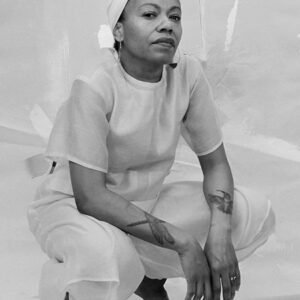
Anastacia Reneé is an award-winning cross-genre writer, educator, interdisciplinary artist, TEDX speaker and podcaster. Renee is the author of (v.), (Black Ocean Press), Forget It (Black Radish Press) and Answer(Me), (Winged City Chapbook Press). She has received fellowships and residencies from Cave Canem, Hedgebrook, VONA, Artist Trust, Jack Straw, Ragdale, Mineral School, Hypatia in the Woods and The New Orleans Writers Residency. Anastacia-Renee’s work has been anthologized in, Furious Flower: Seeding the Future of African American Poetry, Spirited Stone, Lessons from Kubotas Garden, Seismic, Seattle City of Literature, and her poetry, fiction and non-fiction has been in Foglifter, Cascadia Magazine, Pinwheel, The Fight and the Fiddle, Glow, The A-Line, Ms. Magazine, Spark, Obsidian Literature and Arts in the African Diaspora, Crab Creek Review, Alta, Catapult and many more.
Read MoreAnna Quinn
Morning Workshop Faculty
About
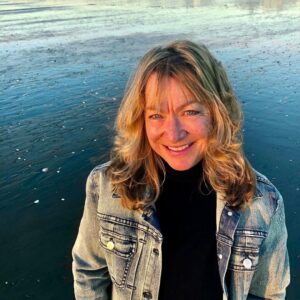
Anna Quinn is the author of two novels, The Night Child (Blackstone, 2018) listed as #1 Best Real Psychological Fiction on Goodreads, and Angeline (Blackstone 2023), a Foreword Review Winner and nominated for a Washington State Book Award. Her work has garnered praise from Luis Alberto Urrea, Dorothy Allison, Bill Ransom, Pam Houston, Melissa Febos, Lidia Yuknavitch, Library Journal, and more. Quinn’s writing has appeared in Psychology Today, New York Times Book Review, Medium, Writer’s Digest, and the Alone Together Anthology— winner of a 2021 Washington State Book Award. She is the founder of The Writers’ Workshoppe in Port Townsend, WA., Kaleidoscope: An Open Mic for Writers, and is an Arts Commissioner in that town as well.
Read MoreArna Bontemps Hemenway
Past Faculty
About
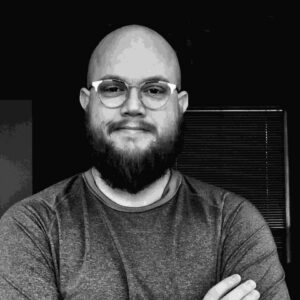
Arna Bontemps Hemenway is the author of Elegy on Kinderklavier (Sarabande Books), winner of the PEN/Hemingway Prize, finalist for the Barnes and Noble Discover Award, and long-listed for the Frank O’Connor International Short Story Prize. His short fiction has appeared in The Atlantic, Best American Short Stories 2015, A Public Space, Ecotone, and The Missouri Review, among other venues. He holds an M.F.A. from the Iowa Writers’ Workshop, is currently Associate Professor of English in Creative Writing at Baylor University, and lives in Dallas, where he cares for his two wonderful children.
Read MoreBettina Judd
Morning Workshop Faculty
About
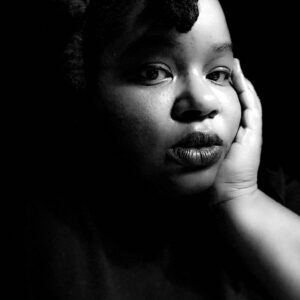
Bettina Judd is an interdisciplinary writer, artist and performer whose research focus is on Black women’s creative production and use of visual art, literature, and music to develop feminist thought. Her book Feelin: Creative Practice, Pleasure, and Black Feminist Thought (Northwestern University Press, December 2022) argues that Black women’s creative production is feminist knowledge production produced by registers of affect she calls “feelin.” She is currently Associate Professor of Gender, Women, and Sexuality Studies at the University of Washington. Her poems and essays have appeared in Feminist Studies, Torch, Mythium, Meridians and other journals and anthologies. Her collection of poems titled patient. which tackles the history of medical experimentation on and display of Black women won the Black Lawrence Press Hudson Book Prize and was released in November of 2014. As a performer she has been invited to perform for audiences within the United States and internationally.
Read MoreBryan Fry
Afternoon Workshop Faculty
About
Bryan Fry earned his MFA in Creative Writing from the University of Idaho. He is the cofounder of Blood Orange Review and currently teaches at Washington State University. His work has appeared in various publications, including Brevity, Front Porch, The South Dakota Review, and The Blue Mountain Review.
Read MoreBryce Andrews
Morning Workshop Faculty
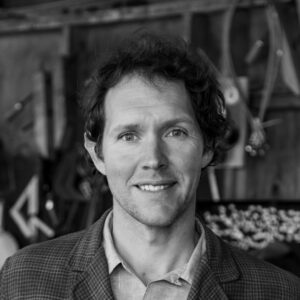
About
Bryce Andrews is a rancher, conservationist, and co-owner of Thunder Road Farm. His award-winning books Badluck Way (2014), Down from the Mountain (2019), and Holding Fire (2023) describe the complex realities of living and working in the wild landscapes of the contemporary American West. He lives with his family on the Flathead Indian Reservation, in Montana.
Read MoreClaudia Castro Luna
Morning Workshop Faculty
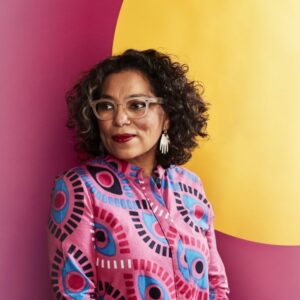
About
Claudia Castro Luna is an Academy of American Poets Poet Laureate fellow (2019), WA State Poet Laureate (2018 – 2021) and Seattle’s inaugural Civic Poet (2015-2018). She is the author of Cipota Under the Moon (Tia Chucha Press, 2022) and Killing Marías (Two Sylvias Press, 2017) both shortlisted for the WA State Book Award in poetry, 2023 and 2018 respectively. She is also the author of One River, A Thousand Voices (Chin Music Press, 2020) and the chapbook This City (Floating Bridge Press, 2016). Her most recent non[1]fiction is in There’s a Revolution Outside, My Love: Letters from a Crisis (Vintage) and in Memory’s Vault: The Poetic Heart of Fort Worden (Empty Bowl). Born in El Salvador, Castro Luna lives in English and Spanish, and she writes and teaches in Seattle on unceded Duwamish lands.
Read MoreCMarie Fuhrman
Past Faculty
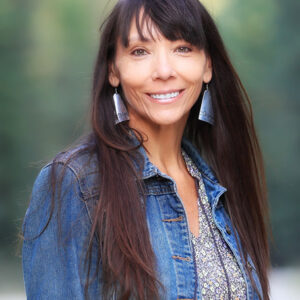
About
CMarie Fuhrman is the author of Camped Beneath the Dam: Poems (Floodgate 2020) and co-editor of Native Voices: Indigenous Poetry, Craft, and Conversations (Tupelo 2019). She has forthcoming or published poetry and nonfiction in multiple journals including Emergence Magazine, Platform Review, Yellow Medicine Review, Cutthroat a Journal of the Arts, Whitefish Review, Poetry Northwest, as well as several anthologies. CMarie is a regular columnist for the Inlander, translations editor for Broadsided Press, non-fiction editor for High Desert Journal and Upstreet, and Director of the Elk River Writers Workshop. CMarie is the Director of Poetry Western Colorado University, where she also teaches Nature Writing. She is the 2021-2023 Idaho Writer in Residence and she resides in the mountains of West Central Idaho with her partner Caleb and their dogs Carhartt and Cisco.
Read MoreDawn Pichón Barron
Afternoon Workshop Faculty
About
Dawn Pichón Barron is currently the academic director/faculty of the undergraduate interdisciplinary Native Pathways Program at the Evergreen State College. She writes across borders and genres, while dreaming of ripe lemon sunrays at the southern tip of the Salish Sea–on the lands of the Medicine Creek treaty tribes and bands—with her wingman and Chihuahuas. Her chapbook, ESCAPE GIRL BLUES, was published by Finishing Line Press, 2018. Other work can be found at A Socially Just Classroom: Transdisciplinary Approaches to Teaching Writing Across the Humanities (2022), Echoes: An Anthology of Native Women Writers (2022), Moss, Pittsburgh Poetry Review, Washington 129 Poetry Anthology (2017), Of A Monstrous Child: A Creative Writing Anthology (2011), Yellow Medicine Review and elsewhere. Lately, she has been obsessed with adornments and fascinated by (reimagining of) motifs and mythical creatures used to demonstrate the continuity of shared time and space through culture.
Read MoreDebra Magpie Earling
Morning Workshop Faculty
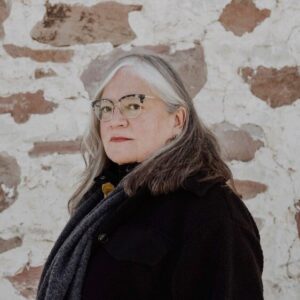
About
Debra Magpie Earling is the author of the novels Perma Red and The Lost Journals of Sacajewea and is currently working on a novel about witches. She is the recipient of the Montana Governor’s Arts Award and has received both a Guggenheim and NEA fellowship. Other awards include the American Book Award, the WILLA Award, the Mountains and Plains Bookseller Association Award, the Spur Award, Montana Book Award, and the Pacific Northwest Bookseller Award. Perma Red was named one of The Great American Novels by The Atlantic Monthly in March 2024. She retired from the University of Montana where she was named professor emeritus in 2021. She is a member and citizen of the Confederated Salish & Kootenai Tribes. She is Bitterroot Salish.
Read MoreDerrick Harriell
Past Faculty
About
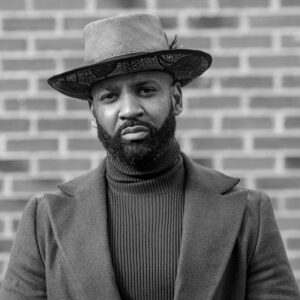
Derrick Harriell is the Ottilie Schillig Associate Professor of English and African American Studies at the University of Mississippi. His previous collections of poems include Stripper in Wonderland, Cotton, and Ropes, winner of the 2014 Mississippi Institute of Arts and Letters Poetry Book Award.
Read MoreElizabeth Colen
Past Faculty
About
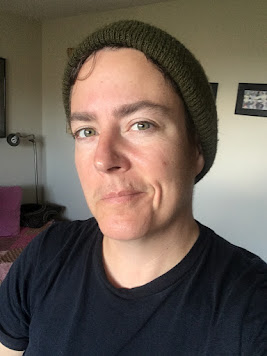
EJ Colen is a PNW-based educator, writer, and editor interested in long-form poetry, the lyric essay, literary and visual collage, and research-based approaches to storytelling and memoir. She is the author of What Weaponry, a novel in prose poems, poetry collections Money for Sunsets (Lambda Literary Award and Audre Lorde Award finalist in 2011) and Waiting Up for the End of the World: Conspiracies, flash fiction collection Dear Mother Monster, Dear Daughter Mistake, long poem / lyric essay hybrid The Green Condition, and fiction collaboration True Ash. With more than two decades of social justice activism, EJ remains committed to centering marginalized voices in all the work that she does. Nonfiction editor at Tupelo Press and freelance editor/manuscript consultant, she teaches in the English and Women, Gender, and Sexuality Studies Departments at Western Washington University.
Read MoreElizabeth Thorpe
Editing Workshop Faculty
About
Elizabeth Thorpe teaches writing at Drexel University and Olympic College. She earned an MFA in Fiction from Goddard College, and is a literary editor for freelance clients and a proofreader for design company 160over90. Her short fiction collection, Cities, was published by Texture Press in 2015. Her short stories, poems, and essays have appeared in Per Contra, escarp, Kahini, Painted Bride Quarterly, and The Maine Review, among others. She lives in Port Townsend, Washington, where she has worked at the Port Townsend Writers’ Conference as an editor since 2011.
Read MoreErica Bauermeister
Morning Workshop Faculty
About
Erica Bauermeister is the NYT bestselling author of 5 novels, including No Two Persons, The Scent Keeper, and The School of Essential Ingredients, as well as her memoir House Lessons: Renovating a Life. Her books have been a Reese’s Book Club Pick, a Washington State Book Award Finalist, and Indie Next Picks, and have been translated into over 25 languages. Before becoming a full-time writer, she earned a PhD in literature and was a teacher and the co-author of two readers’ guides — 500 Great Books by Women and Let’s Hear it for the Girls. She has lived on both coasts of the United States as well as Italy, and currently lives in Port Townsend, WA.
Read MoreGary Copeland Lilley
Artistic Director
About
Gary Copeland Lilley is the author of eight books of poetry, the most recent being The Bushman’s Medicine Show (Lost Horse Press, 2017), and a chapbook, The Hog Killing (Blue Horse Press, 2018). He is originally from North Carolina and now lives in the Pacific Northwest. He has received the DC Commission on the Arts Fellowship for Poetry and is published in numerous anthologies and journals, including The Best American Poetry 2014, Willow Springs, The Swamp, Waxwing, Taos Journal of Poetry and Art, and African American Review. He is a Cave Canem Fellow.
Read MoreJennifer Givhan
Morning Workshop Faculty
About
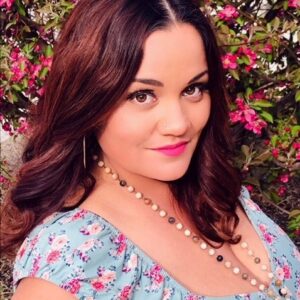
Jennifer Givhan is a Mexican-American and Indigenous poet and novelist from the Southwestern desert and the recipient of poetry fellowships from the National Endowment for the Arts and PEN/Rosenthal Emerging Voices.
Read MoreJonathan Evison
Long Form Faculty
About
Jonathan Evison is an award-winning full-time novelist. He has published ten bestselling novels: All About Lulu, West of Here, The Revised Fundamentals of Caregiving, This is Your Life, Harriet Chance!, Lawn Boy, Legends of the North Cascades, Small World, Again and Again, and The Heart of Winter.
Read MoreJourdan Imani Keith
Past Faculty
About
Jourdan Imani Keith is Seattle’s 2019- 2022 Civic Poet. Featured in Forbes and on NPR, her Orion Magazine essays, Desegregating Wilderness and At Risk appear in the Best American Science and Nature Writing Anthology, as well as text books. The founder of Urban Wilderness Project she leads its R U An Endangered Species™ Women and Whales First: Poetry in a Climate of Change campaign. A recipient of the 2022 US Water Alliance Outstanding Artist prize and a 2018 Americans for the Arts award, her TEDx Talk, Your Body of Water became the theme for King County’s 2016-2018 Poetry on Buses
Read MoreKate Lebo
Afternoon Workshop Faculty
About
Kate Lebo’s first collection of nonfiction, The Book of Difficult Fruit (FSG), won the 2022 Washington State Book Award and was named a best book of the year by NPR, The Atlantic, New York magazine, Electric Literature, and The Globe and Mail. She is the author of the cookbook Pie School (Sasquatch Books), the poetry chapbook Seven Prayers to Cathy McMorris Rodgers (Entre Rios Books), and co-editor with Samuel Ligon of Pie & Whiskey: Writers Under the Influence of Butter and Booze (Sasquatch Books). She lives in Spokane, Washington, where she is an apprentice cheesemaker to Lora Lea Misterly of Quillisascut Farm.
Read MoreKathryn Hunt
Artistic Curator
About
Kathryn Hunt is a poet and nonfiction writer and makes her home on the coast of the Salish Sea. She is author of two poetry collections, Long Way Through Ruin and Seed Wheel and two chapbooks, The Country I Come From and She Who Walks the Earth. Her poems have appeared in the Orion, Radar, Poetry Northwest, Missouri Review, and Narrative, among others, and she is the recipient of residencies and awards from Ucross, Hedgebrook, Artists Trust, and Joya AIR (Spain). She is the artistic curator of Centrum’s Poetry on the Salish Sea, a series that hosts poets from around the Pacific NW and beyond to the Olympic Peninsula in Washington. She’s recently completed a memoir, Nocturne, a mother-daughter tale.
Read MoreKim Addonizio
Afternoon Workshop Faculty
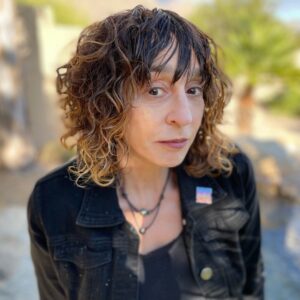
About
Kim Addonizio is the author of seven poetry collections, two novels, two story collections, and two books on writing poetry: The Poet’s Companion (with Dorianne Laux) and Ordinary Genius. Her poetry collection Tell Me was a finalist for the National Book Award. She also has two word/music CDS: Swearing, Smoking, Drinking, & Kissing (with Susan Browne) and My Black Angel, the companion to My Black Angel: Blues Poems and Portraits, a collaboration with woodcut artist Charles D. Jones. Her poetry has been translated into several languages including Spanish, Arabic, Italian, and Hungarian. Collections have been published in China, Spain, Mexico, Lebanon, and the UK. Addonizio’s awards include two fellowships from the NEA, a Guggenheim, two Pushcart Prizes, and other honors. Her latest books are a poetry collection, Mortal Trash (W.W. Norton), and a memoir, Bukowski in a Sundress: Confessions from a Writing Life (Penguin). A new book of poems, Now We’re Getting Somewhere, was published by W.W. Norton (March 2021).
Read MoreKristen Millares Young
Afternoon Workshop Faculty
About
Kristen Millares Young is the author of the memoir-in-essays Desire Lines, forthcoming from Red Hen Press on October 6, 2026. Called “searching, generous, and unrelenting” by Melissa Febos, “alive with style and poetic lyricism” by Weike Wang, and “explosive and daring” by Luis Alberto Urrea, Desire Lines is a forensic investigation into the emotional topography of being a woman, a writer, and a mother. “In Desire Lines, Kristen Millares Young explores womanhood, human rights, and identity with a moral imperative and artistry that few can achieve,” writes Brandon Hobson. “She is an immense literary talent, and this remarkable book should be read by all.”
Read MoreLaura Read
Morning Workshop Faculty
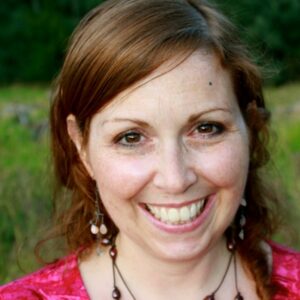
About
Laura Read is the author of But She Is Also Jane (University of Massachusetts Press, 2023, winner of the Juniper Prize); Dresses from the Old Country (BOA Editions, 2018); Instructions for my Mother’s Funeral (University of Pittsburgh Press, 2012, winner of the AWP Donald Hall Prize for Poetry, selected by Dorianne Laux), and The Chewbacca on Hollywood Boulevard Reminds Me of You (winner of the Floating Bridge Press Chapbook Award, 2011). Recipient of a Washington State Artists Trust Grant, a Florida Review Prize for Poetry, and the Crab Creek Review Prize for Poetry, Laura teaches at Spokane Falls Community College and in the MFA program at Eastern Washington University.
Read MoreMatthew Olzmann
Morning Workshop Faculty
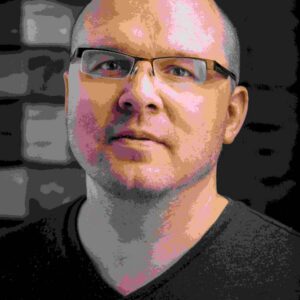
About
Matthew Olzmann is the author of Constellation Route as well as two previous collections of poetry: Mezzanines and Contradictions in the Design. A recipient of fellowships from Kundiman, MacDowell, and the National Endowment for the Arts, Olzmann’s poems have appeared in the New York Times, Best American Poetry, The Pushcart Prizes, Kenyon Review, and elsewhere. He is an assistant professor at Dartmouth College and also teaches in the MFA Program for Writers at Warren Wilson College.
Read MoreMelissa Febos
Past Faculty
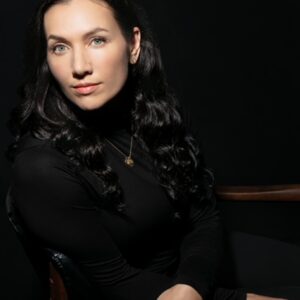
About
Melissa Febos is the author of the memoir Whip Smart; and three essay collections: Abandon Me, a LAMBDA Literary Award finalist and Publishing Triangle Award finalist; Girlhood, a national bestseller; and Body Work: The Radical Power of Personal Narrative. A recipient of the Jeanne Córdova Nonfiction Award from LAMBDA Literary and of fellowships from the National Endowment for the Arts, MacDowell, Bread Loaf, Lower Manhattan Cultural Council, The Barbara Deming Foundation, The BAU Institute, Vermont Studio Center, and others; her essays have appeared in The Paris Review, The Believer, McSweeney’s Quarterly, Granta, The Yale Review, Tin House, The Sun, and The New York Times Magazine. She is an associate professor at the University of Iowa, where she teaches in the Nonfiction Writing Program.
Read MoreNhatt Nichols
Morning Workshop Faculty
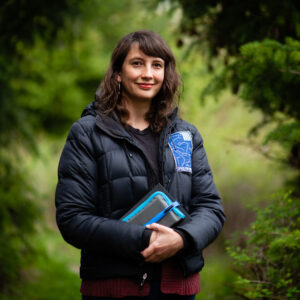
About
Nhatt Nichols (she/her) is a multidisciplinary cartoonist, journalist, poet, and artist whose work focuses on the intersections of humans, animals, and their environment. A graduate of The Royal Drawing School in London, she uses words and images to cover food and environmental issues using solutions journalism practices for High Country News, Edible Magazine, Civil Eats, Modern Farmer, and The Daily Yonder. She is the founder and editor of The Jefferson County Beacon, a rural weekly news outlet. Her first book, This Party of the Soft Things (Bored Wolves 2022), a heavily researched graphic poem, is in its third printing. Her first novel, Burn Morels, is forthcoming from Bored Wolves in winter 2025. Nhatt is a 2023 Artist Trust Literary GAP recipient for her project documenting the history of human/animal dependency and the current refugee crisis in Białowieża, Europe’s oldest forest. Her first museum show, Nhatt Nichols: The Willapa Oyster and its Environs, was on display at The Columbia Pacific Heritage Museum in 2025.
Read MoreNicole Persun
Afternoon Workshop Faculty
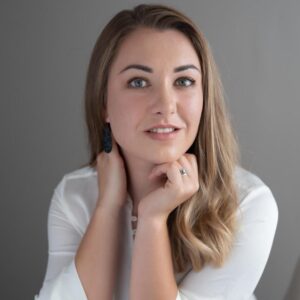
About
Nicole J. Persun is an award-winning and internationally bestselling novelist with a master’s degree in creative writing and instruction. She writes in many genres, most notably contemporary fiction under the pen name Jennifer Gold. Nicole has taught writers as a keynote speaker, in large-scale class settings, intimate workshops, and one-on-one coaching for over twelve years. For more information, visit nicolejpersun.com or jennifergoldauthor.com.
Read MorePeter Quinn
Afternoon Workshop Faculty
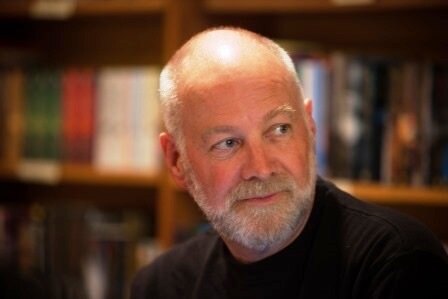
About
A graduate of Lewis and Clark College, Peter studied with poets Vern Rutsala, Tony Ostroff and William Stafford. In 1976 he received an Academy of American Poets Award. His first book of poetry, Painting Circles on Straight Highways, was published by Irenicon Press in 2012. His second book of poetry, small things (Turning Point Press), Will be released in March, 2023. He hopes his almost-finished novel, Lady, Lucifer and Coward – the Unauthorized Journal of John Edgar Quinn, will fill in the many blanks of his grandfather’s life through the alchemy of fiction.
Read MoreQuenton Baker
Morning Intensive Faculty
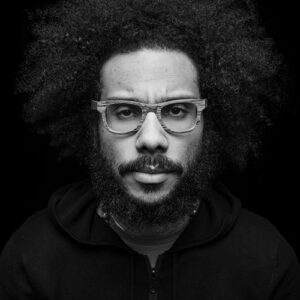
About
Quenton Baker is a poet, educator, and Cave Canem fellow. Their current focus is black interiority and the afterlife of slavery. Their work has appeared in The Offing, Jubilat, Vinyl, The Rumpus and elsewhere. They are a two-time Pushcart Prize nominee, and the recipient of the 2018 Arts Innovator Award from Artist Trust. They were a 2019 Robert Rauschenberg Artist in Residence and a 2021 NEA Fellow. They are the author of we pilot the blood (The 3rd Thing, 2021) and ballast (Haymarket Books, 2023).
Read MoreRavi Howard
Past Faculty
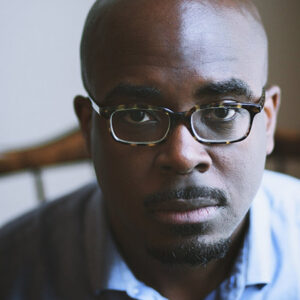
About
Ravi Howard is the author of two novels, Like, Trees, Walking and Driving the King (HarperCollins). In addition to being selected as a finalist for the Hemingway Foundation/PEN Award, Like, Trees, Walking won the Ernest J. Gaines Award for Literary Excellence. Howard has received fellowships and awards from the Black Caucus of the American Library Association, the Hurston-Wright Foundation, and the National Endowment for the Arts.His short fiction has appeared in Salon, Massachusetts Review, Silent Beaches, Untold Stories, Saw Palm, and Alabama Noir. His essays have appeared in The New York Times, Atlanta, and Gravy, and he has recorded commentary and fiction for NPR’s All Things Considered and Mississippi Public Broadcasting’s Thacker Mountain Radio. He has taught creative writing with the Hurston-Wright Foundation, Callaloo, Kimbilio, Minnesota Northwoods, and Bread Loaf Writers’ Conference. He is currently an assistant professor in the creative writing program at Florida State University.
Read MoreReginald Betts
Morning Workshop Faculty
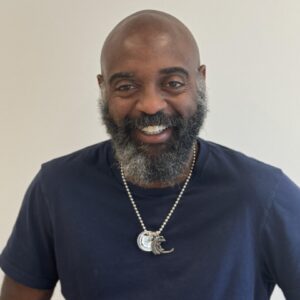
About
Reginald Dwayne Betts is a poet, lawyer, and the Founder & CEO of Freedom Reads, an initiative to radically transform access to literature in prisons. The author of a memoir and three collections of poetry, he has transformed his latest collection of poetry, the American Book Award Winning FELON, into a solo theater show that explores the post incarceration experience and lingering consequences of a criminal record through poetry, stories, and engaging with the timeless and transcendental art of papermaking. Dwayne’s most recent work, released 2023, Redaction, a collaboration with artist Titus Kaphar, is based on their 2019 exhibition “The Redaction” at MoMA PS1 about the U.S. cash bail system–the state and federal court system’s conditions by which those arrested, but unable to afford bail, remain incarcerated even though they have been neither tried nor convicted. In 2019, Dwayne won the National Magazine Award in the Essays and Criticism category for his New York Times Magazine essay, Getting Out, that chronicles his journey from prison to becoming a licensed attorney. He is also a 2021 MacArthur Fellow, has been awarded a Radcliffe Fellowship from Harvard’s Radcliffe Institute of Advanced Study, a Guggenheim Fellowship, an Emerson Fellow at New America, and most recently a Civil Society Fellow at Aspen. Dwayne holds a J.D. from Yale Law School.
Read MoreRena Priest
Morning Workshop Faculty
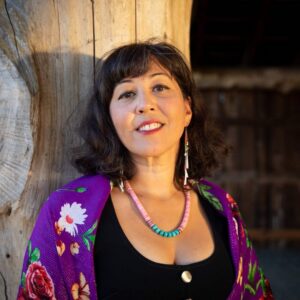
About
Rena Priest is a citizen of the Lhaq’temish [Lummi] Nation. In a historic appointment, Priest was named Washington State’s sixth Poet Laureate (2021-2023), becoming the first Indigenous person to hold the position. In this role, she championed poetry that celebrated the ecological gifts of her ancestral homelands, the bioregion. She is an Academy of American Poets Fellow, a Maxine Cushing Gray Distinguished Writer, and a winner of a Washington State Book Award for poetry. Her new essay collection, Positively Uncivilized, was published as the winner of the 2025 Keepers of the Fire Award from Raven Chronicles Press. She is also honored to be a Seattle City of Literature grantee, selected to participate in an international literary exchange co-sponsored by the Melbourne City of Literature and the UNESCO City of Literature Network.
Read MoreRion Amilcar Scott
Morning Workshop Faculty
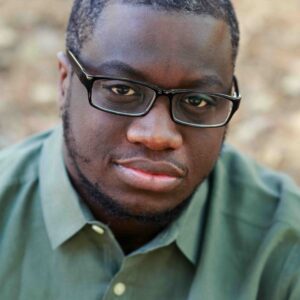
About
Rion Amilcar Scott is the author of the story collections The World Doesn’t Require You and Insurrections, which was awarded the 2017 PEN/Bingham Prize for Debut Fiction and the 2017 Hillsdale Award from the Fellowship of Southern Writers. He teaches creative writing at the University of Maryland. His work has appeared in The New Yorker, The Kenyon Review, Best American Science Fiction and Fantasy 2020 and McSweeney’s Quarterly, among other publications.
Read MoreRobert Stubblefield
Afternoon Workshop Faculty
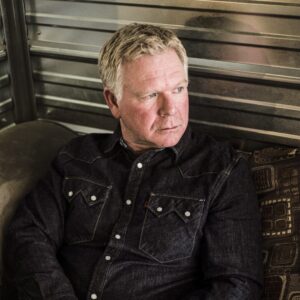
About
Robert Stubblefield has published fiction and personal essays in Dreamers and Desperadoes: Contemporary Short Fiction of the American West, Best Stories of the American West, Hayden’s Ferry Review, Left Bank, The Clackamas Literary Review, Cascadia Times, Oregon Humanities, Oregon Salmon: Essays on the State of the Fish at the Turn of the Millennium, Open Spaces, basalt, High Desert Journal, and The Whitefish Review among others. Awards include a Georges and Anne Borchardt scholarship from the Sewanee Writers’ Conference, Fishtrap Fellowship, and Imnaha Writers’ Retreat Fellowship. Robert grew up in eastern Oregon and now lives in Missoula, Montana and teaches at the University of Montana where he serves as Director of the BFA in Creative Writing and UM Press.
Read MoreRyler Dustin
Afternoon Workshop Faculty
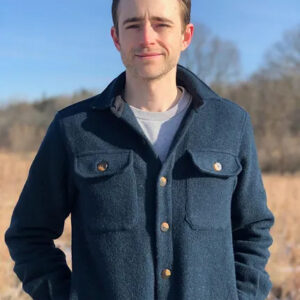
About
Ryler Dustin began his poetry career by performing spoken word; he placed eighth while representing Seattle in the Individual World Poetry Slam, headlined at spoken word venues across the country, and was featured in The Best of Button Poetry. He is the author of Heavy Lead Birdsong from Write Bloody Publishing and Trailer Park Psalms, winner of the University of Pittsburgh’s Agnes Lynch Starrett Prize. After earning an MFA in Creative Writing from the University of Houston and a PhD from the University of Nebraska-Lincoln, he went on to live in Spain, Jack Kerouac’s former home, a cabin in the Oregon wilderness, and recently moved back to his hometown of Bellingham. You can find his work in outlets like Verse Daily, American Life in Poetry, The Best of Iron Horse, and Major Jackson’s podcast The Slowdown.
Read MoreSam Ligon
Afternoon Workshop Faculty
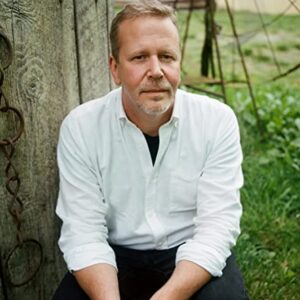
About
Sam Ligon’s most recent novel — Miller Cane: A True & Exact History — was serialized for a year in Spokane’s weekly newspaper, The Inlander, as well as on Spokane Public Radio. The author of four previous books of fiction, including Wonderland and Safe in Heaven Dead , Ligon is also co-editor, with Kate Lebo, of Pie & Whiskey: Writers Under the Influence of Butter & Booze. His stories and essays have appeared in The Georgia Review, New England Review, Prairie Schooner, Gettysburg Review, and elsewhere. He teaches creative writing at Eastern Washington University in Spokane and serves as EWU’s Faculty Legislative Liaison in Olympia.
Read MoreSasha LaPointe
Morning Workshop Faculty
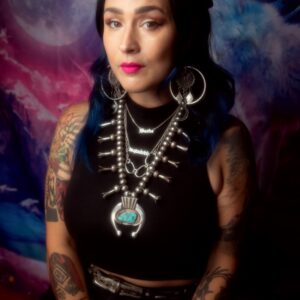
About
Sasha taqʷšəblu LaPointe is from the Upper Skagit and Nooksack Indian Tribes. Native to the Pacific Northwest she draws inspiration from her coastal heritage as well as her life in the city. She writes with a focus on trauma and resilience, ranging topics from PTSD, sexual violence, the work her great grandmother did for Lushootseed language revitalization, to loud basement punk shows and what it means to grow up mixed heritage. Sasha received a double MFA from The Institute of American Indian Arts with a focus on creative nonfiction and poetry. She teaches creative writing at the Native Pathways Program at Evergreen and has been a mentor for Seattle’s youth poet laureate program. Her memoir Red Paint has received starred reviews from Kirkus and Shelf Awareness and is available through Counterpoint Press. Her collection of poetry Rose Quartz is available through Milkweed Press. Thundersong, a collection of essays is forthcoming from Counterpoint Press in spring of 2024.
Read MoreSebastian Matthews
Past Faculty
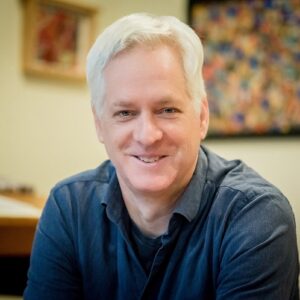
About
Sebastian Matthews’ latest books are a memoir in essays, Beyond Repair: Living in a Fractured State (Red Hen Press), and a hybrid collection of poetry and prose, Beginner’s Guide to a Head-on Collision (Red Hen Press), an Independent Publisher’s Book Award winner. His other publications include two books of poems, the memoir In My Father’s Footsteps (W.W. Norton & Co.), and the collage novel The Life & Times of American Crow. Matthews is the recipient of a North Carolina Writers Grant and the Bread Loaf Writers Conference’s Bernard de Soto Fellowship in Nonfiction. Along with Stanley Plumly, he edited Search Party: The Collected Poems of William Matthews (Houghton Mifflin), which was a runner-up for the Pulitzer Prize. Matthews serves on the board of trustees for the Vermont Studio Center and on the advisory board for Callaloo. He is the host of Jazz on a Summer’s Day, a music and talk show broadcasted out of Asheville, NC, and livestreamed at wpvmfm.org. He leads workshops for the Great Smokies Writing Program, UNC-A, and offers classes on occasion at the Flat Iron Writers Room.
Read MoreShawn Vestal
Past Faculty
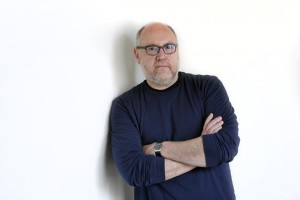
About
Shawn Vestal’s debut novel, Daredevils, was published in spring 2016 by Penguin Press. His collection of short stories, Godforsaken Idaho, published by New Harvest in April 2013, was named the winner of the PEN/Robert W. Bingham Prize, which honors a debut book that “represents distinguished literary achievement and suggests great promise.” He also published A.K.A. Charles Abbott, a short memoir, as a Kindle Single in October 2013. His stories have appeared in Tin House, McSweeney’s, Ecotone, The Southern Review, Cutbank, Sou’wester, Florida Review and other journals. He writes a column for The Spokesman-Review in Spokane,Wash., and teaches in the MFA program at Eastern Washington University
Read MoreStephanie Land
Afternoon Workshop Faculty
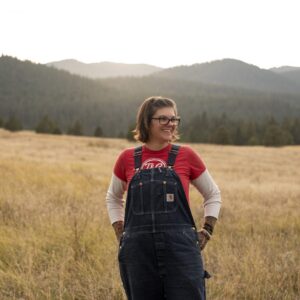
About
Stephanie Land is the New York Times bestselling author of “MAID: Hard Work, Low Pay, and a Mother’s Will to Survive,” called “a testimony…worth listening to,” by the New York Times and inspiration for the Netflix series “Maid,” and its sequel “CLASS: A Memoir of Motherhood, Hunger, and Higher Education.” Her work has been featured in The New York Times, The Guardian, The Atlantic, and many other outlets. Her writing focuses on social and economic justice and parenting under the poverty line. She is a frequent speaker at colleges and national advocacy organizations. Find out more at @stepville or stepville.com
Read MoreSusan Landgraf
Afternoon Workshop Faculty
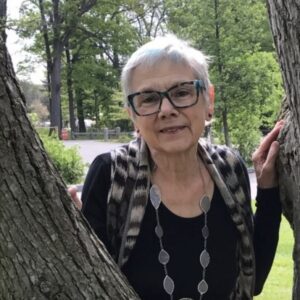
About
Susan Landgraf is a poet and journalist. She has published more than 400 poems, essays, and articles in numerous journals and magazines. Most recently her poems have appeared, or are forthcoming, in Prairie Schooner, Poet Lore, Nimrod, Calyx, The Bellingham Review, Literary Mama, Kestrel, Margie, and The Sow’s Ear. She is the author of What We Bury Changes the Ground (Tebot Bach, 2017) as well as The Inspired Poet (Two Sylvias Press, 2019), a book of writing exercises. Landgraf has taught at Highline College and Jiao Tong University in Shanghai, as well as the Port Townsend Writers’ Conference. She serves as Poet Laureate of Auburn, Washington.
Read MoreTerrance Hayes
Morning Workshop Faculty
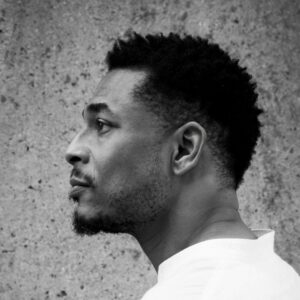
About
Terrance Hayes’ publications, So To Speak, a collection of poems, and Watch Your Language, a collection of visual and lyric essays, were concurrently released in 2023. His honors include the National Book Award for poetry, the Poetry Foundation Pegasus Award for Poetry Criticism and fellowships from the Guggenheim Foundation and the MacArthur Foundation. He is a distinguished Silver Professor at New York University.
Read MoreTess Gallagher
Morning Workshop Faculty
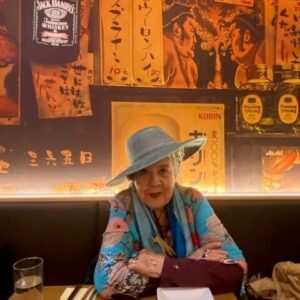
About
Tess Gallagher, the author of eleven books of poetry, lives and writes in her hometown of Port Angeles, Washington, and in her cottage in Co. Sligo, Ireland. She is the only American to have been honored with a Lifetime Achievement Award for her poetry from the Foundation of Rome, which she received in 2023. Her most recent poetry collection Is, Is Not, published by Graywolf press, won the Pacific Northwest Booksellers Award. Gallagher participated in BIRDMAN and SHORT CUTS, films centered on the work of her late husband Raymond Carver’s stories. Her own collection, The Man from Kinvara: Selected Stories, published in 2009, is the basis for film episodes under development. She was privileged to speak and read in celebration of Theodore Roethke at the Bloedel Reserve in September 2024.
Read MoreTessa Hulls
Morning Workshop Faculty
About
Tessa Hulls is an artist, writer, and adventurer. Her essays have appeared in The Washington Post, Atlas Obscura, and Adventure Journal, and her comics have been published in The Rumpus, City Arts, and SPARK. She has received grants from the Seattle Office of Arts and Culture and 4Culture, and she is a fellowship recipient from the Washington Artist Trust. Her debut graphic novel, Feeding Ghosts, was awarded the Anisfield-Wolf Book Award, National Books Critics Circle John Leonard Prize, a Will Eisner Comic Industry Award for Best Graphic Memoir, and the 2025 Pulitzer Prize for Memoir or Autobiography.
Read MoreToni Jensen
Morning Workshop Faculty
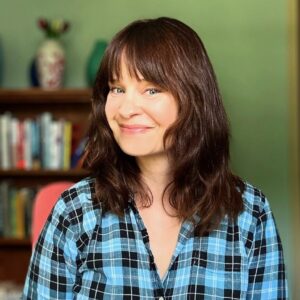
About
Toni Jensen is the author of Carry: A Memoir of Survival on Stolen Land, a Dayton Peace Prize finalist and a New York Times Editors’ Choice book. Jensen’s essays have appeared in journals and magazines such as Orion, Catapult and Ecotone. She also is the author of the story collection From the Hilltop. Jensen has received fellowships from the Lannan Foundation, the Sustainable Arts Foundation, and the National Endowment for the Arts. She directs the MFA Program in Creative Writing and Translation at the University of Arkansas and teaches in the low residency MFA program at the Institute of American Indian Arts. She is Métis.
Read MoreValerie Miner
Morning Workshop Faculty
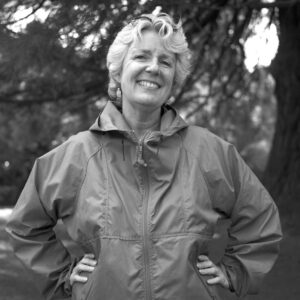
About
Valerie Miner is the award winning writer of 9 novels, 5 story collections and 2 books of non-fiction. Her work has appeared in Ploughshares, The Georgia Review, Triquarterly, Salmagundi, New Letters, Prairie Schooner, The Gettysburg Review, over 60 anthologies, and on BBC Radio 4. Winner of a Distinguished Teaching Award, she been on the faculty at Stanford University, U.C. Berkeley, University of Minnesota, Arizona State University, etc. Her work has been translated into German, Turkish, Danish, Italian, Spanish, French, Swedish and Dutch.
Read More